
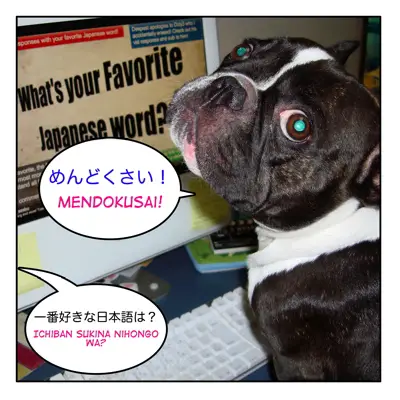
:o 「一番好きな日本語は?」
= Ichiban sukina nihongo wa?
= “What’s your favorite Japanese word?”
「めんどくさい!」
= ”Mendokusai!”
= ” It’s a lot of work!”
Today’s word is
「めんどくさい!」”Mendokusai!”:too much work!, It is a pain!, a lot of work, troublesome
Please watch the video, 「一番好きな日本語は何? ( = ichiban sukina nihongo wa nani? ) What is your favorite Japanese word?」first and check the following list that I made.
:maggie-small: リスト( = risuto) list
♦鬱 = うつ = utsu depression
♦激辛 = げきから = gekikara = Super spicy 激安 = げきやす = gekiyasu Super cheap
♦面白い = おもしろい = omoshiroi= interesting, amusing funny
♦ぬいぐるみ = nuigurumi = a stuffed animal
♦くちばし = kuchibashi = beak
「僕、あの鳥のくちばし大好き!」
= Boku ano tori no kuchibashi daisuki!
= I love that bird’s beak!
♦わがまま = agamama = selfish
Ex. 「あなたは本当にわがままです。」
= Anata ha hontou ni wagamama desu!
= You are really selfish!
♦以心伝心 = いしんでんしん = ishin denshin = heart-to-heart (nonverbal) communication, some dictionaries say “telepathy”
♦百貫デブ = ひゃっかんデブ = hyakkan debu = very fat (Are you talking to me?)
♦愚かな = おろかな = orokana = foolish
♦満腹 = まんぷく = manpuku = full stomach
♦忍耐 = にんたい = nintai = patience
♦お手紙 = おてがみ = otegami = a letter
♦旅行 = りょこう = ryokou (to take) = a trip
♦強い = つよい = tsuyoi = strong
♦僕 = ぼく= boku “I” (first pronoun for boys. I am a girl so I won’t use it.)
♦ドキドキ = dokidoki = thumping (heart beating sound)
ドキドキする = dokidoki suru = be nervous,get excited
♦お転婆 = おてんば = otenba = a tomboy
♦ニキビ = nikibi = acne、zit
♦そろそろ失礼します。 = そろそろしつれいします = Sorosoro shiturei shimasu. = I am leaving now. (formal)
♦分かりました = わかりました = wakarimashita = I understand. / I got it.
♦あほ = aho = stupid, idiot (mainly in western area in Japan)
♦楽しい = たのしい = tanoshii = amusing, fun
♦外人 = がいじん = gaijin = foreigner abbreviation of 外国人 = がいこくじん = gaikokujin
more polite : 外国の人 = がいこくのひと = gaikoku no hito
:u:
more polite: 外国の方 = がいこくのかた= gaikoku no kata : →more polite)
♦キラキラ = kirakira = shimmering, dazzling, sparkling glittering
♦笑う門には福来る
= わらうかどにはふくきたる
= Warau kado niwa fuku kitaru.
= laughing brings happiness
♦お疲れ様です。 = おつかれさまです。= Otsukare sama desu. = Thank you for all your (hard) work.
♦お疲れ様でした = おつかれさまでした。= Otsukare sama deshita. (Same as above but in a past tense.)
♦ホッチキス = hocchikisu = a stapler
♦すみません = sumimasen = Excuse me! or I am sorry!
♦裸 = はだか = hadaka = naked
♦分かる = wakaru = to understand
Ex. 分かりましたか?
= わかりましたか?
= Wakarimashitaka?
= Did you understand?
♦心臓 = しんぞう = shinzou = heart (as an internal organ)
♦花火 = はなび = hanabi = firework
♦自転車 = じてんしゃ = jitensha = bicycle
♦あんこ (餡子 ) = anko = bean jam
♦袋 = ふくろ = fukuro = a bag
「袋いりますか?」
= ふくろいりますか?
= Fukuro irimasuka
= Do you need a bag.
♦和を以て貴しとなる
= わをもってとうとしとなる。
= Wawo motte toutoshi to naru
= It is important to get along.
♦スズキ = Suzuki = Suzuki
♦ブルースリー = Buruusu rii = Bruce Lee (Wait! Is he Japanese!?!  )
)
♦ドラゴンボール = Doragon boul = Dragon Ball
♦コンビニ = konbini = a convenience store
♦芸術家 = げいじゅつか = geijyutuka = an artist
♦かぼちゃ = kabocha = a pumpkin or squash
♦大丈夫 = だいじょうぶ = daijyoubu = fine, all right,OK
大丈夫ですか?
= だいじょうですか?
= Daijyoubudesuka?
= Are you all right?/OK?
♦無心 = むしん = mushin = Buddhist term, free from thought. Empty mind
♦ちょっと伺いたいことがあるんですが。
= ちょっとうかがいたいことがあるんですが。
= Chotto ukagai tai koto ga arun desu ga.
= Excuse me but may I ask you a question?
♦可愛い = かわいい = kawaii = cute
♦下着 = したぎ = shitagi = underwear
♦千鳥足 = ちどりあし= chidoriashi = to stagger around
♦誰ですか? = だれですか? = Dare desuka? = Who are you?
私は鞄です。
= わたしはかばんです。
= Watashi wa “kaban” desu.
= “I am a bag”
♦抱きしめて = だきしめて = Dakisihmete = Hold me tight!
♦仕込む = しこむ = shikomu = to prepare
Ex. 芸を仕込む = げいをしこむ = gei wo shikomu = to train (an animal) some trick.
♦かたじけない = katajikenai =Samurai language “Thank you!” “I am sorry!”
♦むっちゃ = muccha = (colloquial) Very! Super!
♦まさか = masaka = It can’t be true! / No way!
♦電車 = でんしゃ = dennsha = an electric train
♦全部 = ぜんぶ = zenbu = all, everything
全部食べなさい
= ぜんぶたべなさい
= Zenbu tabenasai
= “Eat everything!”
♦食べる = たべる = taberu = to eat
♦星 = ほし = hoshi = a star
♦輝かしい未来を = かがやかしいみらいを= Kagayakashii mirai wo! = (To have) brilliant future
♦一生懸命 = いっしょうけんめい = isshoukenmei = To do one’s best
♦復讐 = ふくしゅう= fukushuu = revenge
♦失礼します。= しつれいします = shiturei shimasu. = “May I come in?” “Good-bye” “Excuse me..”,etc.
♦絶望した = ぜつぼうした = zetsubou shita = disappointed
♦蝉 = せみ = semi = cicadas
♦変身 = へんしん= henshin = transform
♦それほど = sorehodo = not so much
Ex. この林檎はそれほど高くないです。
= Kono ringo wa sorehodo takaku naidesu.
= This apple is not that expensive.
♦弱肉強食 = じゃくにくきょうしゅく = jakuniku kyoushoku = dog-eat-dog world. Survival of the strongest.
♦木漏れ日 = こもれび = komorebi = sunbeams streaming through leaves
♦飲み放題 = のみほうだい = nomihoudai = all you can drink
♦乾杯 = かんぱい = kanpai = Cheers!
♦二日酔い = ふつかよい = futsukayoi = hangover
♦ビール = biiru = beer
♦飽きる = あきる = akiru = to get tired of something.
♦うるさい = urusai = noisy, annoying
♦妖怪 = ようかい = youkai = specter, spook, ghost, goblin, etc.
♦おっぱい = oppai = boobs
♦いやいやいや… = Iya iya iya… = Oh, no, no, no…
♦散歩に行く? = さんぽにいく?= Sanpo ni iku? = Wanna go for a walk?
♦感謝しています。 = かんしゃしています = Kansha shiteimasu. = I appreciate it.
 マギー先生より = Maggie sensei yori. = From Maggie-Sensei
長いリストでしょ! = Nagai risuto desho! = Isn’t it a long list?
あ〜めんどくさかった! = Ah~ mendokusakatta! = Boy, it was a lot of work for me…
でも、皆さんも、お疲れ様でした! = Demo minasan mo otsukare sama deshita! = But good job everyone!
***
Will you be my Patron?
I appreciate your support! サポートありがとう!
14 Comments
「まさかお前が生き残るなんて、思いもしませんでした」
「まさかお前、私を殺そうとしてるの?」
「まさかの逆転」
大体の場合「まさか」は「no way」とか「can’t be」とかに直訳でいませんね。
わがままはたしかに、「利己的」というような意味が含まれていると感じますが、なんか「自分勝手」とちょっと違いますね。
「その願望はただのわがままですけれど、どうかお許しください」
えと~
私の好きな日本語の言葉は…イギリス。
I know that it’s just the Japanese word for England, but I just like the sound of it. I dunno why. XD
Oh! I also like 水 and 音 because those were the first Japanese words I learned for a haiku in middle school.
I know. I’m kinda weird. XD
~ハリちゃん
@ハリちゃん
イギリスって言葉(ことば)が好(す)きなんですね。おもしろ〜い!!
いいですよ〜! 人それぞれで!=Everyone is different
リストの中で1番好きのはホッチキスです。
Its sound nice for me.
今日から「stapler」の変わりにホッチキスを使います。
@アリナ
Funny to hear your favorite word is ホッチキス (or ホチキス)
FYI staples are called ホッチキス(ホチキス)の針(shin)
私の一番好きな日本語の言葉は救急車。 It reminds me of world of warcraft, where when a person whines about something bad that happened, someone else will say QQ, or QQ more, or less QQ more pewpew. Because QQ is supposed to look like two eyes crying. When someone says QQ it kind of means, get over it.
cloudstrife543-san
救急 sounds like QQ, huh? なるほど!I see..Tashika ni QQ looks like someone is crying..
But I don’t like a sound of QQ車!
I like this list a lot!
I have a question.
Is 激~ used in the same way as 超~? Like, 超安い or 超辛い?
Hello, Harin-san!
激 and 超 are both use to add the meaning of “super”.
Usually “激” comes before a noun form and “超” comes before adjetive form.
1) Super cheap
People do *激安 (geki yasu) あのカメラは激安だった。(Ano kamera wa gekiyasu datta) That camera was very cheap.
*超安い (chou yasui) あのカメラは超安かった。(Ano kamera wa chou yasukatta.) The same meaning.
2) Super hot/spicy
*激辛(gekikara) このカレーは激辛だ。(Kono karei wa gekikara da.) This curry is super hot.
*超辛い(chou karai) このカレーは超辛い。(Kono karei wa chou karai.) The same meaning.
3) Super crowded
*激混み(Gekikomi) 今朝の電車は激混みだった。(Kesa no densha wa gekikomi datta.) The train was super crowded this morning.
*超混んでいる(Chou konde iru.) 今朝の電車は超混んでいた。(Kesa no densha wa chou konde ita.) The same meaning.
HOWEVER, they are both slangs so basically there is no rule. People do say
1-1) 激安い(gekiyasui) 超安 (Chouyasu)
2-1)激辛い (gekikarai) 超辛(choukara)
3-1) 激混んでいる(gekikonde iru) 超混む(choukomu)
If we google “超美味しい” (chouoishii) & “激美味しい” (gekioishii), means “super delicious”,”超美味しい” will get more hits.
Some adjetives and nouns never take 激 or 超, though. So please search the word you want to use with 激 or 超 on Google and check if they use it or not.
Oh, one more thing! Sometimes we use them both,
超激レア (Chou geki rea!) means it is super rare!
超激安 (Chou geki yasu) Super cheap!
超激辛 (Chou geki kara) Super hot
They are kind of fun words, huh?
That’s just silly and confusing. Atleast I get it now.
ありがとうございます
Arigatou gozaimasu~ Maggie-sensei!
TheDutchGaijin-san,
Kochirakoso arigatou! Itsudemo kiitene!
Matane!
Sweet, I see that all the favorite Japanese words are here!
I have a question though, “zenbu” or “zennbu” (the second n to make the ん character) is written as “zembu” in a Japanese dictionary.
How come? There is no “m” character. And it’s still written as ぜんぶ . I’ve seen this with other words as well, like “kampai” Do you have any idea why?
Thanks Maggie-sensei!
http://jisho.org/words?jap=ぜんぶ&eng=&dict=edict&common=on&romaji=on
http://jisho.org/words?jap=かんぱい&eng=&dict=edict&romaji=on
Hello, TheDutchGaijin-san! Comment arigatou! As for your question,
全部 ぜんぶ 1) zenbu, or 2) zembu
乾杯 かんぱい 1) kanpai or 2) kampai
太田さん おおたさん 1) Outa-san or 2) Ohta-san
1) form is “Romaji” which Japanese people use. 2) form is for non-native people to pronounce Japanese words.
2) form could be easier to read Japanese words with.
See…
Ex. Memphis is “Menfisu” in Romaji. (It’s how Japanese people try to read English words)
Ex. Combat is “Konbatto” in Romaji.
But orthographically they use “m”instead of “n” before “b” or “p” when they spell in English.
So I think you can write in both ways.
How’s that?
また来てね! Mata kitene! Please visit me again!