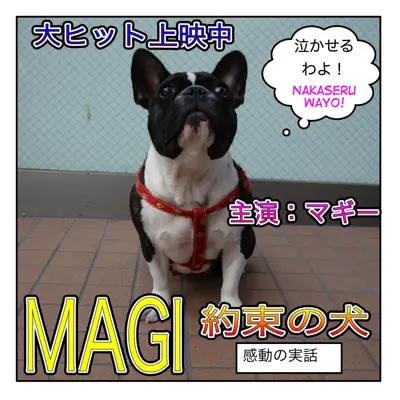
🐶 「泣かせるわよ!」
= Nakaseru wayo!
= “I am going to make you cry!”
MAGI 約束の犬 ( = Yakusoku no inu) The Dog’s Promise
感動の実話 ( = Kandou no jitsuwa) A touching true story
大ヒット上映中 ( = Dai hitto jouei chu) A smash hit movie. Now showing in theaters.
主演 マギー ( = Shuen Maggie)Leading actress Maggie
Hi everyone!
Have you seen the movie, “Hachi” starring Richard Gere? It is a touching movie based on a true story in Japan.
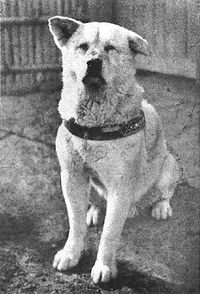
ハチ公 ( = Hachikou) is known as 忠犬ハチ公 ( = Chuken Hachikou) Loyal Dog, “Hachikou”.
He became the most famous and loyal dog in Japan because he continued to wait for his master even after his master had passed away.
You can see the statue of Hachiko in Shibuya station. It has become a popular place to meet up with one’s friends.
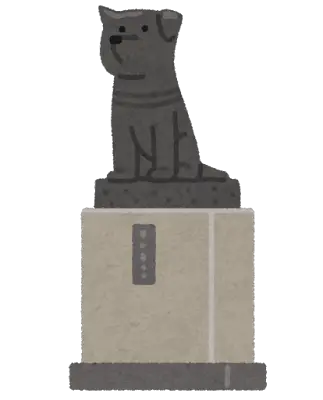
Check the story on Wikipedia!
This new movie, “MAGI” looks very interesting as well!
Maggie says :
「泣かせるわよ!」
= Nakaseru wayo!
= I am going to make you cry!
泣く(=naku) to cry
→泣かせる ( = nakaseru) to make someone cry
Note : わ ( = wa) or わよ ( = wayo) : This is an ending that adds emphasis to a sentence and is commonly used by women.
So today’s theme is 「させる+させられる」Saseru & Saserareru , 使役動 詞 ( = shieki doushi) causative verb and 受け身動詞(=ukemi doushi) causative passive verb!
(1) マギーはマックスを泣かせた。
= Maggie wa Max wo nakaseta.
= Maggie made Max cry.
(2)マックスはマギーに泣かされた。
= Max wa Maggie ni nakasareta.
= Max was made to cry by Maggie.
Note 1) In English the passive form is not that common so we translate both sentences as Maggie made Max cry but actually the second sentence’s subject is Max. So Max was made to cry by Maggie. would be the literal translation although it doesn’t sound natural in English.
Note 2) There are two causative forms for 泣く( = naku)
➡︎(1) 泣かせる ( = nakaseru ) and (2) 泣かす ( = nakasu).
(泣かせる ( = nakaseru) is more common)
 passive causative form: (1) 泣かされる( = nakasareru) or (2) 泣かせられる ( = nakaserareru)
(泣かされた(=nakasareta) is more common)
Leeeeet’s practice!!
• する ( = suru) to do
➡︎させる ( = saseru) to make someone do
➡︎させられる ( = saserareru) to be forced to do
•勉強する ( = benkyou suru) to study
➡︎勉強させる ( = benkyou saseru) to make someone study
➡︎勉強させられる ( = benkyou saserareru) to be made to study by someone
Note: If you use 勉強 ( = benkyou) as a noun, You can put “を” after 勉強 ( = benkyou) and it becomes an object.
*日本語の勉強(を)する
= Nihongo no benkyou (wo) suru.
= to study Japanese
*生徒に勉強(を)させる
= Seito ni benkyou (wo) saseru.
= to make students study
*母に勉強(を)させられる
= Haha ni benkyou (wo) saserareru.
= I am forced to study by my mother.
*練習する ( = renshuu suru) to practice
➡︎練習させる ( = renshuu saseru) to make someone practice
➡︎練習させられる ( = renshuu saserareru) to be forced to practice
Note: The same as 勉強 ( = benkyou). You can put “を” after 練習 ( = renshuu ) as an object.
*結婚する ( = kekkon suru) to get marry
➡︎結婚させる ( = kekkon saseru) to make someone marry
➡︎結婚させられる ( = kekkon saserareru) to be forced to marry
*もう30歳になったので彼女に結婚させられるかもしれない。
= Mou sanjussai ninatta node kanojo ni kekkon saserareru kamo shirenai.
= Since she is 30 years old now, I might be forced to marry my girlfriend.
Note : Again, you can put を ( = wo) after 結婚 ( = kekkon) as an object.
Ex. 結婚をさせる.. ( = Kekkon wo saseru)
➡︎飲ませる ( = nomaseru) to make someone drink
➡︎飲ませられる (=nomaserareru) to be forced to drink
or
➡︎ 飲ます ( = nomasu) to make someone drink
➡︎飲まされる ( = nomasareru) to be forced to drink
Ex. 昨夜は上司にたくさん飲ませられた/ 飲まされた。
= Sakuya wa joushi ni takusan nomaseraeta/ nomasareta.
= I was forced to drink a lot by my supervisor.
•来る ( = kuru) to come
➡︎来させる ( = kosaseru) to make someone come
➡︎来させられる ( = kosaserareru) to be forced to come
Ex. 今日は誰に来させられたの?
= Kyouwa dare ni kosaserareta no?
= Literally By whom were you made to come here today?
• やる ( = yaru) to do
➡︎やらせる ( = yaraseru) to make someone do
➡︎やらせられる ( = yaraserareru)to be forced to do
Ex.この仕事は部下にやらせます。
= Kono shigoto wa buka ni yarasemasu
=I will make my subordinate do this work.
• 書く ( = kaku) to write
➡︎書かせる ( = kakaseru) to make someone write
➡︎書かせられる ( = kakaserareru) to be forced to write
Note: 書かせる ( = kakaseru):Sometimes we say 書かす ( = kakasu).
Also we say 書かされる ( = kakasareru) instead of 書かせられる( = kakaserareru) as
a shorter form.
Note :
It is grammatically wrong but there is also a colloquial form for this.
* 書かさせられる ( = kakasaserareru)
Ex. まだ小学校にも行っていないのに漢字を書かされている。
= Mada shougakkounimo itte inainoni kanji wo kakasareteiru.
= They are forced to write kanji even though they are not even in elementary school yet.
*So there is a tendency to insert さ( = sa) in certain verb conjugations, especially among young people.
That is called さ入れ言葉 ( = saire kotoba).
Ex. やらせる( = yaraseru) to make someone do
➡︎ やらさせる ( = yarasaseru)
➡︎ やらせられる ( = yaraserareru) to be forced to do
➡︎ やらさせられる ( = yarasaserareru)
Ex. やらせて頂きます。 ( = Yarasete itadakimasu.)
➡︎ やらさせて頂きます。( =Yarasasete itadakimasu.) I will do it./Let me do it.
「さ入れ言葉」( = saire kotoba) is getting VERY common and you can hear or see this more and more in everyday conversation including on TV and etc. But if you are going to take a Japanese test, avoid using it.
(Also there is ら抜き言葉 ( = ranuki kotoba) skipping ら ( = ra)
*見られる ( = mirareru)
➡︎ 見れる ( = mireru) to be able to see
but I will talk about it some other time.)
Note: If the person is willing to do something, it means~させる( = saseru) could also means “to let someone do something.”
Ex. 子供をキャンプに行かせる。
= Kodomo wo kyanpu ni ikaseru.
= It could mean “I make my kid go camping (even if he doesn’t want to go.)“
Or “I will let him go camping (because he wants to go.)“
So the kid would say:
*母にキャンプに行かされた。
= Haha ni kyanpu ni ikasareta.
= “I was forced to go camping by my mom.”
(He didn’t want to go.)
*母にキャンプに行かせてもらった。
= Haha ni kyanpu ni ikasete moratta.
= “I got to go camping (because my mom let me go.)”
(He wanted to go.)
*母はキャンプに行かせてくれた。
=Haha wa kyanpu ni ikasete kureta.
= “My mom let me go camping.”
(He is happy to get to go camping.)
*彼にこの仕事をやらされた。
= Kare ni kono shigoto wo yarasareta.
= ”I was forced to do this work by him.”
(complaining)
*彼にこの仕事をやらせます。
= Kare ni kono shigoto wo yarasemasu.
= ”I will force him do this work.”
*彼にこの仕事をやらせ(てみ)ます。
= Kare ni kono shigoto wo yarase(te mi)masu.
= ”I will try to let him do this work.”
(He would like to try to do this work.)
*私にこの仕事をやらせてください。
(=Watashi ni kono shigoto wo yarasete kudasai .)
”Let me do this work.”
*待たせてごめんなさい。
= Matasete gomennasai.
= “Sorry to make you wait.”
*ここで待たせて下さい。
= Kokode matasete kudasai.
= “Let me wait here!”
*歯医者で1時間も待たされた。
= Haisha de ichijikan mo matasareta.
= “I was forced to wait at the dentist’s office for one good hour.”
(complaining)
 マギー先生より =Maggie sensei yori = From Maggie
「この映画は涙なしでは観られません。皆さん、ハンカチを忘れないでね。」
= Kono eiga wa namida nashi dewa miraremasen. Minasan hankachi wo wasurenai dene.
= This is a tear-jerker movie. So be sure to take a hanky with you!
From Yukari : Actually Maggie-sensei was waiting for her “master” just for 3 minutes in front of a convenience store…
*****
Please check the new Causative form lessons:
Links
***
Will you be my Patron?
I appreciate your support! サポートありがとう!
Become a Patron!

263 Comments
Hey maggie, in this sentence:
”わんこいいっスか?2人をビビらせてくっつけるっス”
Why is をさせる used? Is it because it is a direct object? Even though the action is done directly to these people?
Hello Marco
Yes, to make 二人(them/these people/these two) scared
ビビる (very conversational word) to be scared
ビビらせる = to make someone scared
When you provoke someone’s emotion, you can use this form.
There is more complete lesson on causative form
Link is here
The usage of the causative form in your sentence is
6) to provoke someone’s emotions, and feelings: to make someone feel angry/happy/disappointed, etc.
Aは ( = wa) 、Bを ( = wo) + verb causative form
I was looking for a certain grammar point and of course I come back to Maggie Sensei :)
I didn’t know about Hachikou! Very cool story. My dad knew all about it though, which is weird… He’s an old American and not very “cultural”. We had 2 Akita’s when I was very little and now I know why!
Sasuga Maggie Sensei itsumo oshieru
Welcome back, humanbean!
I heard Akitaken is quite popular now. Your dad is “sasuga”. 😉
Thank you ^.^ You’re the best
🐶💕💕
Hi Maggie sensei,
I am trying to understand the need of form causative passive when we already have the causative form.
example sentence, I was taught that for causative sentence, it carry different nuance of which particle (に or を) we will attach to the “victim” (pardon me for the lack of better term)
彼らは彼にアメリカへ行かせた。==> They let him to go to America
彼らは彼をアメリカへ行かせた。==> They made him to go to America (and he has no say against it).
My question is, how is causative form with を different from causative passive? Is it to convey the level of obedience of the “victim” ?
彼は彼らにアメリカへ行かせられた。==> He was forced by them to go to America ( no room of negotiation).
Also, is the use case of causative passive is only to say “Someone forced/made someone to do something?”
Thank you for your time
Hello ユフィ
Yes, you use causative passive form to convey the level of obedience or express annoyed feelings that you are forced to do something that you don’t want to do and it is only used to say “Someone forced/made someone to do something?”
So, if you want to change this sentence 彼らは彼にアメリカへ行かせた。 from his point of view, you can say for example
彼は、彼らにアメリカに行かせてもらった。
to show his appreciation.
Hello Maggie Sensei,
「安さ」「よさ」が買い物を満足させるとして大切な要素であることは間違いないでしょう。
I am wondering if you can explain the causative verb満足させる here. What is being forced to whom? Or what is being forced onto what, who is forcing someone to do something etc.?
Thx in advance
Hi Mark
This saseru is not “to force”
It means “to make”
To make (the customers) happy
Hello. I have a question.
Is there a kanou kei for this verb form?
For example:
(1) マギーはマックスに野菜を食べさせた。
= Maggie made Max eat vegetables.
(2)マックスはマギーに野菜を食べさせられた。
= Max was made to eat vegetables by Maggie.
Is it possible to use kanou kei for these examples?
(1) Maggie could not make Max eat vegetables.
(2) Max couldn’t be made to eat vegetables by Maggie.
Thank you.
asakura
させられる/させられた/させれない/させられなかった
These could be both the causative potential and the causative passive so you can say
(1) マギーはマックスに野菜を食べさせられなかった。
But the listener/reader might get confused. You can use it when the context is clear.
For example
マックスは野菜嫌いで絶対に野菜を食べようとしません。
マギーも美味しい野菜を買って食べさせようとしましたが、結局、マックスに野菜を食べさせられませんでした。
As for (2)
(2) マックスはマギーに野菜を食べさせられなかった。
I think 99 pct of people would think → Max couldn’t make Maggie eat vegetable.
So I wouldn’t use it.
Hello Sensei、
I am trying to understand what the される means at the end of this sentence.
日本人は真面目でよく働くと言われる。そして日本の技術力は世界的にも高く評価される。
Is it passive Causative, or just passive?
Hi Mark,
評価する→passive form 評価される
Just noticed this was posted a long time ago and glad that it’s still effective. A bit off-topic, but I noticed that if you translated that “I was fined”, it becomes 罰金を「科せられる」. I know that it’s original form is 科す, but I’m a bit confused on how this was conjugated in the first place. I was expecting something like 科される which is normally the passive form. I tried searching my dictionary but the only 「科せ〜」 was potential and imperative form.
Thank you!
The verb 「科する」 has two passive forms depending on the conjugation types.
科せられる and 科される
irregular conjugation of s-stem verbs and godan verb conjugation
Hello マギー先生
I was wondering if the causative form can be used for
“accidentally made”, for example –
“When the milk expired, I threw it away in the sink and made the sink smell.”
I didn’t force for the sink to smell, but accidentally made it smell, can causative be used here? Can causative + ちゃう be used?
Is there any examples of “accidentally made/forced”?
おはよう、Milk
For that particular example sentence, “made ~ smell” you can just use ちゃう・しまう 臭くなってしまった(casual ちゃった) instead of using させる but yes, you can use
causative + ちゃう・してしまう
親を心配させる to make one’s parents worry (about ~)
→親を心配させてしまう・心配させちゃう
なるほど!ありがとうございました!
どういたしまして☺️
HI Maggie, I have a question about the causative form. So far, I understand that we can use it to talk about being made to do something or letting someone do something.
But, I came across an example in a manga I’m reading where the speaker uses the causative to say that he has to do something.
台風が来る前に展示物の搬入を終わらせて帰らないと
I would translate this as having to finish the transport of the exhibition goods. Is this a different use of the causative??
Hi Angus,
It is one form of causative usages.
You can use causative form with people or things.
to make someone do something
to make something ~
〜を終わらせる = to make something finish →finish something / have finished
Thanks very much!
What is the Difference of 今度の実験はなんとかして成功させたい vs 今度の実験はなんとかして成功したい
成功させたい shows stronger will and you control the experiment more. I want to make this experience a success.
Hello Maggie Sensei.
With Causative forms,
1) How best to distinguish the difference between てくれた and just a ~させた sentence?
Is my understanding of the following correct?
先生は私に日本語を話させました。
The teacher let/made me speak in Japanese.
先生は私に日本語を話させてくれました
The teacher lets**/allows me to speak in Japanese.
2) Can you have a negative causative sentence like the following?
先生は私に英語を話させてくれませんでした。
The teacher does not allow me to speak in English.
先生は私に英語を話させませんでした。
The teacher did not let me speak in English.
3) にor を?
I read in the Genki that verbs such as “to go”, “to return”, “to sit” use the に particle, so in the causative sentence, it takes on a “を”. Does that sound right to you? I am still trying to wrap my head around this concept…
The examples below – have I used the right particles or are they written correctly?
先生は私をトイレに行かせました。
The teacher made/let me go to the bathroom.
お父さんは私をイトクラブに行かせませんでした。
My father does not let me go to the Night Club
Thank you!
Regards,
Jen.
Hi Jen
1) Yes, your interpretation is right.
させた forced someone to do something
させてくれた someone allow/let you do something for your sake
2)
先生は私をトイレに行かせました。
お父さんは私をナイトクラブに行かせませんでした。
They are both correct.
Though you can use に in the causative sentence (Ex. 私に行かせた) you avoid using the same particles in one sentence. (You are already using に as a direction marker,トイレに・ナイトクラブに)
Hello Maggie Sensei!
Thank you for explaining that!
For question (2), what did you think of the negative causative sentences ? Or is causative form only used for positive sentences?
Thanks!
Oh sorry. For some reason, I must have erased my answer for 2) by accident.
2) You can use causative form in a negative sentence.
I would change the particle を to で to make them sound more natural, though.
A:先生は私に英語で話させてくれませんでした。
The teacher does not allow me to speak in English.
B: 先生は私に英語で話させませんでした。
The teacher did not let me speak in English.
Hello Maggie Sensei.
Thank you for clarifying that and for your explanations!! I really really appreciate it!
I am working on some textbook examples. And I am finding it confusing as to when to use the に or を particle for causative sentences.
Are there some rules/ structure to consider here?
**My initial thought is if the verb itself takes on the “を” particle (e.g をする、を拾う、を食べる – transitive verbs), then the sentence structure is :
==>Action Tellerは Action Doerに objectを action。
e.g 1. 母は私に野菜を食べさせます。
e.g.2. 先生は私に英語で話させませんでした
e.g.3. 先生は学生に宿題をさせました。
**if the verb takes on the “に” particle に行く、に帰る、にくる…
==>Action Tellerは Action Doerを non-object に action。 (And as you mentioned before, avoid using the same particles in one sentence)…
e.g 1. お父さんは私をナイトクラブに行かせませんでした。
e.g.2.先生は生徒を家に帰らせます。
Q: This is the right way to think of the particle?
Q – What about these examples though?
先生は生徒を宿題させます。
部長は部下を休ませました。
Q1) Yes, that’s right.
Q2) 先生は生徒を宿題させます。→先生は生徒に宿題をさせます (生徒 indierct object / 宿題 direct object)
部長は部下を休ませました。 Good.
But if you add 仕事, it changes
部長は部下に仕事を休ませました。
Hello Maggie Sensei.
So it really depends on whether the sentence itself has a direct object mentioned in it or not to determine which particular to use, does it?
Using previous examples:
部長は部下を休ませました。 (Teller は Doer (not direct object) を action)
But if you add 仕事, it changes
部長は部下に仕事を休ませました。(Tellerは Does に direct object を action)
Just another example – where there are irregular verbs such as
迎えに来る
*部長は部下を空港に迎えに来させます。<– Think this one is obvious because there is a place and we cannot have two "に" in the sentence.
**部長は部下を迎えに来させます。<– This one I am not sure now.. my guess is it is "部下を" because there is no direct object and the boss is making the subordinate go pick him up.
What are your thoughts on the last two examples?
That’s right.
And the all of your sentences are right. :)
Thank you, Maggie Sensei.
You are a legend!
本当にありがとうございました!
You’re welcome!
これからもがんばってくださいね。☺️
Hello Maggie Sensei.
It is possible to structure a sentence of something like:
“I wanted my parents to let me learn how to swim” ..
Would/could it look like this:
私は両親に泳ぎ方を習わせてくれてほしかったです。
It will be better to use もらう
両親に泳ぎ方を習わせてもらいたかったです。
Thank you Maggie Sensei.
How would I say “Despite I am a full-time work, up until recently, I was not allowed to live by myself. I want to say “up until recently” because for the longest time up until a point recently, I was not allowed doing this. But this has recently changed now.
Is this correct? –> 会社員なのに、最近まで、両親は一人暮らしをさせてくれませんでした。
Hi Jen,
Yes, it’s perfect!
Hi Maggie Sensei.
Thank you for your previous response.
I am just trying to get my head around forming causative-passive forms.
So for 歌う–> 歌わせられる and 歌わされる mean the same thing?
And using either is OK ?
Is there anything different in written form or speech form?
Hello again, Maggie Sensei.
Just thinking of more examples:
So, if I want to say my parents forced me to learn the piano, it could be either the following:
1) 子供の頃、私は親にピアノを習わされました。
2) 子供の頃、私は親にピアノを習わせられました。
Genki seems to emphasis on the (1) while some JLPT books mention both (1) and (2).
Hi Jen
There are two versions for causative form.
causative form: 歌わせる→passive causative: 歌わせられる
shorter version 歌す→passive causative:歌わされる
causative form:習わせる→passive causative:習わせられる
shorter version: 習わす→passive causative:習わされる
They mean the same. Shorter version is more conversational.
Some textbooks/teachers don’t teach the shorter version because it is more conversational (or it is considered to be a dialect in certain area).
But you do hear a lot in conversation so I think it is useful to learn that form as well.
Thank you Maggie Sensei for explaining this. I really really appreciate it!
I really love your way of explaining things. You give us all the different or potential contexts to use the grammar and a bit of background on how the grammar or word is formed. It really helps me understand the grammar point better.
本当にありがとうございました!
You are very very welcome! 🐶 💕
Hello Maggie sensei,
So there are two ways to form the causative passive verbs.
Is it true that I can use both of them?
For example,
In my understanding, I think I can use all of them. But I’m not sure…
For 歌う
歌わせられる
歌わされる
走る
走らせられる
走らされる
座る
座らせられる
座らされる
Thanks my Lady
Yes, that’s right.
Think the original verb form is different.
歌う and 歌わす
走る and 走らす
座る and 座らす
(さ)せる →(さ) せられる
(さ)す→される
ありがとうございました!
どういたしまして! ☺️
Hi Maggie!! Love you!
So if I understand everything correctly when it’s about me (私は・私に) させる means I am forcing the person to do something and させられる means I am being forced. Is There ever a situation in which that isn’t true?
Also, if I want to say John made Susie clean her room which is better?
1) スージーさんはジョンさんに部屋を掃除させられました。
2)ジョンさんはスージーさんを部屋が掃除させました。
It’s really hard to know when to use the passive form since in English we rarely use it when speaking and therefore it’s not how I think and because of that I forget this grammar exists haha.
Hello A.man!
Yes, that’s right! You got the idea. :)
1) スージーさんはジョンさんに部屋を掃除させられました。(or 部屋の掃除をさせられました)
2)ジョンさんはスージーさんを部屋が掃除させました。→ ジョンさんはスージーさんに部屋を(or 部屋の)掃除をさせました。
1) focusing on Susie
2) focusing on John
You use the causative passive form when you assume the receiver of the action is not happy. Thus you can express one’s annoyed feelings.
Love💕
Hi!
Thank you for another great lesson!
For the sake of learning and wanting to understand the subject to the roots, I wanted to clear up something.
Technically, could the sentence:
もう30歳になったので彼女に結婚させられるかもしれない。
also translate into:
(I /he/she) might be forced to marry (him/her) by her.?
As in not to be forced to marry her, but rather forced to marry someone by her?
Since に is used to indicate by whom the action is performed, in the case of using the potential form(if I understood correctly).
Thank you so much in advance for your help!
Wishing you and Maggie above a wonderful day!
Valentina
Hi Valentina,
もう30歳になったので彼女に結婚させられるかもしれない。
also translate into:
(I /he/she) might be forced to marry (him/her) by her.?
Yes, that’s possible.
It looks complicated so let’s change 彼女 to 母
もう30歳になったので母に結婚させられるかもしれない。
I might be forced to marry (him/her) by my mother.
It’s so interesting to see how many possible interpretations there are 😁
Thank you for replying! ! I feel reassured 😊
Have a nice day!
*彼にこの仕事をやらせます。
= ”I will force him do this work.”
Hi i just want to clear also if this sentence really means to force him to do this work or to make him do this work? Since it is in a “semasu” form? Thanks.
Both.
I will force him do this work. / I will make him do this work. or I will have him do this work.
こんにちは🌞マッギ先生,
I am always confused by the subject and object use in Japanese as I also need to consider the particle and verb as well, just like in these two sentences:
1)女子学生に宿題を見せてもらう
2)男子学生が宿題を見せてあげる
why に is used but not がin (1)? and have you written any article for this topic? Thank you very much indeed!
こんにちは、Anpanman!
2) is easy to understand
Subject+ が+ object+ を+ Vてあげる
Let me change the sentence a little.
男子学生が女子学生に宿題を見せてあげる。
Subject + が + indirect object + に+ directo object+ を+ Vてあげる
This に is to indicate “indirect object”, to whom
Now when you use Vてもらう or (〜を)もらう, you use either 1) から or 2) に
1) 女子学生から宿題を見せてもらう
2) 女子学生に宿題を見せてもらう
In this case に indicate the doer of action, which is to show her homework
I also have あげる・もらう lesson so please go check.
本当にありがとうございました😊
Now I have a clear understanding about this topic. But I have a question of another topic 通じてand通して, hope Maggie sensei could teach me too 🙏🏾
The textbook says they share the same meaning but they cannot be used interchangeably sometimes, like:
私は、共通の友人を通じて妻と知り合いました。
The textbook suggests “通じて“ as the answer only. I am confused.
Maggie sensei,
So, させる( = saseru) could also means “to let someone do something.” and could also means “to force someone to do something.
How about the emotion of させられる。Is it neutron like させる or it is used only when we are forced which is unhappy situation.
Ukemi form is easy to see the unhappy emotion, like
母にキャンプに行かされた。(complaining)
But m y question is what is the emotion if we replace ukemi by causative passive here
母にキャンプに行かせられた。
Does it sentence mean “I was allowed to go camping” in some situation, sensei?
母にキャンプに行かせられた。
= I was forced to go camping by my mother.
(My mother made me go camping.)
So it shows the emotion that “I didn’t want to go but there was no choice. ”
If you are allowed to do something by someone, you say
母に行かせてもらった。
Maggie sensei.
Thank you for the great lesson.
Before, when I read your lesson about 受身, I found a very very great way to change Verb dictionary form to 受身form. That is changing to verb dictionary form to ない、then add れる。
For example, いくー>いかない →いかれる。
Which is
very easy to remember.
I’d like to ask whether I can apply this rule to form the causative. In detail, changing the verb dictionary to ない、then add せる。
For ex, いく ->いかないー>いかせる。
I wonder if this rule is also possible to apply without no exception.
Thanks Maggie sensei for always helping us.
Actually I have been thinking about making a new lesson on this form and already prepared the conjugation chart.
u-verb 聞く = きく= kiku
1) Make a negative form
聞かない = きかない= kikanai
2) delete ない and add せる
聞かせる =きかせる= kikaseru
ru-verb 食べる = たべる = taberu
1) Make a negative form
食べない=たべない= tabenai
2) delete ない and add させる
食べさせる = たべさせる = tabesaseru
irregular verbs
くる →こさせる
する →させる
So great Sensei !!!!
I love your site much because you bring the dark side of Japanese to light.
Thank you sensei
You’re welcome!
Hi Maggie-sensei! I just want to ask, what should I say when I want to say that someone has allowed me to do something? For example, to be forced to get married is 結婚させられた。But if I want to say that I was allowed to get married, what should I say?
I also want to ask, what should I use when I want to tell someone not to use keigo with me because it makes me feel old?
Thank you in advance, I love your lessons!
Hello Allie
1) You can say
結婚させてくれた (the person allowed me to get married) / 結婚させてもらった (I was allowed to get married.)
2) There are many ways to say that but how about
敬語をやめてもっと気軽に話さない?
= Keigo wo yamete motto kigaru ni hanasanai?
Hello Maggie!
ちょっと遅いけど、あけましてオメデトウ!
今年はマギーにとって良い年になるようにね!
The question for today is, why used Steiner言わせぬ instead of 言わぬ?
シナ
誰ずら?このブリキのおもちゃみたいなのは
スタイナー
ええい、忘れたとは言わせぬぞ!
マーカス
忘れたっスか?プルート隊の隊長っス
Maybe this (~とは言わせない) is a special pattern?
It sounds like “don’t tell me you forgot it!” or better “how dare you forget me!”
Could you tell me, what it literary means? (Maybe => I will not let you say “I forgot”?)
よろしく!
明けましておめでとう!! 2018年もいい年にしましょう!
Yes, your translation is right.
Here’s the difference
言わぬ = 言わない = I won’t say ~
言わせぬ = 言わせない = “I won’t let you say ~” → Don’t tell me ~ “
I think I got the picture… Let’s change 言う into some different verb.
Would this sentence be OK?
まったそのようなばかげた考えを思いつかせぬぞ! (Please, don’t came up with such ridiculous ideas again!)
Nice try. It’s grammatically correct but 思いつく is something that you can’t control so you can’t say “I won’t let you come up with ~ “
(I noticed it a few seconds after I posted this ^ ^)
Thank you very much for clarifying this as well.
Have a great day, Maggie!
どういたしまして! Enjoy FF! :)
Hello!! I was doing a homestay in Japan and trying to clean up a small corner of the kitchen because I spilled shoyu,and the host dad said in english “make me come” when he wanted to go in the space where I was at and clean it for me. Is that because he was thinking 来させて, which would more naturally translate to “let me go”? Thank you!
Ah OK, it’s because the idea of Japanese “come and go” are different from English “come and go”.
As you guessed what your host father meant was “Let me take care of it.” (so please move and make a space for me.)
thankyou this is what i needed.
I have to admit there really is ALOT to absorb, but it’s good. so i will practice these examples for as long as it takes.
I take my hat off to the masters of second language.
Hi Shaun
Yes, practice, practice!! がんばって!
Hello!
彼は彼女との距離を起き、彼女の感情の変化を観察することで彼女自身の気持ちを認識させる。
Does it translate to “He distances himself from her to confirm her feelings to him by observing the changes in her mood.” or “He distances himself from her and by observing the changes in her mood makes her recognize her own feelings”? I’m having trouble understanding the object of 認識させる. And how will the translation change if instead of 認識させる it ends with 認識する?
Thanks in advance
@Pol
Hi
It is hard to tell by just one sentence and the key can be hidden in the previous sentence but
I would use 認識する・ or 認識しようとする in that sentence.
Unless the object of 認識する is 彼自身 himself. “let himself recognize her feelings”
(起き→the kanji should be 置き)
Here’s the whole thing to make it more clear. It’s a brief summary of the light novel.
八幡(Hachiman)は雪乃(Yukino)の気持ちがどうなのか見るため、陽乃(Haruno)と偽デートすることで揺さぶりをかける。 八幡は由比ヶ浜(Yuigahama)との距離を近づけ、雪乃に揺さぶりをかける。由比ヶ浜はその行動に気がつくも、気がつかないフリをする。 八幡は雪乃との距離を起き、雪乃の感情の変化を観察することで雪乃自身の気持ちを認識させる。 雪乃が八幡に自分の気持ちを告白するが、八幡は本当のシンジツなど存在しないと雪乃を拒否する。 高校卒業まで話が流れて行くで今回は終わり。
Ah, OK then the object is 雪乃
So he is trying to make her realize her own feelings towards him by keeping a distance from her and observing the change of her feelings.
Dear Maggie sensei,
Thank you so much for your useful lessons ^^
I am currently studying 受け身・使役・使役受け身 and stumbled across an issue common to both, and am struggling to unravel the differences.
1. 受け身
自然にそのような気持ちになると言いたいとき:自発を表す文
例:この写真を見ると、昔のことが思い出された。
Here, why can you not use 思い出している?I don’t understand why it is in passive form… I read your passive form lesson and it mentioned this kind of form when expressing negative emotions, but surely this sentence is positive? THe other sentences in my book are also positively inclined, such as 歌には何とも言えない優しいさが感じられる。
2.使役
あることが原因で、必然的にそのような感情が起こる・行為をするというとき
美しい花が行楽客を楽しませている。
By seeing the beautiful flowers, the tourists were allowed? to have fun?
I know this form is meant to express feelings that are occuring, but what is the difference in using this v something like ている?
Also how would you translate 彼の行動人がっかりられた(I was made to feel disappointed by him)・がっかりさせた(I was forced to feel disappointed by him? ・がっかりさせられた(I was made †o feel disappointed by him? the same translation as the first one?)?
Sorry for all of the questions but I am having a very hard time keeping this all straight…
Hi Karo,
1. First, 思い出される is not a passive form so it has nothing to do with positive or negative.
You use れる・られる for 1) honorific 2) potential and 3) 自発, spontaneous form as well and 思い出される (to come into one’s mind) is spontaneous form.
思い出される to come into one’s mind
思われる to seems / to appear / to think
感じられる to feel (Note: It also has a potential form. to be able to feel)
悔(く)やまれる to regret
案じられる to be anxious
見える・聞こえる are also spontaneous forms.
All these are spontaneous forms.
You can rephrase it with 思い出す
この写真を見ると昔のことが思い出される。
→この写真を見ると昔のことを思い出す。
And 感じる
この歌には何とも言えない優しさが感じられる。
→の歌には何とも言えない優しさを感じる。
You can’t tell the big difference between these sentences but particle changes, が&を.
Technically 自発 verbs are used to when you do something naturally without any control. (spontaneously)
You can see the difference more with
見る and 見える
You see things / look at something/someone with your will →見る Ex. 先生を見る = to look at the teacher.
You see things naturally without any control →見える Ex. 山が見える = You see the mountain.
2. Not “allowed.” The flowers are the cause of the joy of the tourists.
The beautiful flowers make the tourist happy.
→The beautiful flowers please the tourist.
彼の行動人がっかりられた →I think this sentence has typos…
彼の行動は私をがっかりさせた。 (causative)
His behavior made me disappointed. (So his behavior is the cause of my disappointment.)
→passive causative (from my point of view)
(私は)彼の行動にがっかりさせられた
= I was disappointed by his behavior.
The translation can be the same because passive form is sometimes not natural in English.
Thank you so much for this. We covered saseru, saseraru then saseru+mora/kuru in class today and I was pretty lost but this clears a lot up.
Hi Risa!
Welcome to this site! I need to redo this lesson but I am glad to hear it helps!
I wrote 作らせられる for making causative passive form of 作るbut a japanese friend said that it’s not correct. It should be 作らされる.
I just found out from your site that -saseru or -aseru has shorter version, and that is -sasu or -su.
My question is if i’m still using 作らせられる, would that be considered as something incorrect?
Because i was taught that RU verbs such as kaeru, shiru, tsukuru, etc has causative passive as 作らせられる.
@Sandra
Both of them are correct.
作る= tsukuru
causative forms
1) 作らせる = tsukuraseru
2) 作らす= tsukurasu (shortened form)
passive causative forms
1) 作らせられる
2) 作らされる (shortened form)
Hello maggie!
I have a question regarding a certain song’s lyrics
http://www.project-imas.com/wiki/Radio_Happy
The line “聴かせてシンガロング・ナウ” is translated as “listen and sing-along now”, but isn’t it “let me hear/listen to your sing-along now”?
@Beginner
Yes, your translation is right. Let me hear/listen ~ not “Listen and sing along now”
You said haisha de ichijikan mo matasareta.._you changed se to sa and removed ra?
And can you explain the cojugation here?
Hen na hito dato omowaretakunai. Can you try explain why thats passive?
Chotto magiwarashiin desu.
@Rodney
First, this lesson will be gone eventually. (I will remake it with more detailed explanation)
Some verbs have two causative forms. (long forms and shorter forms)
Ex.
* 泣く ( = naku) to cry →泣かせる ( = nakaseru ) → passive causatie 泣かせられる ( = nakaserareru)
* 泣かす ( = nakasu ) (shorter version) This form already means “to make someone cry” → passive causative 泣かされる ( = nakasareru)
So
待つ ( = matsu) →causative 待たせる *→ passive causative 待たせられる( = mataserareru)
待たす ( = matasu) (shorter version) The verb form already has causative nuance “to make someone wait” →待たされる (= matasareru)
***
変な人だと思われなくない
= Hen na hito dato omowaretakunai
Check my 受け身 lesson.
This type of passive form expresses one’s negative feelings. (fear, annoyance or disappointment)
Hello Maggie – Sensei,
I don’t understand the use of the particle “ni” in your following example :
もう30歳になったので彼女に結婚させられるかもしれない。
I might be forced to marry my girlfriend.
Doesn’t “kanojo ni kekkon saserareru” mean that the girlfriend is forced to get married, instead of I am forced to get married?
Can I say “watashi ni kanojo to kekkon saserareru” to mean “I am forced to marry my girlfriend”?
Oops, I think I’ve realised my mistake : saserareru is causative – passive, not causative!
I understand now, the person is made (by the girlfriend =kanojo ni) to marry her. Is that correct?
@Yan
Yes! You got it!! :)
maggie sensei.. that lesson was kinda hard for me.. though this i got an idea,, and recovered my mistakes..thankx a lot
@Anupama
Hi Anupama
I know the causative/passive causative is hard. I eventually make a lesson with more information. :)
Thank you very much maggie san.._.This is my least favorite verb form._..Yuh i never heard of matasu or that stuff yut.
Hi,can you help me?
What does 写真 シェアされました mean? I’d say its “the picture was shared,published”. Is this line in the passive voice? 写真にシェアされました sounds like “something was shared by the picture” and 写真は自分にシェアされました “the picture was shared by me”. These last 2 lines seem to be in the causative-passive form,yet I’m unsure about the first one.
@david
Hi David,
You sometimes drop a particle. I don’t know the context but from just that the line, I think it means 写真はシェアされました。 The picture was shared. (passive form) (It doesn’t say by whom)
If I have to say Smith forced me giving Erika my hat,shall I say
(俺は)スミスから|に (俺の)帽子をエリカにあげされた\あげさせられた?
@Vinicius
The verb “あげる/to give” itself shows one’s willingness (to give something for someone/ Verb causative form て+あげる。 = to let someone do something) so it will be strange to say あげさせられた.
PS:
Perharps I made a mistake on my last message.
先生が質問をたくさん聞かせてくれた。
Teacher let someone ask lots of questions.
According to your lesson I guess this line would actually mean “Teacher let ME ask many queries” .
However 先生が誰かに質問をたくさん聞かせてくれた。
Sounds more like “Sensei let someone do many questions as a favor for me”(For this case I’d use 聞かせてあげてくれた instead,though)
than “Sensei let someone do many questions”. I think “sensei let someone do many queries” would be 先生が\は誰かに質問をたくさん聞かせてあげた。
@Vinicius
I think I answered this question in my last comment.
If the teacher is the speaker, you can say 私は生徒にたくさん質問をさせてあげた。 but you can’t say 先生が〜あげた
I’m a bit confused on せてくれる\せてあげる.
I took the “kureru,morau and ageru” lesson from you already,so I know that shitekureru and shitemoraeru\morau means “to do for me\to do as a favor to me”,whereas shiteageru means “to do (something) as a favor to somebody else”.
Yet I found on another website that together with させて\せて, both kureru and ageru becomes “allow to do”.
“Causative verb: Context will usually tell you what is being meant, but for our purposes we will assume that when the verb is used with 「あげる」 and 「くれる」(ください) it means “to let someone do” while it means, “to make someone do” when used without these”.
There an example on that site
先生が(誰かに)質問をたくさん聞かせてくれた。
Teacher let (someone) ask lots of questions.
Is this wrong?
According to your lesson I guess this line would mean “Teacher let ME ask many queries”.
For “teacher let someone ask lots of questions” I’d use 聞かせてあげた instead.
As like 内緒の話聞かせてあげる。
I’ll let you hear a secret story\I’ll tell you a secret story
@Vinicius
Right.
先生が(誰かに)質問をたくさん聞かせてくれた。
means “The teacher let someone ask many questions.”
If the speaker is talking about the teacher, it could be
“The teacher let me ask many questions.” as well. It could be just the speaker when she/he asked the questions
(You can also say
先生は生徒に/私に質問をたくさんさせてくれた。
= The teacher let the students/me ask many questions.
***
For “teacher let someone ask lots of questions” I’d use 聞かせてあげた instead.
→You can’t use あげる when you are talking about the other people. You use あげる/あげた when you talk about yourself.
why this sentence is not like this. because this is the third person point of view..
先生が(誰かに)質問をたくさん聞かせてもらった。
Is that a question?
先生が(誰かに)質問をたくさん聞かせてもらった。
is not natural because you are talking about the third person, teacher.
hello again Maggie sensei.
Because from the previous lesson, my understanding was あげるandくれる used when we are talking about ourself.
So if we are talking about other person as in third person view we can also useくれる?
Thank you for your answer
That’s right. You don’t use あげる/くれる when you talk about the third person. (Unless you are referring to your family.)
Thankyou for mking things so much clearer
One question, how do you say “I want you to make him do it”, or is it just “make him”
@Ted
あなたが彼にそれをやらせてほしい
The most natural way to say that is to omit あなた ( = you)
彼にそれをやらせてほしい。
Thankyou.
So it’s not possible to use the-tai ending? Maybe that would just complicate things?
I’m thinking of other verbs like…
I want you to make him go..
i want you to make me happy…
or even
I want to be taken
I want to be told
I want to be cured
also, what’s the difference between wanting and needing?
Thanks again.
@Ted
The basic difference between たい and ほしい is
you use たい to express your own desire and
食べたい = I want to eat.
買いたい = I want to buy
You can’t use Vたい to express the third person’s desire because you don’t know how much other people want to do.
X 彼はアイスクリームを食べたい
X 彼は車を買いたい。
Now when you want someone to do something you can say either ほしい or たい
Someone に食べてほしい = I want someone to eat.
Someone に買ってほしい = I want someone to buy
Causative
Someone AにSomeoneBを家に帰らせてほしい = I want A to make B go home.
Someoneに食べてもらいたい = I would like someone to eat ~ .
someoneに買ってもらいたい。 = I would like someone to buy ~ .
Causative
Someone AにSomeoneBを家に帰らせてもらいたい = I would like A to make B go home.
てもらいたい sounds more polite and expresses the speaker’s request.
Hi, everyone, and Maggie.
I’ve just found a sentence that sais:
何も私にそれをあきらめるように強制することができない
(nanimo watashi ni sore wo akirameru you ni kyousei suru koto ga dekinai)
-> Nothing can force me to give it up.
So, you can say it with ように and with こと also.
Thanks Maggie, you are the best (and cutest)
@Robert
Yes, you can both use ように and こと. When you use こと, you need an object marker を
Vように強いる・強制する・強要する
V+ ことを強いる・強制する・強要する
Many thanks, now just need to remember!
@Ted
You’re very welcome, Ted! :)
Hi, Maggie.
I appriciate your lessons so much, you help me a lot, so that’s why I’ve decided since you seem like you like wasting your time on us, I have a question.
So I’ve just come across this verb 強いる (shiiru), wich means: to force someone, And I’d like to ask you if there is an opportunity to say that someone forces someone to do something with this verb.
Like: マッギを眠らせた。[Maggi wo nemuraseta] (I’ve forced Maggie to sleep)
and then, マッギにねむることをしいた。
thanks for your answer in advance. :D
@robert horvath
Hi robert,
Good question. You also use 強いる to make /force someone do something.
The difference:
You usually use it with a noun or nominalized verb.
Also 強いる is much stronger than させる.
Someoneにお酒を飲ませる
→stronger
Someoneにお酒を強いる
or お酒を飲むことを強いる
Another difference:
Someoneにお酒を飲ませた= It is clear that you made that person drink alcohol.
Someoneにお酒を強いた。/お酒を飲むことを強いた。 You forced someone to drink but the person may not drink alcohol.
It focuses on your action, trying to make someone drink alcohol.
As for your sentence, 眠る is fall asleep so 寝る is better.
So マギーを寝させた
マギーに寝ることを強いた might work out.
Another thing.
Is there some verb that sais ‘let someone do something’, instead of させる/あせる
just like in the case of 強いる and させる?
@ROBERT
It is similar to 強いる but there are words such as
強要する(きょうようする)・強制する(きょうせいする)
They are much stronger.
どうも!
ビニシウスと言います。
説明について、問いが有ります。
この役目は部下に任せる。
I`ll force my subordinate to do this obligation
この役目は部上に任せられた。
My boss gave me this obligation
尚、「来させる」の事。。
「今日は誰に来させられたの?」
の英訳はちょっと分かりません。
By whom were you made to come here todayは
Who forced you to come here today と同様ですかね?
それなら「親母に来させられたんだ。。」で答えられますよね。。
これで正しいですか?
PS
この役目は上司に任せられた
My boss gave me this obligation (that I dont want to do)
部上じゃなくて上司です 笑笑
すいません
@Vinicius
こんにちは、ビニシウス
You don’t usually use “passive/causative passive forms” in English as much as in Japanese so the translation is sometimes strange.
So By whom were you made to come here today is “Who forced you to come here today” in English. Therefore you can say
叔母に来させられたんだ。
As for your sentences,
この役目は部下に任せる。
I`ll force my subordinate to do this obligation
この役目は上司に任せられた。
My boss gave me this obligation
任せる has a meaning of “to let someone do ” so it’s not necessary “forcing” but you got the pattern right.
Hello, Maggie Sensei!
I have a question about this sentence:
(あいつはyou lie – I included this for context; “you lie” was in English)
誰に落雷されたのか
I’m mostly confused because according to the definition of 落雷, with する it means either “to strike (lightning)” or “to be struck by lightning.” I thought “to be struck by lightning” was more probable here, and then there would basically be a double passive; canceling those out it would mean: “Who struck (him) with lightning?” But if you take it through the other definition, it would mean: “Who was struck with lightning?”
I can’t decide which one it is! Please help!
Thank you!
@Smoothie Made of Fruit
落雷 means “thunderbolt”
You don’t usually say Someoneに落雷された because you can’t control thunder.
However there is an expression in Japanese
雷を落とす= to scold someone in a harsh way/ to speak someone in an angry way / to give someone hell/ to chew someone out
誰に雷を落とされた= passive form (You do say this expression)
→誰に落雷された=unusual expression but you can figure out the meaning (Who chewed him out that much?)
Oh, okay!
Thank you, Maggie Sensei!
@Smoothie Made of Fruit
You’re very welcome! :)
さすが、マギー先生!
昔々, I had a Japanese girlfriend who would often tell me
「ね、なんか食べさして」 which I have come to find out is a form of “食べさせて”
I always took it to mean “feed me” and we would happily go off to eat somewhere, but according to the passive pattern it means “let me eat something”. Is this the same as “feed me”?
In another example,
「パパ、本を聞かせてちょうだい」= Papa, read me a book [let me be read to](aloud)
マギー先生は「ゆかり先生、ちょっとナデナデさせてちょうだい」を頼んだことがありますか
Maggie-sensei, have you ever asked Yukari sensei to pet you a little bit?
Am I interpreting/using “させる” correctly?
@moonkow
こんにちは、moonkow
なんか食べさせて changes the meaning depending on the context.
Feed me something or Let me eat.
パパ、本を聞かせてちょうだい
Yes, your translation is right.
マギー先生は「ゆかり先生、ちょっとナデナデさせてちょうだい」を頼んだことがありますか
Haha, cute!
That would be
マギー先生は「ゆかり先生、ちょっとナデナデしてちょうだい」と頼んだことがありますか
(If you say ナデナデさせてちょうだい means “Let me pet you, Yukari” )
I may take down this lesson eventually and repost it with more information in future. :)
だって、ゆかり先生でもたまにナデナデが要るんだと思いますよね。
(Yukari sensei needs an occasional nadenade sometimes too.)
ですから、「ゆかり先生、ちょっとナデナデしてちょうだい」と頼めればいいんでしょうかね
ナデナデ
moonkow
@moonkow
ほんと!私だってなでなでしてもらいたいです! !niconico!
ねー! [ナデナデ]
!JYANE! ヾ(・ω・*)なでなで
Hello Maggie!
During my journey with 日本語 I came across a very interesting archaic causative pattern; it’s …をして~しめる.
I’d like you to check, if the sentences are correctly translated.
1. わが意思を、速やかに民をして知らしめよ。 => Inform the nation about our intension as soon as possible!
2. 自らをして悟らしめよ。 => Enlighten me / us! (Make me /us understand!)
The 3rd sentence is a ことわざ, and here I need also your help, please.
3. 死せる孔明、生ける仲達をして走らしむ。
ヨロシク^^
@天人
Hello 天人
You are studying 漢文?
「AをしてBせしめる」means「AにBさせる」
1. OK
2. I think it means “Enlighten yourself.”
3. It is an old saying.
孔明 is dead but he made 仲達 who is still alive run (away).
There is a little history behind this saying but basically it means
an influential person still influences people even if they are dead.
As always I’m grateful for your help, Maggieさん :qq:
No, I’m not studying 漢文, but you are right, this pattern derives from 漢文訓読調.
Now I can continue my journey. Maybe some day it leads me to China (to 漢文).
Who knows, who knows…
@天人
Learning languages is a long journey.
Hope you keep enjoying learning Japanese. :)
Hi Maggie-sensei,
お久しぶりです。
I have a question but not sure where to put it. Because the sentence contains させる, so I post it here.
I came across this sentence in Hiragana Times.
応募数の多い場合は抽選。結果は発送をもってかえさせていただきます。
The English text was:
Winners will be selected by lottery and receive gifts directly.
I do not understand the second sentence 結果は発送をもってかえさせていただきます in particular, the words をもって and かえさせていただきます. I do know させていただきます but not かえ. And I am not sure if it should be かえる or かえす since it is not written in kanji.
I googled and found this is a common phrase like 賞品の発送をもってかえさせていただきます in lucky draw, etc.
In this website, some mentioned it loosely translates to “winners will be notified by post”
http://www.proz.com/kudoz/english_to_japanese/surveying/1243903-%E7%99%BA%E8%A1%A8%E3%81%AF%E7%99%BA%E9%80%81%E3%82%92%E3%82%82%E3%81%A3%E3%81%A6%E3%81%8B%E3%81%88%E3%81%95%E3%81%9B%E3%81%A6%E3%81%84%E3%81%9F%E3%81%A0%E3%81%8D%E3%81%BE%E3%81%99%E3%80%82.html
@Chang
Hi Chang,
Vさせていただきます is a polite way to say “to take the liberty of doing something”
In this case the verb is 代える →代えさせていただきます
When a company gives away prizes, they usually announce the names of the winners on their homepage, in newspaper,
or magazines. But instead of doing that , they will show the result by sending the prize to the winners directly.
結果は発送をもって(当選の発表ということに)代えさせていただきます。
The direct translation is
As for the result, we take the liberty of substituting the mean of showing the result for sending the prize to the winners.
〜をもって with 〜 / by mean of ~
代える= change/ substitute
How would you say an agent caused something to happen rather than forced me to do something? I was trying to say that a product made my skin peel, but from what I understand the endings here would mean “the product made peel my skin,” which is pretty gory.
@Saugiu
Hello Saugiu
In that case in stead of using a causative verb, you can just use (cause + Noun+Adj+の+で・せいで・V+ たら, etc.)to indicate the cause.
Ex. この製品で皮が剥けた。
Ex. この製品のせいで皮が剥けた。(stronger than で)
Ex. この製品を使っていたら皮が剥けた。
In the sentence format where A makes B do X, it’s
A wa B (ni/wo*) [causative verb]
For example A wa B ni nattou wo tabesasemasu.
I’ve learned that the particle used (ni/wo) depends on whether the verb is transitive or intransitive.
Benkyou wo shimasu for example seems to count as transitive as benkyou is the object, which we can tell because of the particle wo after benkyou, while shimasu is the transitive verb, as seen in the example:
Seito ni benkyou (wo) saseru.
But if the “wo” is removed, does it still work that way, or “benkyou shimasu” becomes a verb instead of just the shimasu, which means it becomes an intransitive verb, and the particle used after B becomes wo instead of ni?
The example seems to imply that the wo can be removed without consequence, which means “Seito ni benkyou sareru” is correct and “Seito wo benkyou sareru” is wrong, but I have to ask this to make sure.
@Verdusk
Hello Verdusk,
Great question.
I should add more explanation. But I’ve been thinking about renewing the whole lesson. So please wait.
****
to make students study
* Seito ni benkyou wo saseru (benkyou is an object of an action, verb: suru)
* Seito wo benkyou saseru (seito is an object, verb: benkyou-suru )
are grammatically correct.
benkyou suru is a special verb. It is a transitive verb
Ex. Nihongo wo benkyo suru
Note: * Seito wo benkyou saseru
When it is obvious what to study for the speaker or listener, you sometimes say
*Seito ni ( ~~ wo ) benkyou saseru.
omitting ( ~~ wo)
i dont get how korosareru….follows under these meanings? whats the direct translation of korosareru? completly stuck on this >.<
nvrm i did some research……its a passive verb isnt it? watashi wa kanojo no tabemono wo taberareta…….is that correct?
@rodney
Hi rodney
Yes, 殺される(korosareru)is a passive form.
If you want to learn that form, go check this lesson 受身 (passive form)
Hello! First off, I just want to say thanks for creating this website because it’s been super helpful and goes into a good amount of detail! I have been having trouble with causative tense lately in Japanese. I can’t figure out if I’m using it correctly in a few sentences I’ve come up with for practice…can you help out? am I using the correct particles for these?
克哉に寂しさを感じさせないで。
Don’t make Katsuya feel lonely.
母に私は英語を勉強させられています。
My mom is making me study English.
たくやに私は歌わされちゃったんだ。
Takuya forced me to sing.
克哉を探させてください。
Please let me look for Katsuya.
帰る前に、ワンちゃんを見させてください。
Please let me see the dog before I leave.
たくやは私に彰に話させてくれた。
Takuya let me talk to Akira.
@Tempura
Hi Tempura,
Your particles are fines.
Note:
1)たくやは私に彰に話させてくれた。
Takuya let me talk to Akira.
You can also use 彰と
2)母に私は英語を勉強させられています。
My mom is making me study English.
たくやに私は歌わされちゃったんだ。
Takuya forced me to sing.
You can switch the order and start with 私は
* 帰る前に、ワンちゃんを見させてください。
Please let me see the dog before I leave.
Grammatically correct. But I would say we use “show me” 見せてください in conversation more.
こんにちはマッギ先生、


この授業をありがとうございます!!!
ほとんど分かってきましたけど、まだ二つの問題があります。
『Aという人 は Bという人 に 食べさせる』と『Aという人 は Bという人 を 食べさせる』はどう違いますか?私には、両方を英語に訳すと『A let/made B eat』と言います。
二つ目は、『犬を散歩させる』と『犬に散歩をさせる』どう違いますか?『take the dog for a walk』という意味として両方使えますか?最初の文の方がいい気がしますけど、理由は分からないです!
よろしくお願いします。
@Johnny
こんにちは、Johnny
*例外もありますが、基本的に「に」を使うときはBが自分の意思で食べるときに使います。ただ、目的語に食べ物がはいると「を」は「に」に変わります。
A lets B eat / A feeds B *= Aは、Bに食べさせる
A makes B eat = Aは、Bを食べさせる
A lets B eat a banana. = AはBにバナナを食べさせる。
A makes B eat a banana = AはBにバナナを食べさせる
* Note: 「〜させる」はmake/let someone do somethingですが、
「食べさせる」には
“A makes / lets B eat”
に、もう一つ意味が加わります。”A feeds B ”
『犬を散歩させる』『犬に散歩をさせる』
どちらも使えますが、普通は、『犬を散歩させる』の方をよく使います。
『犬を散歩させる』の方が、飼い主さんが犬をコントロールしていますが、『犬に散歩をさせる』だと犬に好きなように散歩をさせているように聞こえるかもしれませんね。
Hi Sensei,
I have been watching anime lately and I notice some characters like to use the word ” korosareru ” when they are in trouble. As I know, causative passive is the subject being forced to do something. How is that applicable to korosareru???
@anne
Hi Anne,
OK 殺す= korosu = to kill →passive form 殺される= korosareru= I will be killed (→They are (or He/She is) going to kill me!)
If you want to learn more about passive form, check my passive form lesson.
Thanks Sensei! I figured out the mistake. The causative passive form for korosu is actually korosaserareru. You have pointed it out. Thanks again. But there is another case though. I learned that serareru can be colloquial which is sareru~ But I cant seem to find the word korosasareru on the net which I think might be wrong. Please help ;(
@Anne
You want to say “someone makes me kill someone”?
Then 殺させられる= korosaserareru
But Sensei is there any colloquial form for “korosaserareru”? As said, I read some verbs were shorten from serareru to sareru for godan verbs though. For example kakaserareru become kakasareru. Can korosaserareru becomes korosasareru?
@anne
OK, in that case, you could day 殺さされる = korosasareru as a colloquial shorten version. :)
Oh my goodness it’s so long.. I should have just emailed that… That’s embarrassing… Please, delete that if you can…!!!
@Brews
OK, I did. :)
But there is no email that you can ask me a question…
If you can, try to make one or two question at a time. I can help you.
大学の授業ではどうして、たべさせられましたの「せ」があるのに、
よむはよまさられましたですか?どうして「せ」いらないんですか?
@Jeff
~させられる、~せられる、~される の違いについて、詳細はこちらをご覧ください → http://d.hatena.ne.jp/ninkyoro/20120218
@天人
いつもフォローありがとう❤
返事が遅れてごめんなさい。
「食べる」は一段活用です。
1) 食べる taberu
2) delete “る= ru”
→ 食べ tabe
3) add させる saseru
→ 食べさせる (使役)Causative form
↓
Passive causative form
食べさせられる tabesaserareru (使役受身)Passive causative form
そして「読む」には二つ使役の形があります。「読む」は、五段活用ですが、
五段活用では「〜せる」を「〜す」とする形になるものがあります。
(1)
1) 読む yomu
2-A) delete “u” and add “-aseru”
→読ませる yomaseru (使役)Causative form
→読ませられる (使役受身)Passive causative form
2-B) 読ます yomasu (使役)Causative form
→読まされる yomasareru (使役受身)Passive causative form
先生~、質問攻めにしてもいいですか。
1. Concerning the form 書かす. You said that only some verbs have short forms like 書かす. Most of these Verbs like 泣かす, 飲ます, 待たす seem to be regular vocabulary and can be found in any dictionary, but I can’t find 書かす in any regular reference book or website. Is this form really grammatically correct, like JLPT proof, or is it just conversational or slang?
2. In the case of 待たせる and 待たす, I noticed that the short form is mostly used in passive voice (though it could be the irregular causative-passive form of 待つ too, which then seems to be prefered to the regular causative-passive), while the regular causative form is mostly used in active voice. i.E.
“彼は私に待たされる。 He was kept waiting.” seems to be prefered to “彼は私に待たせられた。”
“私は彼を待たせた。 I made him wait.” I don’t think I ever saw “私は彼を待たした。”
Is my observation correct that the short and regular causative forms are used differently and are not always interchangeable?
3. Can you combine the potential form with passive, causative or causative-passive? It does not make much sense in my language, but in english some people think it would be possible to say things like: “He made me able to swim.” or “I was made being able to swim.” In my understanding, this is terrible english and nobody would talk like that, but it seems gramatically possible. Also, my learning programm, which recognizes conjugations, says that 泳げさせられる is a correct potential-causative-passive verb. (It does not recognize 書かす though. :) )So, is that really possible in Japanese?
教えてくださいね。
@Zetsuboumanadeshi
www 質問攻め〜♪
1. Hmm I don’t use the grammar books and I don’t know where you have searched but let me check…
OK, check these pages.
https://ja.wikipedia.org/wiki/%E4%BD%BF%E5%BD%B9
http://bit.ly/1F9Lpdl
2. Yes, your observation is correct. This is a really interesting and complicated thing and I bet many Japanese teachers have trouble teaching. お
You use 待たせる more than 待たす
待たす < 待たせる
but when it becomes causative passive form you use 待たされる more.
待たされる*>待たせられる
And though 待たした is not so common, we hear/see people use. I think it also has something to do with dialects.
待たしてごめんなさい。
待たしておく
3. Japanese causative form is used when someone force someone to do something.
He made me able to swim.” or “I was made being able to swim.
This “made” is not “forced”
If it is something favorable, we use してくれる (passive してもらう)form.
彼は(or が)私を泳げるようにしてくれた。
私は、彼に泳げるようにしてもらった。
In your example, 「(2)マックスはマギーに泣かされた。」 shouldn’t the verb be, 泣かせられた ?
I’m a little confused by all the さs and せs and られるs… :cryingboy:
Or is this like a more casual way of saying it?
@Tom
I made this lesson a few years ago and I know I should add more information but I have been procrastinating. Sorry.
There are two forms for certain verbs.
飲む→(causative form) 飲ませる or 飲ます
→(passive causative) 飲まされる/飲ませられる
書く→(causative form) 書かせる or 書かす
→(passive causative)書かされる or 書かせられる
泣く→(causative form)泣かせる or 泣かす
→(passive causative)泣かされる/泣かせられる
So both 泣かされた/泣かせられた are fine.
Hi Maggie sensei, for this sentence “watashi ga rensai no geemu wo sasete moratte imasu.” Would the proper translation be…” I was allowed to have the game series”, “I was asked to have the game series” or “I was able to have the game series” thanks in advance!
@Courtney
I don’t understand well how the game site works but if the writer is a creator of a game,
Sasete moratteiru is a humble way to say “to do something” but when you translate it, just “I am the one who has been creating a series of the game.”
I am confused right now.
If it is 飲ませられる (=nomaserareru)
Why does it become 飲まされた? shouldn’t it be 飲ませられた?
@reid
Good question!
飲む has two forms. 飲ます・飲ませる like 書く (書かせる・書かす)
I added it in the lesson. Please check it again.
Oh, I get it. Are there many of verbs with two forms like 飲む? And is there any difference, like one is more polite or something?
I really wish japanese didn’t have so many of these little details, and exceptions and tricks that confuse so easily. Well, I guess that is part of what makes the language so interesting.
@reid
Not so many of the exceptions. Don’t worry. They(書かす/飲ます)are more literal.
I really wish japanese didn’t have so many of these little details
→I totally agree with you. If so, the length of my lesson would be much shorter. :)
こんにちはマギー先生!
「させる」と「させられる」を使う時、助詞の「を」と「に」についてよく混乱します!基本のルールとかはありますか?
例文を作ってみたんですが
「彼女は結婚式で私をブライズメードにさせてくださって光栄に思います」
それとも「を」と「に」は逆であるべきでしょうか?「私に。。ブライズメードを。。。」?
@Lava
こんにちは、Lava!
いい質問ですね。まず
「彼女は結婚式で私をブライズメードにさせてくださって光栄に思います」
の文章ですが、言い直すと
彼女は私をブライドメイドにさせた(ことを光栄に思う)
となるので「彼女が私を無理にブライドメイドにした=She forced me to be her braidmaid 」というニュアンスが入ります。
ですから、「彼女が私にブライドメイドをさせてくださったことを光栄に思います。」
ただ、もう少し自然な日本語では「彼女が私をブライドメイドに選んで下さったことを光栄に思います。」の方がいいかもしれませんね。
***
「に」と「を」ですが、
I made him clean the room
私は彼に部屋の掃除をさせる
(主語:私)
He was forced to clean the room by me.
彼は私に部屋の掃除をさせられる
(主語:彼)
この例をみてわかる様に「に」は行為をさせる人、させられる人、両方に使います。
(As you can see, you use “に” for someone who makes you do something and someone who is forced to do something.)
I made HIM clean the room.
He was forced to clean the room BY ME.
「を」は、「させる・させられる」行為に使います。
(「を」is used for t what you made someone do/ what someone made you do)
Lavaに宿題です。
「は」、「を」、「に」を入れてみてください。
1) 先生( )生徒( )文( )書かせる
2) 生徒( )先生( )文( )書かされる
3) お母さん( )手伝い( )させられる
4) お母さん( )子供( )手伝い( )させる
説明してくれてありがとうございました!
宿題の文章なんですが、やって見ました。
1) 先生(は)生徒(に)文(を)書かせる
2) 生徒(は)先生(に)文(を)書かされる
3) お母さん(に)手伝い(を)させられる
4) お母さん(は)子供(に)手伝い(を)させる
でも、なんで「マギーはマックスを泣かせた。」と「子供をキャンプに行かせる。」には「に」ではなくて「を」が使われていますかな?The above sentences and these two sentences both seem to be “made to do”.
@Lava
宿題、全問正解です!
では、もう少し詳しく説明しますね。
基本的に使う動詞が自動詞か他動詞かをみてください。
★他動詞(transitive verb) You need を
生徒が文を書く
→先生が生徒に文を書かせる
→生徒は先生に文を書かされる
子供が手伝いをする
→お母さんが子供に手伝いをさせる
→子供はお母さんに手伝いをさせられる
★自動詞 (intransitive verb) You don’t need を
*マックスが泣く (Original Sentence)
→マギーがマックスを泣かせる
*子供が(キャンプに this に is a direction marker)行く
→親が子供を(キャンプに)行かせる
*でも例外があります。
Exceptions : 待つ (他動詞=transitive verb)
友達が待つ
→私は友達を待たせる
詳しい説明本当にありがとう!
大体分かったような気がします! :-P
@Lava
よかった!!またいつでもここで練習してくださいね。
Hello
I have a question about させる and させられる
What is the difference between
彼にこの仕事をやらされた and 彼にこの仕事をやらさせられた
does the above carry the same meaning as “I was forced to do this work by him” ?
Thanks
@Kyle
Hello Kyle,
The meaning is the same but I would use やらされた.
Thanks for the quick answer.
If I say 「彼から仕事をやらせれた」 is this grammatically correct?
@Kyle
「彼から仕事をやらせれた」→やらされた
教えてくれてありがとうございました!
勉強になりました :uparrow: :up!!:
@Kyle
どうしたしまして、Kyle!
Konbanwa, sensei
It’s me again ehehehe
I want to ask, why Japanese language sometimes use double negative words to make a positive meaning?
like this one
ルウを散歩させなきゃいけないしな!
that’s actually mean,”I must let Ruu take a walk, you know!” or “I must walk Ruu, you know!” right? Maggie-sensei.
why the speaker don’t just say
ルウを散歩させるしな!
@Just a novel lover’s
Konbanwa!
The sentence
ルウを散歩させなきゃいけないしな!
Let’s break it down.
First do you understand the meaning of this sentence?
↓
ルウを散歩させなければいけない
It means “I have to walk Ruu”
Now the casual contraction of なければいけない is
なきゃいけない
→ルウを散歩に連れていかなきゃいけない
The meaning is the same, I have to walk Ruu
Now the ending part し implies “also”
I also have to walk Ruu.
And the last casual suffix な is to stress the speaker’s point.
(So your translation “you know” is good.)
ルウを散歩させるしな
just means “I am also going to walk Ruu, you know.” and it doesn’t have a meaning of “must/ have to”.
Hope this helps.
I see… thank you sensei for helping me, it’s really help on reconstructing my logic
seriously, because I’m asking sensei about this double negative words I rechecked my translation on my favorite’s novel and I found a critical miss (fufufu… now my doubt about his gender are up by 80%)
dakara hontouni arigato gozaimasu sensei ^^
@just a novel lover’s
どういたしまして!!
Enjoy reading the novel! :)
Konnichiwa, Maggie-sensei
Shitsumon ga arimasu
How would you translate a causative form verb with nasai end?
For example,
If I want to say something like, “complete the translation of that book” and I want to be firm and polite I know I must use nasai at the end of the verb but someone told me that I should use owarasenasai and that made me think a lot but with no results.
So, for my sentence… which one is more suitable?
Sono hon no honyaku wo owarasenasai
Sono hon no honyaku wo owarinasai
And how would you use nasai with causative and passive forms.
Some examples would be good.
Thanks in advance.
Note: Sorry, I cant type in japanese with my celphone at this moment
@Freddy
こんにちは、Freddy
First
終わる(=owaru) is a intransitive and a transitive verb
You use it as a transitive verb when you finish something on time or as you planned.
When someome tries to finish something, you use either
1) 終える= oeru
or
2) 終わらせる= owaraseru
So your sentence
Sono hon no honyaku wo owarasenasai →OK
Sono hon no honyaku wo owarinasai→終えなさい(=oenasai) is better
******
Q: And how would you use nasai with causative and passive forms?
Some examples would be good.
Let me see….
causative
Ex. 彼に自分の荷物を持たせなさい。
= Kare ni jibun no nimotsu wo motasenasai.
= Make him carry his own luggage.
Ex. もっと子供を遊ばせなさい。
= Motto kodomo wo asobasenasai.
= Let your children play more.
passive form is not that common but
Ex. 親は子供をもっと叱りなさい。そして子供は親にもっと叱られなさい。
= Oyawa kodomo wo motto shikarinasai. Soshite kodomo wa oyani motto shikararenasai.
= Parents should scold children. And children should be scolded by their parents more.
Hope this helps.
Thanks for your reply and sorry for not giving a response earlier.
I wanted to make sure that I had studied enough to come back here again and ask with more details.
At this very moment, I understand more the usage of this form “causative”. However, there are still several doubts in my mind regarding to this.
According to what I looked up and to your explanation, the causative forms can have the following meanings
– Make/ Have someone do
– Let someone do
I have noticed something peculiar, and it’s that when a verb is intransitive you can turn into a transitive verb by using the causative form, just like “OWARU”.
Why does this happen?
Nevertheless, in the case of owaru, it seems to have the following behavior:
– Owaru: to come to an end
– Owaraseru: to finish something (because someone tries to finish it).
In the example “その本の翻訳を終わらせなさい”
What I meant was “complete/finish the translation of that book.”
But since owaraseru is causative then this makes me feel that the sentence written above says something like:
“Make yourself finish the translation of that book”
But “make someone itself do something” sounds weird to me…It’s kind of implicit.
For example:
私の宿題を終わらせたい = I want to finish my homework.
まず最初に宿題を終わらせなくちゃ = We must finish our homework first
However, to me these sentences are something like:
– I want to make myself finish my homework.
– We must make ourselves finish our homework first
No one says, “I want to make myself do something”, at least in a cases similar to these ones.
However, it looks like In Japanese this is normal.
In the translation, obviously we just ignore the causative part “make ourselves/myself do something” because is implicit.
Why does this happen? I don’t really know what is the reason for this.
Another thing is make me thing a lot is about the real usages of verbs that have both transitive and intransitive forms.
Example: Owaru is both, transitive and intransitive verb.
And both cases the meaning doesn’t change but it’s seem to be that the usage is different according to the form of the verb (vt/vi)
– Owaru transitive form: When finish something on time or as you planned
– Owaru intransitive form: Not sure how to explain the usage with this form.
So, when a verb is transitive you use for some specific cases and when is intransitive you use it for another cases.
Does this always happen with verbs that have these two forms (transitive/intransitive)?
Why?
For now that would be all.
Again thanks for your reply.
@Freddy
Hello Freddy
Q when a verb is intransitive you can turn into a transitive verb by using the causative form, just like “OWARU”.Why does this happen?
Let me see if I understand your question here.
花が咲く(flower blooms) intransitive
→花を咲かせる(transitive verb) to make the flower bloom transitive
(Yes, as you said you can make intransitive verb to transitive verb by using the causative form)
*****
As I said 終える is a very special verb which can be used both for intransitive and transitive.
仕事が終わる (the work finishes) intransitive
仕事を終わる。(you finish working) transitive (This doesn’t have a meaning of causative)
Let’s compare the following examples.
Ex. 1) Freddyの仕事は5時に終わった。(intransitive) (just describing what time your work finished.)
Ex. 2) Freddyは5時に仕事を終わった。 (transitive) (as you planned/just describing what time you finished working.)
(causative)↓
Ex. 3) Freddyは5時に仕事を終えた。(transitive/ causative) (involving your will)
Ex.4) Freddyは5時に仕事を終わらせた。(transitive/ causative)(involving your strong will. implying there is a reason why you finished your work at five.)
I think you should separate 終わる from other verbs.
There are not many verbs which can be used for both intransitive and transitive.
Other verb like 終わる is
Ex. 開く(=hiraku) ドアを開く(hiraku) transitive ・ドアが開く(hiraku) intransitive
Q: 私の宿題を終わらせたい = I want to finish my homework.
まず最初に宿題を終わらせなくちゃ = We must finish our homework first
However, to me these sentences are something like:
– I want to make myself finish my homework.
– We must make ourselves finish our homework first
→I know what you are trying to say here but these two sentence are causative.
You want to finish the sentence. The object is homework. Not yourself.
how to say “you scared me”in japanese
@me
びっくりした!(=Bikkurishita!)
驚かせないで! (= Odorokasenaide) (It is more like “Don’t scare me!”)
Hi there!
I’m wondering about the sentence: “He made me look awsome”
彼は私をすごい見させた。
or
私は彼にすごい見させられた。
@jacob
Hi jacob,
How about
彼は私をかっこよく見せてくれた。
Can you explain when to use を and when to use に in causative? For example, I made my brother cook lunch.
@Manaki91
The basic patterns are
☆(someone)に(something)をさせる = to make someone do something
Ex. マギーに部屋のそうじをさせる。
= to make Maggie clean the room
☆(someone)に(something)をさせられる =(It is a passive form but we translate it as Someone made you do something)
マギーに部屋の掃除をさせられる
= Maggie makes me clean the room.
I can’t understand why is it used 思い知らされ in passive form? As far as I can understand here the sound「音」 is making someone to realize something. And even if passive, why not それらの音に?
Thank you in advance!
いつもは車の音や街の音にかき消されてしまう、世界の囁き。それらの音が、世界の中心にあることを思い知らされ、だから、人の世界の不在を強く実感してしまうのだ
Hello Darkakira
思い知らせる means “to give someone a lesson / to show someone something”.
EX)
1. おまえに思い知らせてやろうぜ! (= I’m gonna teach you a lesson!)
2. 相手チームに思い知らせてやれよ。(= Let’s give them a lesson!)
3. 人に身の程を思い知らせてやる。(= To show someone where his/her place is) [身の程=one’s position/standing/place]
に used here tells us WHO will get the “free” lesson.
を used here tells us WHAT 話し手 will show to his 相手.
思い知らされる means “to made someone something to realize / to be reminded of something / to made someone aware of / to become aware of”.
EX)
1. 自分の力の限界を思い知らされた。(= Someone become aware of his/her own limitations)
“why not それらの音に?” because in this sentence 間接受身 is used: B が/は AにDをCされる.
受身のヲ(間接)と二(直接)の違いについては、以下のlinkを御覧なさい。
http://web.ydu.edu.tw/~uchiyama/1h93fy/ukemi.html
http://detail.chiebukuro.yahoo.co.jp/qa/question_detail/q1072740650
http://oshiete.goo.ne.jp/qa/7637418.html
http://detail.chiebukuro.yahoo.co.jp/qa/question_detail/q1015317070
ご参考になれば。
今日はマギー先生。
このサイトは本当に素晴らしいです
よ!このレッスンは優位木です。でも質問があります。日本語で「~to make you want to do something」なんといいますか?「~させたい」ですか?
たとえば、「アニメとドラマを見ることで日本に行かさせたい。」って正ですか?
@ジャッシンデレラー
こんにちは!ジャッシンデレラー!
I think there are many ways to say “~to make you want to do something” depending on the sentence but you can say
but a lot of time we say it ~したくなる without using a causative verb.
アニメとドラマを見ると日本に行きたくなる
This commercial film makes me want to eat the ice cream.
このCMをみるとアイスクリームが食べたくなる。
This site makes me want to study Japanese.
このサイトに来ると日本語を勉強したくなる。
(A little note for you : 優位木→有意義= yuuigi But you you meant to say “useful” 役に立ちました。is more natural. :) )
*母はキャンプに行かせてくれた。
(=Haha wa kyanpu ni ikasete moratta.)
“My mom let me go camping.” (He is happy to get to go camping.)
→You wrote kureta in kana but moratta in romaji. ( ´ ▽ ` )
@N4B4
こんにちは!N4B4!
Thank you for spotting the mistake. I fixed it. ありがとう!!
Please explain me that as 泣く is a first group verb so its causitive form is 泣かせる。For example,
1)Mother made chid cry.
(母は芯ちゃんを泣かせた)
2)Child was made cried by mother.
(芯ちゃんは母になかされた。)
Same should be applied for 書く as it is also the first group verb.
1)To make children write.
子供を日本語を書かせる。
2)Children were forced to write.
子供は母に日本語を書かされた。
@shikha
Yes, they are correct.
Just one correction.
1)To make children write.
子供を日本語を書かせる。
→子供に〜を書かせる。
I’m still confused by this ~れる and ~される.
弟 に お酒 を みんな 飲まれました.
Is that right?
And i have some questions:
1. How to make ~される or ~される form of ~て しまう? Does it change to ~て しまわれる?
2. Could this sentence: 前の人が立って, 映画 が 見えませんでした changed into 受け身? Considering 見える is tadoushi.
Well, I’m still learning Japanese so maybe i’ve made some mistakes. Hope you can explain it clearly.
Thank you :)
@masihbelajar
こんにちは!はじめまして。
弟 に お酒 を みんな 飲まれました.
Q1) Is that right?
→Yes, it is correct.
The direct translation is
All the liquor (beer, or any alcoholic beverage) was drunk by my brother. It means, My brother drank all the liquor.
Q2) And i have some questions:
1. How to make ~される or ~される form of ~て しまう?
食べる
→食べさせる to make someone eat
→食べさせられる Someone is forced to eat something
→食べさせられてしまう。Someone has been/was forced to eat something.
Note : 〜てしまう : action is completed/ It implies more emotion (feelings)
Q3) Does it change to ~て しまわれる?
I can’t think of any at the moment.
Q3) . Could this sentence: 前の人が立って, 映画 が 見えませんでした changed into 受け身?
You can say
前の人に立たれてしまい(or しまって)、映画が見えませんでした。
Haha sorry i wright wrong!!!!
書かされる-Incorrect for test
書かせられる-Correct for test
友達に日本語を書かされた-Incorrect for test
友達に日本語を書かせられた-Correct for test
Hello ViktorSAMA
I have a few questions:
書かされる-Correct for test
書かせられる-Incorrect for test
友達に日本語を書かされた-correct for test
友達に日本語を書かせられた-incorret for test
I hope you have time to Answer my questions. BTW i love your videos on Give me a Breakman too. Japanse for morons rock hehe. I am a big moron too HEHE宜しくお願いします
@eienstudent
I am not Victor… We are Maggie and Yukari. (Victor is helping us promoting this site.) so I don’t make the videos but will tell him your message. He will like that.
Anyway, when you take an exam, 書かせられる is correct.
書かされる is considered as さ入れ言葉 as I explained in the lesson and grammatically wrong.
Though many of us use it in daily conversation.
Please read “Note” in the lesson. I explained more about this さ入れ言葉
そうですか、マッギエとゆかり、はこのホームページを作りました。知りませんでした!すみません。笑。
早くて返事を、書いてくれてありがとうございました。マッギエ先生、もいいホームページだと思います。はい、させる・させられる・レッソンって、もっと読んで見ます。これからも楽しいレッソンを作ってください。eienstudentより
@eienstudent
だいじょうぶ!そしてコメントありがとう!またよかったらこのサイトに来てくださいね。そしてVictorのビデオも応援(おうえん)してあげてください!
I have no sentence, but an important question.
The language phenomenom abotu the ra-nuki words and the sa-ire words.
You mentioned it before, that if you attend a Japanese exam (perhaps oral exam), you should avoid using these features.
But what about the official JLPT exam? Do you know something? Beacuase the exam was newly revised due to a better and more natural Japanese, so these two ra-nuki and sa-ire would be included.
@Japanese Learner
I would still avoid ra-nuki and sa-ire on JLPT exam.
You should know the fact that people do use them nowadays but when it comes to exams (→any types!) or serious Japanese class, you’d better avoid using them.
Hello, I have a question! Because ‘saseru’ can mean ‘to make’ or ‘to let,’ sometimes it can be confusing.
「貴方はそんな約束 誰にもさせちゃだめよ」
Does this mean ‘You shouldn’t make anyone make those kinds of promises’ or ‘You shouldn’t let anyone make those kinds of promises with you’ or something different? Thanks!
@Kay
You are right. させる can be “to make” or “to let”
So, if you hear 「貴方はそんな約束 誰にもさせちゃだめよ」
it could be both 1) ‘You shouldn’t make anyone make those kinds of promises’ and 2) ‘You shouldn’t let anyone make those kinds of promises with you’ .
You have to know the context.
Ahh, the context doesn’t make it exactly clear, unfortunately But thank you so much for clarifying!
And thank you for your wonderful lessons!
@Kay
You’re welcome. If you find out about the whole context, just let me know. Usually we can tell which one they mean.
Anyway, がんばって! !ochame!
Chuken Hachikou story is soooo sad ;_; I could never watch the movie >.<
ok, here we go:
今晩、フレンドはあたしに仕事をやらせた。
Tonight, a friend made me do her work.
@Aki
Good! Can you change the sentence,
→I made my friend do the work.
フレンドは私に仕事をやらせられた。
@Aki
That’s right! Good job!
Akiはマギー先生に例文を作らされた。 :)
= Aki wa Maggie sensei ni reibun wo tsukrasareta.
(例文= reibun = example sentences.)
昨日、ゲームのせいで遅く寝ました。
十時に起きるつもりけど友達が遊びに来たのでにぎやかになって起こされました。
どうですか?
相変わらず有り難う!
@aaninoue8
起こされました→Great! It’s correct!
(But change 十時に起きるつもりけど→ 十時につもりだったけど)
ゲーム楽しそうですね。
These suffixes are so difficult to conjugate.
Having many problems to translate to japanese what i’m thinking to write.
But here we go!
毎日、マギー先生に日本語で書かさせられります。
大変ですけど、頑張りますよ~!
出来ますかな?
そして・・・
最近、早く起きています。
勉強にやらせていました。
正解ですか?先生にこれをやらせた。
オーケー?w
@Rafael.
毎日、マギー先生に日本語で書かさせられります。
Hahaha!! Good one!
Almost! →書かされます。
It is difficult. But I can correct you here or on twitter anytime.
勉強にやらせていました。→ If you made someone study 勉強をやらせていました。
If someone made you study →勉強をやらされていました。
so
先生にこれをやらせた。will be 先生にこれをやらされた。
がんばって!
I’m just a little confused. He wrote mainichi, Magii-sensei ni nihongo de kakasaserarerimasu. But you corrected him and said it should be, kakasaremasu? In your lesson didn’t you state they are the same, with kakasaserareru being the colloquial version of kakasareru?
@Dcox3
Hello! Oh, you have been checking the comment section? Aren’t all the people who come here great?
Anyway I corrected 日本語で書かさせられ”り”ます。because of “り”. It must be typo, though.
OMG..thank you so much Maggie-sensei^^
Sure whenever you have time. In the mean time, I’ll try to catch up with your great lessons^^
I know that usually CMS like to play with words and such.
Ex: 0:33 どち?something…I know they use twins to sell products, 2:02 I have no idea what they’re selling メトロが心をつないでいく。??, 2:33, 2:46, 3:31 I understand what they’re talking most of it, but is that a cell phone CM?, 7:02 they talk really fast, 7:17…
Actually I would love to understand all of them, but I don’t want to bother you too much. You don’t have to explain everything because it might be time consuming.
Generally I find Japanese CM very very interesting in terms of ideas, language, and style^^
So whenever you have time..Maggie-sensei^^
@Top-san
OK! I will make a lesson for you using the video. Please give me some time, OK?
I’ve been excellent, Maggie sensei^^ Just a little bit busy. Now I’m back^^ Thank you for asking.
I have a proposal though. Today I was checking out Japanese commercials, which are all wonderful by the way^^.
There are quite interesting expressions in these CMS that many times I couldn’t quite catch what they say, like this youtube link here http://www.youtube.com/watch?v=RPB55fLQbsM
I don’t know if you’ll be interested in teaching us some of these interesting expressions^^
Ahhh..back to study your lessons now^^
thank you much Maggie-sensei.
@Top-san
I think using Japanese commercials is a very good way to learn Japanese. I have used Boss’ commercials in this blog as well.
As for the link you gave me, is there any specific expression that you want to learn or you didn’t get ? (Give me with the time, Ex. 2:05, etc.)
Hi Maggie-sensei^^
I was confused about what you say that you can put を after 結婚 but you don’t include it in this example.
And is this 練習 or 勉強?Can you use any verb to make it a noun?
Note : The same as 勉強 (=benkyou). You can put “を” after 練習 (=benkyou) as an object.
結婚する (=kekkon suru) to get marry
→結婚させる (=kekkon saseru) to make someone marry
→結婚させられる (=kekkon saserareru) to be forced to marry
*もう30歳になったので彼女に結婚させられるかもしれない。
(=Mou sanjussai ninatta node kanojo ni kekkon saserareru kamo shirenai.)
Since she is 30 years old now, I might be forced to marry my girlfriend.
Top-san
お久しぶりです!!How have you been?
Oh, I see your confusion. I should have added the same note to 結婚! 結婚 also can be a noun so we say 結婚をさせる。
I will fix that right now.
Thank you for pointing out!
I always appreciate it!
«Maybe it was a bad idea to mention here but I thought I wanted to introduce all types of Japanese you might hear in Japan.»
Not at all! I found your site when I was looking exactly for this! I was constantly puzzled by the extra «sa», thinking it meant something else.
Thanks.
@Marcus
Thank you for your comment. I am glad you found our site like that! Please come back here again!
Just one more question; Is it grammatically wrong to use the shorter causative, and causative-passive, versions of Godan verbs? Or is it only Ichidan verbs?
@Sebastian
Let’s take 書く here again.
書く→書かす&書かせる They are both grammatically correct.
書く→書かせられる is grammatically correct. 書かさせられる=kakasaserareru is grammatically wrong (さ入れ言葉)But again many people use it without knowing it is wrong. So I would avoid using it for the exam or in front of a strict Japanese teacher.
Maybe it was a bad idea to mention here but I thought I wanted to introduce all types of Japanese you might hear in Japan.
Thank you Maggie! ^_^
“Also we say 書かされる(=kakasareru) instead of 書かせられる(=kakaserareru) as
a shorter form.
(Cf. There is also a colloquial form for this. →書かさせられる(=Kakasaserareru) * See the remark below!)”
Is it possible to use this form when conjugating Ichidan verbs. such as 食べる? I was reading “The Handbook of Japanese verns”, but I’m not sure if I can use that form with Ichidan verbs.
Thanks
Sebastian
Sweden
@Sebastian
Hello! 一段活用 「食べる」の使役の形は、 The causative form of 食べる will be
食べる→食べさせる→食べさせられる
And these are grammatically wrong
×食べさす
×食べさされる
So avoid using them in a class or exams. However, “some” people do use them in a daily conversation.
Hello!
I got here because I was searching the difference between “saseru” and “kureru”. I’m afraid I don’t understand the usage of both that well so could you explain the difference please? When would I use each of them?
Thank you!
@Jan
Sorry! I was out of town and just saw your question. “saseru” is to make someone do something. 勉強させる=benkou saseru =to make someone study
くれる=kureru=is to do something for someone. これやってくれる?=Can you do it for me? I made あげる+くれる lesson so please go to that lesson and if you have a question, let me know, OK?
Thank you this helped a lot!
I always have problems with the causative so now I hope to understand it better thanks to you! ^^
Doci-san,
Thank you for your comment! I am glad to hear it helped! Try to make sentences! I can help you anytime! がんばってね!
Maggie-sensei,
Wow, such a long reply again, you are so helpful! And yes, that definetely answers both my questions! Some great examples too.
Thanks again!
ロブタさん
どういたしまして!本当に長くなっちゃいましたよね!(Another “chau”!!)
I think it is very important to learn from example sentences.
Mata kitene!
Maggie-sensei,
Thank you so much for the very detailed reply! And I’m glad I had not just made a mistake with the grammar – so this ‘さ入れ言葉’ is a well-known phenomenon? I had never heard of this before! It doesn’t really make sense to me though – new speech patterns among young people tend to remove things rather than make the words longer right?! Although I suppose by adding ‘さ’ you don’t have to differentiate between words and only have to worry about conjugating ‘させる’ added to the stem.
And I’m very sorry to make you think so hard in your break between lessons. I have two more very annoying questions through, but they are in no way urgent, so only answer them when you feel like it!
First, I noticed in your ‘いる/ある’ lesson something again that has bothered me for a long time. Why is it sometimes ‘には’ rather than just ‘は’ in a sentence such as ‘マギーには才能が有ります’?
Second, I have been watching Japanese drama for language practice recently, and some of the characters have the annoying habit of adding ‘ちゃった’ to phrases that are not ‘unfortunate’ as I had been lead to believe. Is this common?
I promise, no more questions for a month!
ロブタさん
You’re right. We may not know the name as “saire kotoba” but it is a well-known phenomenon.
Many Japanese people use this “sa”ire kotoba without thinking. I said especially among young people but even older people use it as well.
Ex. 読む(=yomu)
“Let me read it!” should be 「読ませて下さい。」(=yomasete kudasai.) But I bet many people say 「読まさせて下さい。」(=yomasasete kudasai.)
Somehow the later sounds even more politer. Anyway, I think it is good to know.
OK!! New questions!
Let’s compare the following two sentences.
1)マギーは才能があります。
2)マギーには才能があります。
Using “には” focuses on “Maggie” more.
In this case, we can think “ni” as a location.
1) Maggie has a talent.
2) “There is a talent IN Maggie.” (Focusing on “the location” which is Maggie.)
Other examples :
3) 九州は温泉が一杯あります。(=Kyuushu wa onsen ga ippai arimasu.)
4) 九州には温泉が一杯あります。(=Kyushuu niwa onsen ga ippai arimasu.)
Both of them mean “There are lots of hot springs in Kyushuu.” and indicate the location, Kyushu, but the 4) emphasizes the location more while 3) could be just a statement or fact. 4) implies slightly more emotional attachment to Kyushuu, I think.
Also compare “ni” and “niwa”
5) 彼に言いたくありません。(=Kare ni iitaku arijmasen.) I don’t want to tell him.
6) 彼には言いたくありません。(=Kare niwa iitaku arimasen.) I don’t want to tell HIM! (because I have a problem with him.)
Again, 6) focuses on 彼 more.
You can try to make sentences using “ni” and “niwa”. I can check them for you.
The second question about “ちゃった”
Yes! “ちゃった” is VERY common in a daily conversation.
It is a colloquial way of saying 〜(し)てしまう。
You’re right. There is a “unfortunate” meaning as follows.
1.このカップを割ってしまいました。I accidentally broke this cup. (Oops! feeling)->colloquial : 割っちゃった。
2.そんなことをやったら死んでしまいますよ。 If you do such a thing you are going to die.-> colloquial : 死んじゃうよ!
3.困ってしまいます。 I will be in trouble ->colloquial :困っちゃう。(Komacchau)
4.困ってしまいました。I am in trouble ->colloquial :困っちゃった。(Komacchatta)
5. ちょっと太ってしまいました。I gained a bit of weight. -> colloquial : ちょっと太っちゃった。(Oh no!)
It also means “some action has completed, done, finished”
6.一人で仕事やっちゃいました。 I have finished work by myself.
7.もう宿題終わっちゃったの?Did you already finish your homework?
8. 簡単に試験に受かっちゃった!I passed the exam easily. (See this is not “unfortunate”!)
Try to change the following sentences using ちゃう
9.これを食べてしまったの(ですか)? “Did you eat it? (Accusing)
10.これを食べてしまっていい(ですか)? ”Can I eat it?” (Can I finish eating it?)
11.これを食べてしまいましょうか? ”Shall we eat this?” (=eat this up? finish it?)
Answers :
9-A) これ食べちゃったの?
10-A)これ食べちゃっていい?
11-A) これ食べちゃおうか?
It is kind of a cute ending but if you overuse it, you may sound a bit 軽い!
Hope I answered your questions.
You can ask me questions anytime! Matane!
Maggie-sensei,
I was just wondering – I know that for normal passive forms of verbs, you change the ending of ~る verbs to られる, so shouldn’t it be the same for passive causative? For example, why does 書く become かかさせられる rather than かかせられる?
Also, in what situation is it OK to use the abbreviated form of the passive causative?
先生のお返事をお待ちしています!
ロブタさん
The normal passive form of 書く is 書かれる (written)
Ex. この手紙は1900年に書かれました。(This letter was written in 1900.)
And its passive causative form is 書かせられる. But we say 書か”さ”せられる in modern Japanese. Grammatically it is wrong but we use it anyway. It is called さ入れ言葉. Maybe my explanation was not good enough so I added that information in the lesson.
It has been annoyed many Japanese intellectuals as “ranuki kotoba” but I think it will be accepted as formal Japanese sooner or later.
せられる or させられる…Which one do we use more frequently?? It depends on the verbs or people who use it. I would say we still use せられる more…
As for your last question, abbreviated form is more colloquial. Again, it is grammatically wrong but people use it anyway.
You can use the abbreviate form anytime in Japan. But avoid using it in a formal situation or Japanese exam.
Did I answer your questions?
Your questions made me think a lot!
今回の質問で非常に頭を使わされました。Now I have to go play with a new toy!
But thank you so much for your questions! :maggie-small:
The dog’s promise shouldn’t be ‘inu no yakusuko’, instead of ‘yakusoku no inu’? ‘Yakusoku no inu’ sounds like ‘the dog of promise’.
blkobsさん
Thank you for your question. I took the both titles from the real movie but you are right. When I posted it, I thought the translation was a bit odd. 約束の犬 itself sounds strange even in Japanese but it should be translated “the dog of promise.” as you said.
And 犬の約束 should be “The dog’s promise.” I think they have change the title just because there is a similar title. 犬と私の10の約束
ユカリさん、こんにちは!
「日本の写真を見るのは私に日本に行くことを夢させます。」
「夢させる」はあります?
私はもっと時間があるときに、もっと文を書いて見ます。
またね!
Mikaさん、
今日は!
この場合の「夢」の動詞 は、「見る」です。(=Kono baai no “yume” no doushi wa “miru” desu.)
In this case the verb for yume is “miru”
->夢を見る (=yume wo miru.)
Also there are a lot of verbs for yume, such as 叶える(=kanaeru) to make it come true, 持つ(=motsu) to have,壊す(=kowasu) to ruin,etc. Maybe I will make a lesson someday.
to make (or let) someone dream=「夢を見させる」(=yume wo misaseru)
通常、夢をみるのはいいことなので、(=Tsuujyou Yume wo miru no wa iikoto nanode)
させてくれる、させてもらうという形を取ることが多いです。(=”sasete kureru” “sasete morau” toiu katachi wo toru koto ga ooi desu.)
(Usually to dream something is positive so, we use, ”sasete kureru” or “sasete morau” forms.)
*~させてくれる(=~sasete kureru.) to let me dream of something
*〜させてもらう (=~sasete morau.) get to dream of something.
夢を見せてくれた相手にはこう言います。(=Yume wo misete kureta aite niwa, kou iimasu.)
To someone who gives you a chance to dream about something, you say:
Ex. いい夢を見させてくれてありがとう!(=Ii yume wo misasete kurete arigatou)
Ex. いい夢を見させてもらいました。ありがとう!(=Ii yume wo misasete moraimashita. Arigatou.)
「して(来て)くれる」のレッスンをチェックしてみて下さい。(=”~” no ressun wo chekku shitemite kudasai.)
Please check “shitekite kureru lesson”
** makes (or let ) ~ dream は、**は〜に夢を見させてくれる。(= ~ wa 〜 ni yume wo misasete kureru.)
「日本の写真を見るのは私に日本に行くことを夢させます。(Your sentence)
->日本の写真を見ることは私に日本に行く夢を見させてくれます。(=Nihon no shashin wo miru kotowa watashi ni nihon ni iku yume wo misasete kuremasu.)
->(more natural) 日本の写真は私に日本に行く夢を見させてくれます。(=Nihon no shashin wa watashi ni nihon ni iku yume wo misasete kuremasu.)
また挑戦してね!(=Mata chousen shitene!) Try again sometime!
Wakkatta, sensei!!!
Muchas gracias
Hola Alejandro!
Gracias por tu comentario!
Me alegro que lo hayas comprendido.
Ahora hay que hacer la frase, eh!
Ciao!
私はマッギー先生に褒めさせられましたから、仕方がありませんね。さすがのマッギー先生だよね!
Harin-san,
あら、褒めさせちゃった?(笑)(=Oh, Did I make you praise me?)
ちょっとだけ直しますね。
褒めさせられましたから->褒めさせられたので or 褒めさせられたから
さすがのマッギー先生だよね-> さすがマギー先生だよね。
You put “の” after “さすが” only in a negative sentence.
さすがの〜も出来ない。〜しない=even ~ can’t
Ex. さすがのマギー先生もわからない。(Even Maggie-sensei doesn’t understand.)
ね!さすがでしょ!私!
生きていくために仕事を持ってやらせます???????
i know its probably wrong but how would you say in order to survive you must have a job or in this case is forced to have a job???
derwbningen-san,
Nice try!!
In this case, I would say 「生きていくためには(何か)仕事を持たなければいけません。」
I have to have a job in order to survive. It sounds more natural. But good point! させる、させられる needs a cause and it usually should be someone else besides some exceptions.
Keep writing!