
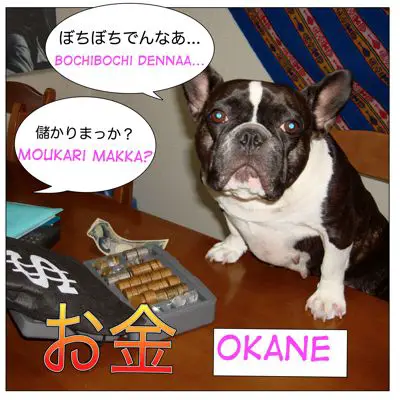
😀「儲かりまっか?」
= Moukarimakka?
= “How’s business?”
🐶「ぼちぼちでんなあ…」
=Bochibochi dennaa..
= “Just getting by..”
Today we will start with 大阪弁 ( = Osaka-ben) Osaka dialect!
Personally I love the sound of Osaka-ben. It sounds fun and friendly! It sounds very familiar because we hear it all the time on the お笑い番組 ( = Owarai terebi bangumi) TV comedy shows.
→Check my previous lesson 笑う ( = warau) to laugh
The dialogue in the picture is a typical phrase in a business scene in Osaka. Everybody in Japan knows it even if they are not from Osaka so as まいど(毎度)! ( = maido). (It literally means “every time” but it means “Hi!“) We sometimes joke around using the phrases.
「まいど!どうでっか?もうかりまっか?」
= Maido! Doudekka? Moukari makka?
⬇️
If I need to “translate” into 標準語 ( = hyoujungo) (standard Japanese) it would be like this :
「今日は!(or どうも!)調子はどうですか?商売の方はうまくいっていますか?」
= Konnichiwa! (or Doumo!) Choushi wa doudesuka? Shoubai no hou wa umaku itte imasuka?
= “Hi, how is it going? How’s business?”
:u:
•「儲かりまっか?」
= Moukarimakka?
= “How’s business?”
儲かる ( = moukaru) means to make money, to make a profit
Ex. ギャンブルで儲かる
= ganburu de moukaru
= to make lots of money gambling
~まっか?( = makka?)
Osaka dialect = ~ますか? ( = masuka?)
So the direct translation will be “Are you making lots of money?” “How is your money situation?”
→How’s business?
It is originally from a common greeting of 浪花の商人 ( = Naniwa no akindo) Osaka area’s merchants Osaka people has a reputation of being business-oriented and tight with money like bargaining here and there. I wrote in my previous lesson of 労る ( = itawaru) that Japanese people tend avoid to be too direct. So I think it is interesting that they use this straight forward question naturally.
You are supposed to answer to this question if the business is going relatively well,
•「ぼちぼちでんなあ..」
= Bochibochi dennaa?
= “Just getting by.” “So-so!”
= まあまあです。
= Maa maa desu.
or
まあなんとかやっています。
= Maa nantoka yatte imasu.
⬇️
ぼちぼち ( = bochibochi) little by little, slowly, soon
ぼちぼち帰ります。
= Bochibochi kaerimasu.
= I will get going. (Not in a hurry way.)
ぼちぼち勉強します。
= Bochibochi benkyou shimasu.
= I will study little by little.
でんなあ ( = dennaa) Osaka dialect ← ですねえ ( = desunee)
If you are not making money or not doing well, you say :
「あきまへんわ!」 Osaka dialect
= Akimahen wa
Average Japanese
= だめです。( = Damedesu) /上手くいっていません。( = Umaku itte imasen.)
= Not at all! Not doing good..
OK! Enough for Osaka dialects.
Today’s lesson is about MONEY!!
金 かね ( = kane) /きん ( = kin)
かね( = kane) for money and きん ( = kin) refers gold
(Ex. 金のネックレス ( = kin no nekkuresu) gold neckless)
We usually say お金 ( = okane) for money. If you say 金 ( = kane), it sounds blunt and not sophisticated.
1) 金が欲しい ( = Kane ga hoshii)
2) お金が欲しい ( = Okane ga hoshii) I want money.
→2) sounds more polite.
🔸 <Money related expressions!>
•お金がかかる ( = okane ga kakkaru) to cost money
Ex. 子供の教育にお金がかかる。
= Kodomo no kyouiku ni okane ga kakaru.
= A child’s education costs a lot of money.
Ex. あの家にはあり余る程、お金がある。
= Ano ie ni wa ariamaru hodo okanega aru.
= That family is loaded.
 あり余る ( = ariamaru)=more than abundant, roll in
Ex. 彼の家は金持ち/豊か/裕福だから何でも買える。
= Kare no ie wa kanemochi/yutaka/yuufuku dakara nan demo kaeru.
= His family is rich so that he can afford anything.
• 持つ ( = motsu) to hold, to have
Ex. うちの子供はお金を持たせるとすぐに使ってしまう。
= Uchi no kodomo wa okane wo motaseru to suguni tsukatte shimau.
= As soon as I give my kid money, he spends it right away.
• お金がない ( = okane ga nai) not to have money
Ex. 今月は全くお金がないです。
= Kongetsu wa mattaku okane ga nai desu.
= 今月は全くお金がありません。
= Kongetsu wa mattaku okane ga arimasen.
= I don’t have money at all this month.
• お金が足りない ( = okane ga tarinai) short of money
Ex. ちょっとお金が足りないから貸してくれる?
= Chotto okane ga tarinai kara kashite kureru?
= I am a little short (on money). Can you lend me some?
•お金に困る ( = okane ni komaru) be pinched for money
•お金を使う ( = okane wo tsukau) to spend money
•現金 ( = genkin) cash
•小銭 ( = kozeni) small change
Ex. (小銭に)崩して下さい。
= kozeni ni kuzushite kudasai.
= Could you break this?
•硬貨 ( = kouka) coin
•コイン ( = koin) coin
•5(五)円玉 ( = goen dama) 5 yen coin / 10(十)円玉 ( = juuen dama) 10 yen coin / 50(五十)円玉 ( = gojuuen dama) 50 yen coin /100(百)円玉 ( = hyakuen dama) 100 yen coin / 500(五百)円玉 ( = gohyakuen dama) 500 yen coin
Also you can call the coins as 〜円硬貨 ( = en kouka) or コイン ( = koin)
•(お)札 ( = (o)satsu) bill
千円札 ( = sen en satsu) 1000 yen bill /1万円札 ( = ichiman en satsu) 10,000 yen bill
•札束 ( = satsutaba) a wad of bills
•ピン札 ( = pinsatsu) crisp banknotes, a brand new bill without wrinkles
(We have to use ピン札 ( = pinnsatu) to use as a gift money for happy occasions.)
• はした金 ( = hashistagane) chicken feed
• 大金 ( = taikin) lots of money

Ex. 株で儲けて大金を手にする。
= Kabu de moukete taikin wo te ni suru.
= To make lots of money in the stock market.
•資金 ( = shikin) funds
Ex. その政治家は資金集めで苦労している。
= Sono seijika wa shikin atsume de kurou shiteiru.
= The politician has been suffering from fundraising.
•お金を貯める ( = okane wo tameru) to save money
あの人は相当 (or しこたま*)お金を貯めているという噂だ。
= Ano hito wa soutou (or shikotama) okane wo tamete iru toiu uwasa da.
=They say he has hoarded up money.
(Note: しこたま= shikotama = casual/slightly negative)
•貯金 ( = chokin) savings
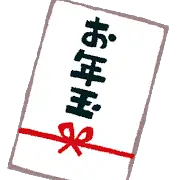

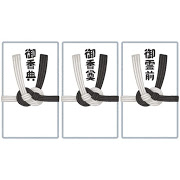
It is considered to be very rude to open up gift money in front of the person who has just given it to you. As I mentioned before it is also impolite to unwrap a gift that someone brings you as soon as you receive it in a formal situation. So if you receive it, just say thank you with appreciation and put it aside carefully.
 マギー先生より = Maggie-sensei yori = From Maggie-sensei
日本は銀行の利子がとっても低いの。
= Nihon no ginkou wa rishi ga tottemo hikuino.
= The bank interest rates are very low in Japan.
誰か私の大切な100円を400%の利率で1年預かってくれない?
= Dare ka watashi no taisetu hyakuen wo yonhyaku paasento no riritsu de ichinen azukatte kurenai ?
=Anybody wants to keep my precious 100 yen(=$1.00) for a year at 400% interest?
***
Will you be my Patron?
I appreciate your support! サポートありがとう!

16 Comments
If you are still around to answer questions…
How would you say “I think I am all paid up.” as in “I don’t think I owe any more money.” Is there a Japanese equivalent of “paid up” or “caught up”? Also, I assume (like in English), it would be different for a bank/business to tell you, “You are paid in full.”
Thanks in advance, I am having a hard time looking this one up.
Hello Christopher
Sorry for the late reply. I was on vacation.
paid up in Japanese is 支払いが済む= しはらいがすむ= shiharai ga sumu / noun form 支払済 しはらいずみ shiharaizumi
I think I am all paid up = もう支払いは済んでいると思います。= Mou shiharai wa sunde iru to omoimasu.
You are paid in full. 全額支払っています。( zengaku shiharatte imasu.) /全額支払い済みです。(Zengaku shiharaizumi desu.)
人々は忙しくなって、それは大丈夫ですです。
この素晴らしい返事をありがとうございます。
どういたしまして💕
@Maggi-sensei:
How do I say “Money can buy anything, even happiness” in Japanese?
Is there any idiom that reflects this kind of sentiment/nuance in Japanese?
@John
Hi John,
You can say “愛があればなんでも買える。幸せさえも。”
It is not an idiom but the the common phrase we have has an opposite idea.
愛でお金は買えない。= You can’t buy love with money.
Suppose I want to say please keep balance in your account how should I say in Japanese in a polite form
@Apeksha
It changes depending on the context but
口座の収支バランスを保ってください。
Maggie, thanks a lot for your lessons.
I have a question. Are 利子, 利息 and 金利 synonyms?
@Jane
Hi Jane!
They are all “interest” in English and some Japanese don’t distinguish them but to be more specific,
利子 : interest for your 預金 = bank saving、
利息 : interest for 借入金 貸付金、debt, loan、
金利 : interest rate for your loan, or saving
hehe sensei you should teach that too! sensei is so wise ne :)
what all countries have you visited? I love travelling!!!
@Aki
I love traveling,too!
I have been to Holland, Germany, UK, France, Spain, Portugal, Austria, Switzerland, Italy, the US, Purto Rico, Australia, Hong Kong.
There are so many countries I have never visited in the world…but I tend to go to the same place again and again.
wow, that’s awesome!!! out of all those any favorites? or favorite new food you got to try or something?^^
you know sensei I am not jealous that you’ve been to any of those… I am just jealous that you live in Japan !! いいな。。。>。< (笑)
先生は亀くんの近いね~!うふ^_~
@Aki
Haha, I knew you would say that! You would like to go to a country where 亀 lives!
My favorite place is Hawaii no matter what!
so 小銭 includes 5 yen 20 yen 50 yen coins??
I hate small change -.- like pennys here! they are absolutely worthless and you will probably lose them…. and yeah I know we have a saying “a penny saved is a penny earned” but still…
Maggie sensei, what do you you think of small change? めんどくさいな? :)
@Aki
小銭 includes 5 yen 20 yen 50 yen or even 100 yen coins.
Yes! I agree! It’s めんどくさい!We have a saying, 一円を笑うものは一円に泣く,too.
Actually I am very good at getting rid of all the coins when I go traveling abroad, though… It is like a game for me.