
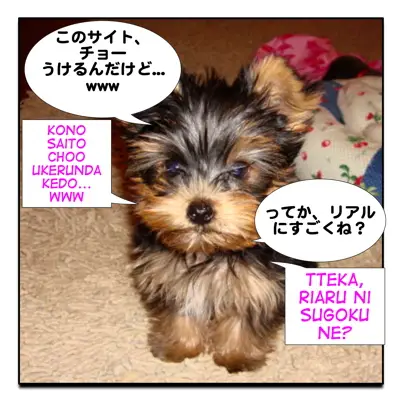
Cookie: 「このサイト、チョーうけるんだけど…www」
= Kono saito choo ukerun dake do..wwww
I love this site. It’s hilarious.… LOL!
「ってか、リアルにすごくね?」
= Teka, riaru ni sugoku ne?
I mean isn’t it awesome?
Today’s topics is about so-called 若者言葉 ( = wakamono kotoba), Japanese language used by young people.
I have already taught you some of these types of expressions:
*タメ口 ( = Tame guchi)+ ヤバい( = yabai) lesson
 ヤバイ ( = yabai)、マジ ( = maji), ~っす ( = ~ssu))
*ちょっと + 曖昧表現 lesson ( = Chotto+Aimai Expression) (the last part)
〜的 ( = ~teki)、〜感じ ( =~kanji)、なんか ( = nanka)、〜かも ( = 〜kamo)、っていうか〜 ( = teikuka〜) etc.)
* 微妙 ( = bimyou)
*ハンぱない( =hanpanai)
*ドン引き ( = Donbiki)
etc.
Also in my Mini Lessons I have posted a few.
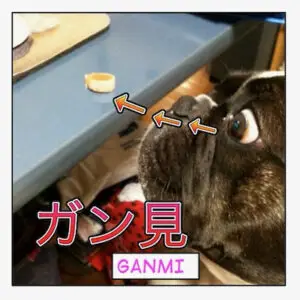
⭐️ ガン見 ( = ganmi) to stare at something
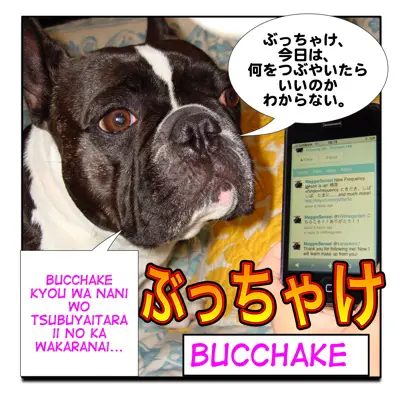
⭐️ ぶっちゃけ ( = Bucchake) To be frank, Frankly speaking, To be honest
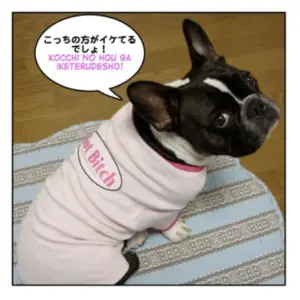
⭐️ いけてる ( = iketeru) cool, good, nice, delicious
⭐️ ねむっ ( = nemu) sleepy
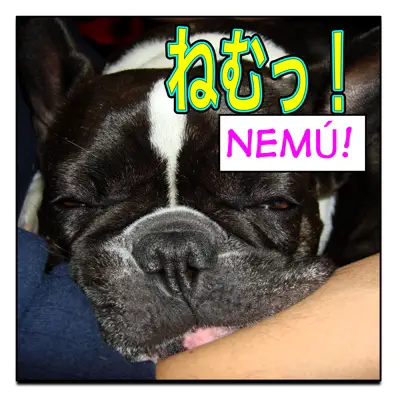
Recently it’s trendy to finish words with “っ” ( = tsu)
* 眠い = ねむい ( = nemui) sleepy →ねむっ! ( = Nemú)
* 暑い/熱い = あつい ( = atsui ) hot =あつっ!( = Atsú)
* うまい ( = umai) delicious =うまっ!( = Umá) ….continue..
⭐️ ガチで..( = gachi de)
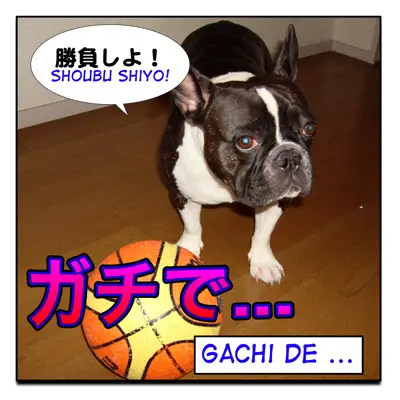
ガチで ( = Gachi de) : ガチ( = gachi) is an abbreviation form of ガチンコ ( = Gachinko) It means 本気で ( = honki de) / 真剣に ( = shinken ni) / マジに ( = maji ni) : (to do something) seriously / to get real/for real/ playing something for keeps….continue..
Some of the slangy expressions especially the one with different grammar patterns confuse you because you have been learning “proper” Japanese. Unfortunately text books and human teachers at Japanese school tend to avoid teaching slang.
But actually you see or hear these all the time in daily conversation or on TV.
In my opinion, if you are comfortable, go ahead and start adopting them but if you only use slang, people might think you are 軽い ( = karui) shallow. waa
Still it is fun to learn slangy expressions and you will understand young people’s “street talk” much better.
Many of this type of slang words will disappear eventually. For example, we used to say KY for 空気読めない ( = kuuki yomenai) can’t read between the lines, but we don’t hear it so often now.
So I would like to teach you some of the slang patterns today. These are just a few part of them and I will keep adding more in later lessons. Ready?
1) Young people tend to shrink words and phrases.
•ありがとうございます。( = arigatou gozaimasu.) Thank you very much →あざっす! ( = azassu!)
Even in the old days we had these kind of abbreviations.
•おっす! ( = Ossu) Hey! , Hi! is originally from ←おはようございます。 ( = Ohayou gozaimasu.) Good morning.
•ちわっ! ( = Chiwa!) Hello! ←こんにちは! ( = Konnichiwa)
2) Young people like to coin words combining two different words,
*エロい ( = eroi) sexy + かっこいい ( = kakkoii) =エロかっこいい ( = erokakkoii) sexy and cool
Combining two different qualities:
*きもい ( = kimoi) creepy, nerdy + かわいい ( = Kawaii) cute =キモかわいい ( = Kimokawaii) creepy but cute in a way.
Note : A duo comedians, アンガールズ ( = Angaaruzu), are called キモかわいい ( = kimokawaii) or キモかわ ( = kimo kawa)
*不細工/ぶさいく ( = busaiku) ugly + かわいい ( = kawaii) cute →ブサかわいい ( = busakawaii) /ブサかわ ( = Busakawa) ugly but cute in a way.
Many people called me this. Ehen! :mad:
*安い ( = yasui) cheep + かわいい ( = kawaii) cute →安カワ ( = yasu kawa) cheap and cute fashion
3) Young people like to finish sentences with っす( = ssu) instead of です。( = desu) or ます。( = masu)
Ex. そうですね。( = Soudesu ne.)→そうっすね。( = Soussune)
Ex. 違います。( = Chigai masu.)→違うっす。( = Chigaussu)
Ex. 美味しいです。( = Oishii desu.)→美味しいっす。( = Oishiissu)
4) In standard Japanese you never finish sentences with the following expressions, but young people do it all the time.
*~かも ( = ~kamo) I think…, It seems like
*~みたいな ( =~mitaina) Something like ~
*~から( = kara) I said~
Ex. 無理だから!
( = Murida kara!)
I said it is impossible!
*〜ないし!(=nai shi) emphasize
Ex. 私、やってないし!
( = Watashi yatte nai shi!)
I said I didn’t do it.
(→ Variation : やってねぇし!
( = Yatte neeshi!)
rough expression / usually for men
Ex. そんなこと聞いてないねぇ し!
( = Sonna koto kiite neeshi!)
I didn’t hear about that at all! )
5) Young people like to start a sentence with “っ” ( = tsu)
•ってか ( = tteka) I mean, actually
•つ〜か ( = tsuuka) I mean, actually
Note : 4) & 5) Please go to the Aimai lessons to know the details
6) You may hear young people stretch the ending of a word with “ー”, “〜“or vowels (あ,ぁ(a),い,ぃ,(i)う,う,(u)え,ぇ,(e)お,ぉ(o)) adds more emotion in a cute way.
•あついよー!/あついよお〜 ( = Atsuiyoo) /あついよぉ〜 ( = Atsuiiyoo) It’s hoooot! (Talking to you or others.)
•あついなー!/あついなあ〜 ( = Atsuinaa) / あついなぁ〜 ( = Atsuinaa) It’s hooot! (Talking to yourself.)
•これほしいよー!/よお〜/よぉ〜!
( = Kore hoshiiyoo)
I want this badly!!
•すごぉーぃ!
( = Sugooi)
Woow! That’s great! (for girls)
•キタ〜〜〜〜!/きたああ〜〜!
( = Kitaaaaaaa!)
Here we gooooo! /Here he coooomes!
(When something you are expecting is coming.)
7)Young people sometimes change the end of words or omit a part of a word.
•きもちわるい ( = kimochi warui)
→きもい ( = kimoi) → きめ〜 ( = kimee)* Creepy!
•かっこいい ( = Kakkoii)
→かっけ〜! /カッケ〜!* ( = Kakkee) Cool!
•正直に言うと ( = Shoujiki ni iuto)
→正直 ( = shoujiki) To be honest,
•すごい ( = sugoi)
→すげ〜!/スゲ〜!* ( = Sugee) Great!, Wow!, Awesome!
•本当?( = Hontou?)→ほんと?/ホント? ( = Honto?) Really?
•ふざけるなよ! ( = Fuzakeru nayo!)
→ざけんなよ!* ( = Zakennayo) Stop kidding me! Don’t fool around! Cut it out!
Note : Women don’t use the one with this * mark very much because it sounds too rough.
8) Adding small “つ“(=tsu) in the middle of a word emphasizes the meaning.
•めちゃくちゃ ( = mehakucha)→めっちゃめちゃ ( = mecchakucha) a great deal
Ex. めっちゃくちゃ美味しい!
( = Mecchakucha oishii)
It’s super delicious!
9) Adding 超 ( = chou) 激 ( = geki) before a word emphasizes its meaning.
Nobody says チョベリグ ( = Choberigu), 超ベリーグッド(=Super+very good) anymore, but we still use 超 / チョー/ チョ〜( = chou) to emphasize something.
超ヤバい ( = chou yabai) Something tremendously good, delicious, bad, or risky.
We also say 激 ( = geki) instead of 超(=chou)
激 (or 劇)ウマ! ( = geki uma!) Really delicious
(←some uses kanji 劇 ( = geki ) from 劇的に (= gekiteki ) dramatically delicious)
めっちゃ ( = Meccha) is mainly used in Kansai area. It sounds kind of cute.
Ex.めっちゃ好き! ( = Meccha suki!) I love it!
From the picture above:
「このサイト、チョーうけるんだけど…www」
( = Kono saito choo ukerun dake do..wwww)
I love this site. It’s hilarious.… LOL!
•受ける/うける/ウケる ( = ukeru) hilarious, funny, to get a kick out of something.
•w means 笑い ( = warai) which means Haha…. or LOL! The more “w”s you have, the more you are laughing.
(Just written form.)
「ってか、リアルにすごくね?」
(=Teka, riaru ni sugoku ne?)
I mean isn’t it awesome?
•リアルに ( = riaru ni) really It is from “real”
リアル ( = riaru) + noun : authentic something/someone
「リアル〜!!」 ( = riaruu) This is too realistic. It is authentic.
リア充 ( = riajuu) blog word
←リアル生活が充実している
( = Riaru ni seikatsu ga juujitu shiteiru)
to have a fulfilling real life.
•~ね? ( = ~ne?) Ending the phrase with ね? ( = ~ne?) Mainly for boys.
Ex.すごくない? ( = Sugoku nai?)
→すごくね? ( = Sugoku ne?)
Ex. 食べたくない? ( = Tabetaku nai?)
→食べたくね? ( = Tabetaku ne?)
OK, that’s enough. I will keep adding 若者言葉 ( = Wakamono kotoba)here or in other lessons. But I think you actually need to hear how they talk. !HI!
***************
I found a good example of “natural” 若者言葉 ( = Wakamono kotoba) in a video clip.
When you go to a movie theater, you will see previews, commercial and stuff. This is a short and fun movie clip made by the movie company TOHO. This clip is often shown right before the main feature starts. There are different versions and they are all very popular now.
Since I am not sure how long they will be up on Youtube, please watch the video clip ASAP and check the following lesson.
If they take down the video, I may delete this lesson! So study it right now!!
They won’t make you burst into laughter, but will make you giggle くすっ!( = kusu) because it has ゆるゆる感 ( = yuruyuru kan) loose and relaxing feeling.
Note : You may hear ゆるい ( = yurui) loose, relaxing, laid back. often somewhere. It is one of trendy words as well.
ゆるキャラ ( = yuru kyara) A local humorous mascot which represents each area to promote the area.
ゆるい ( = yurui) loose, relaxing, laid back + キャラ ( = kyara) character = ゆるキャラ ( = yuru kyara)
Ex. せんとくん ( = Sentokun) is ゆるキャラ ( = yuru kyara) of 奈良 ( = Nara)
:u:
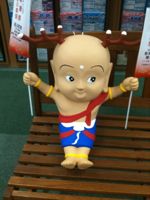
Now before we see the video clip, let me introduce the two main characters in the clip. They are made out of paper so one of them is called 紙ウサギロペ ( = Kami Usagi Rope) Paper Rabbit Rope and the other one is called 紙リスアキラ ( = Kami Risu Akira)Paper Squirrel Akira
Since アキラ ( = Akira) is older than ロペ ( = Rope) he is called 先輩 ( = senpai) senior. It is unclear whether they used to go to the same school or work in the same company.
Pay attention to their dialogue because Paper Rabbit always uses politer Japanese.
However, they use 若者言葉 ( = wakamono kotoba) young people’s Japanese.
As you just learned, young people tend to finish a sentence っす ( = ~ssu) instead of saying です(= desu).
ロペ(=Rope) always finish the sentence with っす ( = ssu), and that is his way of showing respect towards Akira.
Also as I mentioned in my 笑う ( = Warau) lesson, the typical comedian pattern in Japan is ボケとツッコミ ( = Boke to tsukkomi). The funny one and the straight man.
Akira is ボケ( = boke) and Kami usagi is ツッコミ ( = tsukkomi). Can you tell?
The dialogue is very colloquial that is why it is so natural that you may hear in real conversations among young people.
They don’t talk clearly so I may not get the whole part right but here we go!
*紙ウサギ ロペ ( = Kami Usagi Rope):R
*紙リス アキラ先輩 ( = Kami Risu Akira senpai):A
*****************************
「海」( = Umi) at the beach
R:「あっらららららら〜」
( = Arra rarararara…)
Oh my…
A:「あっやばいねえ。」
( = A yabainee.)
This is bad..
R:「やばいっすね。」
( = Yabaissune)
Yeah, this is bad…
A:「めっさ(1)いるね。」
( = Messa(1) iru ne)
There are lots…
R:「めっさいますね。」
( = Messa imasu ne.)
Yeah, there are lots…
A:「あ〜そういやなんかテレビで言ってたわ。」
( = Aa souiya nanka terebi de itte ta wa)
Now I just remembered, I heard on TV that…
R:「はい」
( = Hai) Yes,…
A:「あ〜あの夏の終わりかけの時にぃ」
( = Aa natsu no owarikake no toki nii)
In the end of summer,…
R:「はい」
( = Hai)
Yes
A:「海行くとぉ」
( = Umi iku too)
When you go to the beach.
K:「はい」
( = Hai)
Yes
A:「なんかサメが大量発生してるから気をつけろ的(2)なことを」
( = Nanka same ga tairyou hassei shiteru kara ki wo tsukero teki (2)na koto wo)
They said something like we have to be careful because there is a swarm of sharks.
R:「それってクラゲじゃなかったっすか?」
( = Sorette kurage ja nakatta ssu ka?)
Wasn’t it jelly fish?
A:「あっそっか!」
( = A sokka)
Oh I see…
K:「はい」
( = Hai)
Yes,
A:「どうする?」
( = Dousuru?)
So what are we going to do?
K:「えっ!? 」
( = Eh!?)
What?
R:「いやいやどうするって全然 (3)無理じゃないっすかこんな… 」
( = Iyaiya, dousurtte zenzen(3) muri ja naissuka konna)
No, no, no… what do you mean by what we are going to do? It is totally impossible, you see this, right?
A:「(ちょーちょー、ちょ〜待て!)サメだよ!」
( = Cho cho cho mate!) ( = Same dayo!)
Wait, wait… it is a shark we are talking about!
R:「はい(=Hai) Yes.
A:「サメは肉食だべ(4)!」
( = Same wa nikushoku dabe(4)!)
Sharks are carnivorous, right?
R:「はい」
( = Hai)
Yes.
A:「俺らは?」(=Orera wa?)
And you know what we are?
R:「えっ?」
( = Eh?)
What?
K:「紙っすねえ」
( = Kamssu nee)
We are made out of paper, right…
A「おう (5)」
( = Ou!(5))
See?
R:「あ、そっか、」
( = A sokka)
Oh, I see!
A:「だべ?(4) 」
( = Dabe(4)?)
Right?
R:「ああそうじゃないっすか」
( = Aa souja nai ssu ka!)
Oh, now I get it.
R:「ああ、何、じゃあ全然大丈夫じゃないっすか。」
( = Aa nan jaa zenzen daijoubu ja nai ssu ka)
Then what? We are totally fine, aren’t we!
R:「でも、もし」
(=Demo moshi)
But what if…
R:「はい 」
(=Hai)
Yes,
A:「あいつらが肉だけじゃなくてぇ、ねっ」
(= Aitsura ga nikudake ja nakutee ne)
What if they don’t just… you know…go for meat…
R:「はい 」 (=Hai) Yes,…
A:「動いているものならとりあえず何でも食うしっ…みたいな(6)…ことだったらぁ」
(=Ugoite iru mono nara toriaezu nandemo kuushi mitaina(6) kotodattaraa)
What if they eat anything that moves….
R:「全然アウト(7)っすね。」
( = Zenzen auto (7) ssu ne.)
We are totally eaten…
A:「だべ?」
( = Dabe?)
Right?
A:「よしっ!終了!」
( = Yoshi! Shuuryou!)
OK, let’s call it!
K:「そうっすね」
( = Soussune)
I agree!
A:「取り合えず… 」
( = Toriaezu)
Just for now…
R:「はい 」
( = Hai)
Yes,
A:「ジョーズシリーズを全部借りて〜研究しようぜ!うん。」
( = Jouzu siriizu wo zenbu karitee kenkyuu shiyouze, un!)
Why don’t we rent out Jaws and the sequels and study up (about sharks) !
R:「えっ?映画館どうするんっすか?(8) 」
( = E? Eigakan dousurunnsuka?(8))
What? What about movie theater?
A:「あっそっか!」( = A sokka!)
Oh, I see,
A:「ジョーズ…ジョーズやってる映画館って… 」
( = Jouzu…jouzu yatteru eigakan tte..)
Jaws… the movie theater that shows Jaws is…
R:「ないっすね!」( = Naissu ne)
There isn’t any!
R:「あるわけない(9)じゃないっすか!」
( = Aruwake nai (9)ja nai ssuka!)
There is no way to find a theater like that!
A:「そっか!」( = Sokka!)
You are right!
Note :
(1) めっさ ( = messa) is a slang meaning “a lot“
It is from めちゃめちゃいる ( = mechamecha iru.) There are a lot of them. The kanji of めちゃ( = mecha) is 滅茶 ( = mecha) and the kanji for 茶 ( = cha) is also be read asさ “sa”.→めさ ( = mesa)→めっさ/メッサ ( = messa)
(2)的な ( = tekina)
I explained 的には ( = tekiniwa) in my ちょっと+曖昧表現( = Chotto & aimai hyougen) lesson before.
的な ( =tekina) is another vague expression and it means “something like“
(3) 全然 ( = zennzen) totally
It means “not at all” and we usually use it with negative word.
•全然だめ。( = Zenzen dame) It is not good at all.
•全然寝ていません。( = Zenzen nete imasen.) I didn’t sleep at all.
But young people combine this word with something positive.
•全然いいね! ( = Zenzen iine) It’s really good!
•全然美味しい!( = Zenzen oishii!) It is so delicious.
(4)だべ ( = dabe)
It is originally from a dialect. They say だべ ( = dabe) instead of です ( = desu) or でしょう? ( = deshou?) そうです ( = soudesu) そうだべ ( = soudabe) Yes, it is.
そうでしょう?( = soudeshou?) そうだべ? ( = soudabe?) Isn’t it right?
Since it sounds very humorous, some people use it in a daily conversation. I hear SMAP member, 中居君 ( = Nakai-kun) sometimes uses this.
(5) おう ( = ou) is usually for rough men.
It is rough so women should avoid using it.
(6) みたいな ( = mitaina) something like… Another vague expression.
Also check in my ちょっと + 曖昧表現( = Chotto & aimai hyougen) lesson.
(7)アウト( = auto) to be in trouble, to be sucked
(8) He said that because this clip is for promoting a movie theater!
(9) 〜わけない ( = wakenai) There is no way to ~
Ex.マギーが私のこと好きなわけない。
( = Maggie wa watashi no koto sukina wake nai.)
There is no way that Maggie likes me.
If you have learned enough 若者言葉 ( = Wakamono kotoba) try to watch the different version of Paper Rabbit! There are tons of them! like 「まじっすか?」( = Majissuka?), Really?,No kidding!
 マギー先生より( = Maggie Sensei yori) From Maggie Sensei
私ももう4歳だから若者言葉にはついていけないわ。
( = Watashi mo mou yonsai dakara wakamono kotoba ni wa tsuite ikenaiwa.)
I am already 4 years old. I can’t catch up with young people’s language..
57 Comments
Sensei, What Does The “Go” Stand For In These Words?
“Go-Meiwaku”
“Go-Kakete”
“Go-Renraku”.
That’s an honorific expression.
You add it in front of some word and make it sound polite. The kanji is 御 (ご/ お/おん = go / o / on) It has three ways of reading. (You can just write in hiragana as well.)
meiwaku → (polite) gomeiwaku
kake te → It is hard to tell by romaji but is it right after “gomeiwaku”? If so it should be “o kakeshite”
renraku →(polite) gorenraku
Check my keigo lesson.
Arigatou Gozaimasu, Too Understood Sensei. But I Got One More Question Please:
I Noticed In A Some Dictionnary A Word “Sama” In The End Of A Defined Term.
Ex: (…Ni Natte Iru Sama)
What’s That Word Sensei?
~verb + 様(さま)sama = 様子(ようす)yousu = (to describe) the way S is ~ (or does ~)
Sou Desu Ka, Mata Arigatou Gozaimasu Sensei. Kansha Shitemasu.
_Jitsuwa, Watashi No Nihongo Ha Yoku Natta Sou Deshite, Saikou No Sensei To Iu Anata No Tetsudai Ha Tottemo Yaku Ni Tatta N Desu. Ichiban Saito Ni Kimattemasu.
<3
どういたしまして!
うれしいメッセージありがとう! これからもにほんご、たのしくつづけてくださいね。
= You’re very welcome! Thank you for your nice message. I hope you keep studying Japanese with fun!
Hai Yes I Do! Our Most Japanese Helpful Sensei!!
*-* <3
nice teaching Maggie-Sensei it helps me a lot. if you can would you like to add on how to use Kunyomi and Onyomi reading? sometime it is still confusing :-D
@Vigo
Hello Vigo, Thank you for visiting this site.
There are so many kanji so I can’t teach you all of them here but
Kanji has kun-reading and on-reading.
For example
kanji 読
kun reading よ(む)= yo (mu)
on reading どく = doku
* Kun reading is used individually with hiragana.
to read 読む = yomu
*But if it is combined with other kanji, we tend to use on-reading.
読書=dokusho= reading a book
okay thanks for the explanation. does this rules apply for Name too since name of Japanese people uses kanji i mean do their name only uses Onyomi reading (unless stated by the person him or herself of course) :-D
@Vigo
You use both on-reading and kun-reading for names.
Ex. 守=mamoru (boy’s name/kunreading)
Ex. 清美=kyomi (清=kiyo is kun-reading and 美 is on-reading)
But we sometimes use completely different way of reading for names as well. Check my latest lesson. 名前
thanks for the instructions Maggie-Sensei :-D
Hai Yes I Do! Our Most Japanese Helpful Sensei!!
*-* <3
You are way too nice! 💕
先生、色々有難うございました。
@ageng
どういたしまして! :)
先生、若者言葉、外来語、流行語はどんな違いますか。
@ageng
こんにちは、ageng!
流行語の中に若者言葉が入ります。
☆流行語 : Buzz words, trendy words
★若者言葉 : buzz words which are used among young people
流行語 is not always used by young people. It could be a word or a quote from news, politicians, athletes, comedians,celebrities, etc.
外来語 means Japanese words which originally came from foreign language* terms (*Mainly from Western language.)
そうですか、つまり若者言葉は絶対に流行語ですか。
先生!また質問します、SLANG語はどんな語ですか。若者言葉と同じ意味ですか。
@ageng
日本語で答えた方がいいかな?
大まかに分類するとそうなりますが、厳密に言うと”若者が使う言葉”という意味でもあるので若者言葉の全てが”流行”しているわけではありません。
スラングは英語から来た言葉ですが、こちらも若者言葉と同じ言葉として扱うこともありますが、ネットスラングとか一定のグループの中で使われている新語、俗語などのことを言います。
先生、返事は遅れてすみませんでした。
やはり若者言葉は特殊の語ですね。先生、若者言葉はいつも変わりますか。若者言葉オンライン事典がありますか。
Nb:sensei iam sorry for my bad japanese
@ageng
日本のGoogleで”若者言葉”を検索するといっぱい出てくると思いますよ。
Can i ask you something? I’ve watched an anime and there was a character who always said something which sounded like ‘majitsuka/ga’ but in her context (I watched with subtitles–such a shame -.-)
it was used like: that’s so weird, so grazy something in this direction.
Is this right? I mean common and right how I understood if yes would it be written with Kata/Hiragana or Kanji? I know majitsuka has also another meaning but i forgot..
And can you tell me what:
I’m (so) bored!
Thats’s so weird/stupid!
Are you kidding me?!
It’s georgious!
You are georgious!
That’s so much fun!
He/She is so much fun!
He/She is so kind.
would be in japanese?
Haha, that’s just some things which popped in my mind where I though I could need it somewhere..
Maybe you know the anime ‘date a live’ there are always 3 girls as nextcharacters and one of them says this always.. it’s the only sentence she says, if she sees something confusing/grazy/weird.
@Cho
What you have heard must be
まじっすか?= Majissuka? (slang but politer than まじか)
or
まじか?= Majika? (slang/ more rough than まじっすか)
They mean “Are you serious?””No way!” “I can’t believe it”
So it could be “That’s strange (I can’t believe it!)”
OK these are a few ways to say the following sentences but I will give you the casual ones.
I’m (so) bored! = 退屈!= taikutsu
That’s so weird/stupid! = それは変だね= sore wa hen dane
Are you kidding me?! = うそ!= uso! / 本当に? Hontou ni?
It’s gorgeous! = すてき! (=suteki) note : this sounds a bit feminine.
You are georgious! = あなたは(or the person’s name) すてきだね。 *Be careful when you address someone あなた
That’s so much fun! = それは楽しい!= sore wa tanoshii
He/She is so much fun! = 彼/彼女はとても楽しい= Kare/kanojo wa totemo tanoshii
He/She is so kind. = 彼/彼女はとても優しい (or 親切だ) = Kare/kanojo wa totemo yasashii (or shinsetsu da)
about ぶっちゃけ, can you use it as a noun i.e 「彼女のぶっちゃけで凄くびっくりした」?
ありがとうございます。
@Sherddr
Hello Sherddr!
You can’t not use ぶっちゃけ as a noun but you can say 彼女のぶっちゃけ話、すごくびっくりした。
That’s a wonderful blog!! Thanks a lot!!!
I’m just wondering about a phrase Cygnus used: 「見逃してほしけりゃ」
What does ほしけりゃ mean and when is it used?
Sorry, just found the lecture about りゃ(あ)&じゃ(あ)
so 欲しけりゃ comes from 欲しければ and means something like “if you want”?
たとえば: 旅行して欲しけりゃ夏休みにイタリアへ行かない?
@hanako
Good! you found the answer from my りゃ(あ)lesson.
欲しければ or 欲しけりゃ means “If you want me to do something”
旅行して欲しけりゃ夏休みにイタリアへ行かない?→(correction) You mean “If you want to go traveling, why don’t you go to Italy”? Then it will be
旅行したけりゃ夏休みにイタリアに行けば?
If you are asking this person to go to Italy with, you can say
旅行したけりゃ夏休みにイタリアに一緒に行かない?
Does うれしっ make sense for “I am happy”? I don’t know why, to me it sounds kind of strange! Heh
@Ichigobanana
You say うれしっ! when you are happy so “I am happy!” is fine but it is more like “Yay!” in English.
I’m watching Manaberu News now and one of the guests answers the question of the audience. Then Ikegami says じゃあ、もうここからは士田さんにお願いしましょうか。 And he says 分かりました, as if he would take over from that time and be the new show host. Ikegami then says ノリがいいですね.
How would u translate that ノリがいいですね? What does he mean by that? That he has a good sense of humor?
@Cygus
Ah, that ノリがいい is used to describe a person who can play along picking up the joyful mood. It is one of the words on the list for my future lesson.
ahh tanoshikatta^_^ will try and check out the aimai lesson tomorrow^^
toka shinjiki maggie wa kawaii da yo!!! there’s NOTHING busaiku about you :) mou ichido-ARIGATOU SENSEI <3
ganbare ne!
@Aki
Glad to hear you enjoyed it.
It is important to have fun when you learn languages. I am busa-kawaii♥
Hello, Maggie!
このすごく役に立つウェブサイトはユーチューブのビデオを通して見つかったばかりなんだ。日本語の口語や俗語に興味津々、さっそく全部を読んでみたいと思う。今GTOの漫画を読んでるけど、時々あまり分からない(汗)「見逃してほしけりゃ」とか。この漫画の場合は、チンピラの表現がよく使われていると思う。
あと、「劇うま」の劇について質問があります。ゲキの漢字は「激」じゃないですか。
お疲れ様です!
@Cygunus
Welcome to Maggie’s site and thank you so much for your comment. Some people write 劇ウマ (meaning 劇的に=gekiteki ni = dramatically delicious) instead of 激.
But you are right. 激 is more common so I have changed it. Thank you!
GTO!!! なつかしい!また来てね。
Thank you much, sensei^^
Yes, sensei^^ It seems like they talk a lot more in the current clip^^
@Top
OK, I will make another lesson using a new clip sometime. :maggie-small:
Would you mind including some of their interesting expressions sometimes in the future? I think they’re funny and very interesting^^
@Top
You mean expressions from Kamiusagi’s other video clip?
Without your explanation of the clip, I wouldn’t be able to understand what they’re saying. Even the new uploaded clip, I still have a hard time understanding.
@Top
The way they talk is very natural. They don’t talk clearly with full of colloquial expressions so I bet many of older Japanese people wouldn’t understand them either. However this series is very popular and many people go to the theater looking forward to seeing the clip.
せんせい!
I have a question about the word 友達!
友はfriendです、達は more than one personです. だから、友達はfriends?なんが、彼は私の友達ですで言うが?
それから、わたし達や生徒達や、たちで読みます。友達がともたちじゃない、ともだちで読みますなんですが??
Just in case you don’t understand me… 友達 should mean friends, right? why I read something like he’s friends in Japanese(彼は私の友達です)? Isn’t that wrong? Why is 友達 tomodachi when all the other words are written as tachi with same kanji?
To answer your previous question, I don’t have a favourite snack, all snacks are good:] I am sure Maggie will agree!
@Tiffany
You are right! We use 達=tachi for plural. 君達、私達、若者達…etc.
友達 originally meant “friends”, a plural form, long time ago and but it has lost the meaning as plural friends and we use it for both singular or plural friends in modern Japanese.
We occasionally hear 友達たち=tomodachi tachi as a plural form but it is not that common yet.
So if we hear,
彼らは私の友達です。 (They are my friends. )
We know there are more than one friend because of the subject, 彼ら=they.
But if we hear,
明日友達が来ます。
we have no idea how many friends this person would bring.
So you’d better say,
明日、”2、3人”友達が来ます。→a couple of friends
or
明日、”たくさん”友達が来ます。→many friends
Great question, Tiffany. I have never thought about this but it is confusing, huh?
Please wait for the previous question. There are lots of guest teachers but I do remember. :D
sumimasen..
hanpanai/hanpanee wa, nanno kotoba kara naritate imasuka?? soshite donna toki shiyou suru ka??
arigatou….
@krisna
It is originally from 中途半端ではない=chuuto hanpa de wa nai/半端ではない=hanpa dewa nai
“Hanpanai” no lesson de kuwashiku setsumei shitearu node mazu check shitene. Sokoni nannno koto ba kara kitta kotoba ka setsumei shitearimasu. (Click here→ハンパないレッスン)
Kono lesson wo mita ato ni mada shitsumon ga attara itsudemo kiite kudasaine.
Arigatou :maggie-small:
Maggie先生 ちわっ!
又久しぶりっす!
私Slangを使うとやっぱりなんかきまりが悪いです…
(I feel kinda awkward ?)
とにかく、いいレッスンでした。 有り難う =)
@LadySapphire-san
ほんと、久しぶり!!元気でしたか?
うまく若者言葉使ってるし〜!そうですね。使う日本語は自分のスタイルに合わせて選んでみて下さいね。
Arigatou Maggie-sensei :)
I thought that might be the case. I was confused by the phrase – ‘to be sucked’, which suggests something else entirely. It’s probably better to say ‘to be in a situation that sucked’
@Leee
Yes, in this case ‘to be in a situation that sucked’ would work!
@Leee
Hi,Leee! アウト=ダメ=ヤバイ
In this case, the situation that they might be eaten by sharks sucks. Also physically they will be in trouble, so it is アウト!
We usually use it when there is no way to escape from the trouble or situation.
Also アウト can be used as “out of question”
I’m wondering about:
(7)アウト(=auto) to be in trouble, to be sucked
When you say ‘to be sucked’ is that like as in “this situation sucks” or the physical action?
And thanks for this lesson. It’s a treasure trove :)
正確すぎ吹いたw
私ってこーゆーサイト、好きじゃないですか~みたな~ww
とりま、リア充はもうblog wordじゃなくて実生活でも多くの人が使ってるみたいな~つーかリア充爆発しろ!
@Nobody
ってか、若者言葉リアルにうまいんだけど…