
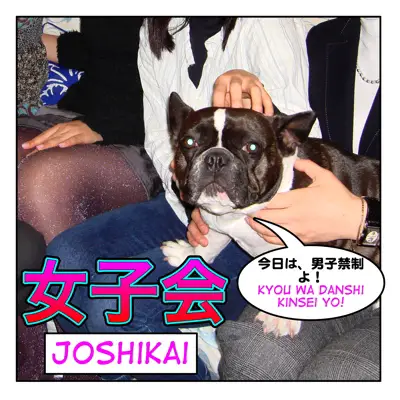
「今日は、男子禁制よ!」
= Kyou wa danshi kinsei yo!
= No men admitted today!
Today’s lesson is for girls!
First the focus word for today is 女子会 ( = joshikai) . It was nominated for one of 新 語、流行語大賞 ( = shingo, ryuukougo taishou), award for the new and popular key word of the year 2010.
女子会
 女子 = joshi = girls, women
会 = kai = gathering
It means women’s gathering/women’s get-together.
While 飲み会 ( = nomikai ) drinking party and 合コン ( = goukon ) group dating gathering involve men, 女子会 ( = joshikai ) is just for women. (Their age is around 20s ~ 40s)
We, women love going out, eating, chatting and just enjoying one another’s company — you know, girl-talk! This kind of gathering is nothing new but we started to hear this word a couple of years ago.
A lot of restaurants, hotels, or travel agents have been targeting women’s groups with their original
•女子会プラン
= joshikai puran
= special plans for women’s gathring,
•女子会メニュー
= joshikai menyuu
= special menu for women’s gathering.
What do we talk about in 女子会 ( = joshikai) ? All sorts of chitchat to serious 恋バナ ( = koibana) (slang) romantic stories.
We enjoy sharing stories about our daily life, our romances, our work life, friends, traveling, hobbies — just about anything!
We just keep talking on and on and it seems like we never run out of the topics!
📝 Culture Note:
There have been special deals just for women in many places in Japan.
For example, there are special lady’s days called レディースデー ( = rediisu dei ) Lady’s day.
Women can get a special discount on certain days at movie theaters (normally a movie ticket costs 1,800 yen but on Lady’s Day women can get in for only 1,000 yen. This is offered about once a month), special menu at restaurants, bars or special service at hotels (Ex. Women-only floor where they can get special hotel amenities, special food menus or spa services ,etc. )
There are also special seats set aside exclusively for women in some movie theaters, Pachinko (commonly referred to as “Japanese pinball” in English) parlors and there are even 女性優先(専用)車両 ( = Josei yuusen (sen’you) sharyou ) train cars just for women on subways during rush hour to protect them from 痴漢 ( = chikan) perverts.
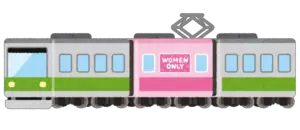
Note : 痴漢 ( = chikan ) pervert :
Do you think this is sexist? How about in your countries? Do you have any special service just for women?
***************************
Today I will give you special レディースサービス ( = rediisu saabisu ) service for women.
I made sound files of all the example sentences for you! :)
(Note : Most of my example sentences below are very casual yet very natural as usual. Which means many of them don’t follow the strict grammatical rules, skipping particles, using casual suffixes, etc. )
****************
From the picture :
Maggie says,
「今日は男子禁制よ!」
= Kyou wa danshi kinsei yo!
= No men admitted today!
• 男子 ( = danshi) men, boys
• 禁制 ( = kinsei) banned, forbidden, prohibited
(Note : You might know the word 禁止 ( = kinshi ) prohibited, ban.
禁止 ( = kinshi ) is a more common word and it is usually used when you prohibit certain actions.
Ex. 駐車禁止
= chuusha kinshi
= No parking
禁制 ( = kinsei) is used when something is restricted or taboo.
If it is no women admitted, we say, 女人禁制 ( = nyonin kinsei)
Now, she say〜よ!( = ~ yo!) at the end of the sentence. This is a “female speech”.
A while ago, I have a request to make a lesson on female speech from Cate-san. :h:
As many of you know, women speech is different from that of men.
Generally speaking female speech is more polite and softer while male speech is rough and blunt.
It is true that some girls talk like boys — using rough Japanese or calling themselves 僕 ( = boku) , and young men have become more 草食系男子 = soushoukei danshi and showed their feminine side and Japanese has become a sort of “neutral” these days, still there is a specific difference between female speech and male speech.
If a man uses female speech, he sounds very effeminate, and if a woman uses male speech, she sounds very rough.
I have met a man whose Japanese was fluent but he talked like a woman because he learned Japanese from his Japanese girlfriend. So be careful! Once you’ve acquired one speech pattern, it may be hard to get rid of it.
So let’s learn some basic female speech suffixes and words today. And if you’re a man? Don’t worry. I’ll include some male speech too, so you will still learn something.
First of all, some Japanese expressions are unisex which means it is possible for either men or women to use them. Some of the expressions in female speech are childish and you’ll hear children using the same patterns.
I will mark
male speech with (*M)
female speech with (*F)
And if the expression is neutral, I’ll use:
(Both *M + *F) .
A lot of expressions in this lesson may sound extremely feminine and are typically heard or seen only in comic books, anime, or TV dramas. These expressions are often used to represent typical female roles and add character and depth in fictional settings but may not be commonly used in everyday conversation.
1) 〜よ = ~ yo
There is the neutral 〜よ ( = ~yo) suffix that can be used for both genders.
When you suggest something,
Ex. 一緒にランチしようよ!(Both *M + *F)
= Issho ni ranchi shiyouyo!
= Let’s have lunch together.
Ex.日本語の勉強しようよ!(Both *M + *F)
= Nihongo no benkyou shiyouyo!
= Why don’t you (we) study Japanese?
But the following examples are just for female speech.
↓
Ex.そうよ!マギーの 言う通り、彼が悪いのよ!(*F)
= Souyo! Maggie no iutoori, kare ga warui noyo!
= Maggie is right! It is his fault!
Ex.ここよ!ここ!(*F)
= Koko yo! koko!
= It’s here! Here!
📝 Note : In some cases, if you add だ ( = da) in front of よ ( = yo) , it could be used for both genders.
(Some rough expressions indicated with (*M) are only for male speech)
Ex.1) マギー嬉しそうよ(*F)!
= Maggie ureshisou yo!
= Maggie looks happy.
マギー嬉しそうだよ (Both *M + *F)
= Maggie ureshisou dayo
Ex.2) 母からもらったのはこのお財布よ。(*F)
= Haha kara moratta nowa kono osaifu yo.
= The wallet I got from my mother is this one.
〜この財布だよ!(Both *M + *F)
= 〜kono saifudayo
Ex.3) これ全部自分で作ったのよ!(*F)
= Kore zenbu jibun de tsukutta noyo!
= I made all of this by myself.
これ全部自分で作ったんだよ!(Both *M + *F)
= Kore zenbu jibun de tsukuttan dayo!
or
Ex.4) ここを散らかしたのは誰よ! (with anger) (*F)
= Koko wo chirakashita nowa dare yo!
= Who made a mess here?
〜誰だよ!(*M)
= daredayo!
Ex.5) だめよ!そんなこと(を)しちゃ!(*F)
= Dameyo! Sonna koto (wo) shicha!
= Don’t do that!
だめだよ! (Both *M + *F)
= Dame dayo!
Ex.6) いやよ!(*F)
= Iya yo!
= No way!
いやだよ!(Both *M + *F)
= Iya dayo
Ex. 7) これは誰がやったのよ!(with anger) (*F)
= Kore wa darega yattanoyo!
= Who did this?
これは誰がやったんだよ!(*M)
= Kore wa dare ga yattan dayo!
Ex. 8 ) そうなのよ、参っちゃった。(*F)
= Sounano yo. Maicchatta.
= That’s right/You are right. What a bummer.
そうなんだよ (*M)
= Sounan dayo
Ex. 9) 次マギーの番よ。(*F)
=Tsugi Maggie no ban yo.
=It’s your turn, Maggie!
次マギーの番だよ。(Both *M + *F)
= Tsugi Maggie no ban dayo.
Besides those in the above examples, male speech also has ~よ suffix when they want to strongly emphasize an order.
Ex. お前がやれよ!(rough) (*M)
= Omae ga yare yo!
= You do that!
Ex. お金貸してくれよ!(rough) (*M)
= Okane kashite kure yo!
= Lend me money!
Ex. もう寝ろよ!(rough) (*M)
= Mou nero yo!
= Sleep already!
Ex.これやれよ!(rough) (*M)
= Kore yare yo!
= Do this!
*************************
2) 〜わよ= ~ wayo : assertive
Ex.違うわよ!(*F)
= Chigau wayo!
= That’s not true!
Ex. そんなこと言ってないわよ!(*F)
= Sonna koto itte nai wayo!
= I didn’t say that!
Ex. 私には、わかんないわよ!(*F)
= Watashi niwa wakannai wayo!
= I don’t know! (It is too difficult for me.)
*************************
3) 〜 ね = ~ ne : It makes your quotes softer
Note : 3) & 4) It slightly gives feminine tone but men can use it as well.
Ex.これから宜しくね。(Both *M + *F)
= Korekara yoroshiku ne.
= meaning (I hope this is beginning of a good relationship.)
Ex.ここで待っててね。(Both *M + *F)
= Koko de mattete ne.
= Please wait for me here.
Ex.この本、明日までに返してね。(Both *M + *F)
= Kono hon ashita made ni kaeshite ne.
= Please return this book by tomorrow.
*************************
4) 〜よね ( = ~ yone) When you confirm your opinion with others. tag question
Note : It is similar to the English, “right?” and used to emphasize a sentence while asking for agreement from the listeners at the same time. Question marks are not really needed here.
Ex.マギーって可愛いよね。(Both *M + *F)
= Maggie tte kawaii yone.
= Maggie is cute, isn’t she?
Ex. 日本語って難しいよね。(Both *M + *F)
= Nihongo tte muzukashi yone.
= Japanese is difficult, isn’t it?
Ex. デパートは今日すごい人だったよね。(Both *M + *F)
= Depaato wa kyou sugoi hito datta yone.
= The department stores were full of people today, weren’t they?
Ex.大変なのはこれからよね。 (*F)
= Taihen nanowa korekara yone.
= It was tough, but it will be even harder from now on.
*************************
5) 〜わ ( = ~ wa) : to add female touch to the sentence.
Ex. 知らなかったわ…(*F)
= Shiranakatta wa…
= I didn’t know that…
Ex.そうだったわ(*F)
= Soudatt wa.
= That’s true. / You are right. ( I forgot about that.)
Ex. あ、マギー先生だわ! (*F)
= Ah, Maggie sensei dawa!
= Oh, here is Maggie sensei!
Note: Kansai and other areas have a dialect in which they finish their sentences with わ ( = wa) that can be used by men.
Ex. 怖いわ!
= Kowai wa!
= You are scaring me.
Ex.よう言うわ!
= You iu wa.
= Stop kidding me!
(Note : よう ( = you) is Kansai dialect of よく = yoku)
*************************
6) 〜わね ( = ~ wane) : When you state your opinion.
:ii: i-adjective + わね ( = wane)
:s: verb + わね ( = wane) When you share your feeling with others./ tag question
Ex.今日は寒いわね。(*F)
= Kyouwa samui wane.
= It’s cold today, isn’t it?
Ex.そのドレス可愛いわね。(*F)
= Sono doresu kawaii wane.
= That dress is so cute.
Ex.あなたって細かいわね。(*F)
= Anatatte komakai wane.
= You are very picky, aren’t you?
Ex.遠距離恋愛って難しいわね。(*F)
= Enkyori renai tte muzukashii wane.
= Long distance relationships are difficult, aren’t they?
Ex. よく言うわね!(*F)
= Yoku iu wane
= Watch your mouth./You should talk/ Who asked you!
Ex. 苦しいわね。(*F)
= kurushii wane
= It is hard, isn’t it?
Ex. 困ったわね。(*F)
= Komatta wane.
= We are in trouble, aren’t we? or This is troublesome isn’t it.
*************************
🔸na-adjective + わね ( = wane)
7) 〜だわね ( = ~dawane ) : When you express your opinion./ tag question
Ex. あの女優さん、綺麗だわね。(*F)
= Ano joyuu san kirei dawane.
= I think that actress is beautiful? / Don’t you think that actress is beautiful?
Ex.今日、子供達、何か静かだわね。(*F)
= Kyou kodomotachi nanka shizuka dawane.
= The children are very quiet today, aren’t they?
*************************
8 ) 〜わよね ( = wayone) : When you try to confirm your opinion with others, tag question
Ex.そんなことないわよね。(*F)
= Sonna koto nai wayone.
= That is not true, is it?
Ex. 上司は私達のこと、何にもわ かっていないわよね。(*F)
= Joushi wa watashitachi no koto nannimo wakatte inai wayone.
= Our bosses don’t understand us at all, do they?
Ex.マギーはいいわよね。いつも食べて寝て…(*F)
= Maggie wa ii wayone. Itsumo tabete nete….
= I am jealous of Maggie. She just eats and sleeps…
:kkk: na-adjective + わね= wane
9 ) 〜だわよね ( = dawayone ) tag question
Ex.おばあちゃん、90歳だけど元気だわよね。(*F)
= Obaachan, kyuujussai dakedo genki dawayone.
= Grandma is 90 years old now, but she is very healthy, isn’t she?
Ex.マギーってもう6歳だわよね。(*F)
= Maggie tte mou rokusai dawayone.
= Maggie is already 6 years old, isn’t she?
*************************
10) 〜 かしら ( = kashira) When you wonder something. “I wonder”
Ex. 明日は雨かしら。(*F)
= Ashita wa ame kashira.
= I wonder if it’ll rain tomorrow.
Ex.どうかしら?(*F)
= Dou kashira.
= I wonder…
Ex.これ美味しいかしら。(*F)
= Kore oishii kashira.
= I wonder if it is delicious.
*************************
11) 〜の ( = ~ no)
Ex. 私、お裁縫ができないの。(*F)+ children
= Watashi osaihou ga dekinai no.
= I can’t sew.
Ex. 私、納豆が苦手なの。(*F) + children
= Watashi nattou ga nigate nano.
= I don’t like natto (fermented soybeans.)
Ex.これとっても高かったの。(*F)+ chlidren
= Kore tottemo takakatta no.
= It was very expensive.
Note : Men use ~の?( = ~ no?) as a question.
Ex. 納豆苦手なの? (Both *M + *F)
= Nattou nigate nano?
= Don’t you like natto?
Ex. 裁縫ができないの?(Both *M + *F)
= Saihou ga dekinai no?
= Can’t you sew?
*************************
12) 〜のね ( = ~none ) : When you confirm something / tag question
Ex. マギーも辛かったのね。(*F)
= Maggie mo tsurakatta none.
= Now I see you (=Maggie) had a hard time, didn’t you?
Ex. ここでお塩を入れればいいのね。(*F)
= Koko de oshio wo irereba ii none.
= So now I can add some salt, right?
13) 〜のよ ( = ~ noyo) : explanatory, assertive (When you emphasize something.)
Ex. そうなのよ! (*F)
= Sounanoyo!
= You said it. / That’s right!
Ex. 昨日は本当に忙しかったのよ。(*F)
= Kinou wa hontou ni isogashikattanoyo.
= You know I was so busy yesterday.
Ex. スーパーがお休みだったのよ。(*F)
= Suupaa ga oyasumi dattanoyo.
= You know the supermarket was closed.
14) 〜じゃない ( = janai) (colloquial)
Ex.いいじゃない、少しぐらいなら食べたって。(*F) + some men might use it.
= II janai, sukoshi gurai nara tabetatte.
= Come on! You should eat just a little.
Ex.マギーも手伝ってくれたらいいじゃない。(*F)+ some men might use it.
= Maggie mo tetsudatte kuretara ii janai.
= You should help me, Maggie!
Ex.そのお洋服いいじゃない!(*F)
= Sono oyoufuku ii janai!
= Those clothes look really nice!
Note : Male speech add か ( = ka) in the end. It sounds rough.
Ex.いいじゃないか!(*M)
= II janai ka!
= Why not?
Ex.だめじゃないか!(*M)
= Dame janai ka!
= You can’t do that! / Don’t do that!
*************************
15) あら ( = Ara) Oh, Hey : to show your surprise
Ex. あら可笑しい。(*F)
= Ara okashii
= Oh, that’s funny!
Ex.あら可愛い。(*F)
= Ara kawaii
= Oh, that’s cute.
Ex.あらどうしたの?(*F)
= Ara doushita no?
= Oh, what’s wrong?
Ex.あら、マギーじゃない!(*F)
= Ara maggie janai!
= Oh, that’s Maggie / Here comes Maggie!
*************************
16) あたし
私 ( = watashi ) = I can be used both for men and women.
But あたし ( = atashi ) is used only by women. It sounds too girly, childish or shallow.
Ex. あたしに何か用? (*F)
= Atashi ni nani ka you?
= What do you want (from me)?
There is a version for わたくし ( = wataskushi) → あたくし (= atakushi)
Ex.これあたくしが作ったのよ。(*F)
= Kore atakushi ga tsukutta noyo.
= I made this.
(We may hear this in real life but I think we hear it more often on TV dramas or in comic books for a snobbish rich women role.)
17) Women (especially aged women) tend to add お ( = o ) to words to make them sound more polite more than men.
•紅茶 = koucha = black tea →お紅茶 = okoucha
•砂糖 = satou = sugar →お砂糖 = osatou
•みかん = mikan = tangerine →おみかん = omikan
•手紙 = tegami = letter →お手紙 = otegami
•布団 = ofuton = futon, Japanese bedding→お布団= ofuton
(Men also say お茶 ( = ocha) 、お醤油 ( = oshouyu), etc but again women tend to overuse お ( = o) much more than men.)
Ex. おりんごお一つ如何かしら? (*F)
= Oringo ohitotsu ikaga kashira?
= Would you like an apple?
Ex. このお肉美味しいわね。(*F)
= Kono oniku oishiiwane.
= This meat is delicious, isn’t it?
18 ) Others
Some reaction words/expressions are only used by women : Mangatic reaction Japanese Lesson
•うふふ = ufufu, うふ= ufu When you laugh in a sexy way. (*F)
•キャー! = kyaa When you are surprised or excited. (*F)
•いや〜ん! = Iyaan = “No! “ in a sexy way. (*F)
Even if it’s a unisex word, if you change the intonation, it will sound very effeminate.
Now I have explained the basic female speech patterns. But just because you are a woman, you don’t have to use these.
There are a lot of suffixes that I don’t use. (Ex. 〜わよね ( = ~ wayone) , etc.) Many of them sound extremely feminine and you may just hear/see in anime , manga, or drama. Both men and women can use “standard Japanese”, however it would be useful to learn female speech. If you are a man, you don’t want to sound like a girl when you talk.
If you are a man, go check my male speech lesson.
 Maggie先生より = Maggie sensei yori = From Maggie sensei
女子会はいっつもすごく*盛り上がるの。
= Joshikai wa ittumo sugoku moriagaruno.
= We always get so excited in our women’s gathering.
何を話すかは男子には内緒よ!
= Naniwo hanasu ka wa danshi niwa naishoyo!
= I won’t tell the boys what we talk about!
(*盛り上がる = moriagaru = to get lively)
***
Will you be my Patron?
I appreciate your support! サポートありがとう!
53 Comments
Hello, sensei! I’ve found your blog because I was looking for something… This section is really well-made, thank you! :D If what I understood is correct, is “そりゃそうだわなー” a female sentence? Or can it be used by a male?
Thanks a lot in advance! :D
Hello Mirialia,
そりゃそうだわなー is from それはそうだよね and it is a male speech.
I’m very confused regarding the gendered speech. When speaking with friends, would it ever be appropriate for a female to use more masculine speech? Especially said in a friendly/familiar manner? Would it really be alarming or off-putting for a woman to use masculine grammar (excluding rude masculine words, of course)?
Hi Veronica
I wouldn’t use male speech.
Even if you avoid using rude masculine words it still sounds rough.
Wow I needed this – especially 15 through 18. I’ve been watching little witch academia and had no male characters to help me pick up on the differences. Hmmmm… time to find a show with both sexes I think
Good! Did you study male speech lesson?
Hi Sensei,
This is an awesome lesson, but I just had one question:
What exactly does the “って” in
“日本語って難しいよね”
mean exactly? I’ve seen it elsewhere but from what I can tell, it turns whatever it’s attached to into the subject. Is that a good way to think about it?
Hi Jasmine,
日本語って難しいよね。
って in this sentence has a function of introducing a topic.
= 日本語は難しいよね
If you want to learn more about って, check this lesson. →How to use って
Hi Maggie,
I really like your lessons and greatly appreciate the effort you put into preparing these.
I have a question regarding じゃない here. You give an example: あら、マギーじゃない!- how do you differentiate it from the negative? To me the sentence looks like: “This is not Maggie! / You are not Maggie!” Would the intonation be different in speech than the negative? The written language doesn’t use commas for this (and why not)?
@Gabe
Hi Gabe,
I’m happy to hear you like my lessons.
I think my じゃない lesson will answer your question. Click here.
Hey Maggie,
I want to thank you for all your great lesson on this awesome language 😊😘
I wanted to give you something back for your hard work 😉 I tried my best to make some summary sheets for this lesson and wanted to ask if you can please take a look on them😊😉 if you like them or you find them useful, maybe you can share it with all the other Japanese learners here to 😊 how can I send them to you ?
Thank you again for all your help 😊
Kind regards 😊
@Chii
I just got your beautiful sheets!!
I uploaded on Facebook for a few hours today and many many people liked it! Thank you!
Thank you 😊 I am so glad I could help you and all the others just I little 😊😉👍 I will try to make more if you want 😊Thanks again your amazing 😉
That is seriously cool :) I need to look through your lessons in some proper order one day. Thank you!
You’re welcome!
My lessons are pretty random. Go to index and find the lesson you like. Hope you enjoy learning Japanese here. :)
Hello Maggie!
I always love reading your lessons!
How often in real life do people use ‘あたし’? When I type in Japanese, I usually refer to myself as ‘わたし’ in hiragana over kanji because I’ve heard it’s more casual when I write my blog or talk to my friends. I heard that some girls use ‘ぼく’ as well, but I’m not sure sometimes because non-native Japanese speakers confuse anime and real life a lot. I want to learn how to speak as casually and candidly as possible towards my friends.
Thanks for helping me so much with my Japanese!
@Sharlz
Hi Sharlz
I’m happy to hear you read my lessons. :)
People who use あたし do exist but compare to わたし, it is still rare. (You may think it is just for young people but certain people in an older age group use it as well.)
And as you said there are girls who prefer to call themselves ぼく.
If you have a strong policy to create your image, you can use it.
However, if you overuse あたし・ぼく, it gets annoying for many people.
I have seen many Japanese learners try to use わよ・そうよ type of speech intentionally to make themselves sound more feminine but it gives the listener/readers of feeling of 違和感 (いわかん), the feeling that something is wrong.
I would stick to 私. By using the suffix, such as 〜の makes your speech sounds pretty casual yet neutral and friendly.
It’s interesting to know difference between male/female speech. Thank you for the great lessons!
I read quite often: ありがとうなんだよ。is this also to masculine or can it be used by female?
@MilkySnow
Hello Milky Show!
ありがとうなんだよ: I don’t think it is common. (Personally I have never heard/seen people using it.)
But ありがとよ/ ありがとな is a male speech and it is pretty rough.
why did you say 食べたって in this sentence: いいじゃない、少しぐらいなら食べたって
can I say 食べたら or 食べてくれればいい instead of 食べたって?
and can you tell me the difference between ikinai/ kyuuni/ totsuzen?
thank you Maggie sensei !niconico!
@Roro
食べたっていい:
You can also say 食べてもいいじゃない、食べたらいいじゃない(more conditional) 、食べてくればいいじゃない(=go eat something)
As for the difference between ikinari/kyuuni/totsuzen, you asked the same question in my 是非 lesson and I already answered it. So please go check the answer.
I’m really sorry.. I thought I didn’t ask you before..
but I still don’t understand why you used the past tense in ( tabetatte)?? is a casual form of saying ( tabetara)?
thank you again
@Roro
Ah, OK
Yes, it is a casual form
When you talk about permission,
~てもいい
→(casual form) たっていい
食べてもいいじゃない。It is OK that you eat. You can eat.
→(casual form) 食べたっていいじゃない (It is OK that you eat. It sometimes means “you have eaten”)
I would say 食べたっていい sounds slightly stronger than 食べてもいい
You will hear this form a lot.
若い頃は何をやってもいい。
若い頃は何をやったっていい。
You(We) can do anything when we are young.
When you ask someone for permission, stick to てもいい
Ex. これ、食べてもいい?
x これ、食べたっていい? is not natural.
When you ask
「だよね」の使い方はなんですか ❓
@Nan
Hi Nan!
We use だよね for example,
*When we ask an agreement from the listeners.
Ex.ここはマギーの家だよね。
= This is Maggie’s house, right?
Ex. 彼女は本当にきれいだよね。
= She is so beautiful, isn’t she?
*When you show an agreement to people around you.
Ex. そうだよね。=I suppose you are right./ I suppose that’s right. / I agree with you.
Ex. 本当だよね〜= Hontou dayonee.. = That’s right./It’s true. / What you have just said is right.
だよね is not just for women. A lot of men use it,too.
Thank you for this lesson, I loved it !
A female friend told me that かしら was more for old women. Do you think it’s right ? She also told me that そうね was a bit old too…
@nani?
I wouldn’t say かしら or そうね for old women but they both sound very feminine. I personally don’t use them but you may hear/see people use them in the drama or movie or in manga more often.
Ok, thank you very much !
And I have a last question; sorry, but it’s the second time my japanese friends correct me when I write わ at the end of a sentence (they tell me not to write it). So is it because it’s not spoken language, or because I can’t use it when I talk with “です・ます” ?
i’ve read this lesson long time ago, and i’m glad to learn how to sound girly! :D
up to now, i always avoid using the だ ending, i really hesitate to use it.
but lately my friend, she use it pretty much in her messages.
so… which kind of だ is girly? should i avoid だ?
can adult female use の often? does it make the sentence stronger or.. what kind of feeling does it bring?
@kaechan
Maybe your female friend uses 〜んだ?
これ食べるんだ
明日、試験があるんだ etc.
Then it is totally acceptable.
And yes female adults use の as well
Ex. どこいくの?
買い物に行くの。
Thank you very much for your lesson!
I’ve become friends with two japanese girls and I was afraid to end up speaking like a girl hahah, but now I will know how to and how not to talk xD
@Orti
That’s funny. You can use the stuff in this lesson not to use. Very clever!
Yes, it is safer to learn “neutral” Japanese first. :)
こんにちは Maggie Sensei!
I really love this lesson, it’s perfect for me as I’m watching a lot of J Drama and listening to J Pop and I am learning way too much male speech without even realising it sometimes… >_<
Also, I have made a few Japanese friends in the last few months and we always enjoy 女子会 so much! I want to use this word with them the next time. ありがとう ^_^
Licia.
@Licia
Hi Licia!!
I am so happy to read your nice comment. Thank you! Hope you enjoy 女子会 with your Japanese friends. Hope your J-friends teach you lots of cool Japanese words,too!
また来てね! :)
Thanks for your reply! ^_^
Yes, my friends teach me a lot of interesting words… like 猫舌 <– I love this one, there is no translation in English or Italian (my mother-tongue)
I also like oyaji gyagu and dajare, everyone finds this strange! I heard they are usually greeted with "さむい"
And finally I love Samurai のことば! Probably because of Rurouni Kenshin… I love how he always says "ござる" or "拙者 は" <3
I am always asking my 日本人のともだち to teach me Samurai speech or tell me some dajare… So if I can make a request for a lesson, it would be either Samurai words, dajare or Kansaiben (which I love and I find so interesting!)
ありがとう !!
Licia
@Licia
どういたしまして!
Haha, yes, oyaji gyagu is always 寒い!!
And I was surprised to hear you like Samurai languages. Might try to make a mini lesson on Facebook in future.
As for kansaiben, please check ヤンヤンマチコ lesson. I taught some kansaiben there.
Ciao!
Thank you Maggie!
I will check out your Kansaiben lesson now!
ciao ciao ^_^
Licia
i love your web site! you make things look so clear!
@alliswhite
I’m happy to hear that!
Thank you for your comment! ありがとう!!
Hello! Thank you for the lesson!
I have a question about the meaning of ”って”. I see this used in many sentences but I don’t know what it means or when to use it etc.
For example, it was used in some of the sentences from todays lesson, like:
マギーってもう6歳だわよね.
あなたって細かいわね.
日本語って難しいよね.
マギーって可愛いよね.
Thanks for the help ^_^
@Paris
Hello Paris!
OK “って” is used instead of subject marker “は”(= wa) or “という~は”(=toiu~ wa) It is casual but we use it all the time.
*マギーはもう6歳だわよね→マギーってもう6歳だわよね
*あなたは(or あなたという人は)細かいわね→あなたって細かいわね
*日本語は(or というものは)難しいよね→日本語って難しいよね
*マギーは可愛いよね→マギーって可愛いよね.
Also we use it instead of “と”=”to” when we quote something.
*Paris said hello to Maggie = Parisがマギーによろしくと言っていたよ。→Parisがマギーによろしくって言っていたよ。
* Paris said she likes you. = Parisがあなたのこと好きだと言っていたよ。→ Parisがあなたのこと好きだって言っていたよ。
If I have a chance, I will make a mini lesson.
Thank you for this lesson I often visit this site and never post in the comments. I just want you and victor to know how much I appreciate the lesson on here and on youtube don’t stop making them please~ I study Japanese in college but it’s these kind of lessons that help me sound more fluent. Thank you :3
@DaggerTribal
Thank you for leaving the comment. Will forward your message to Victor.
So you are studying proper Japanese in college. I will teach you here more casual one. Please feel free to leave any comments and questions here anytime.
Yukari-sensei, ARIGATOU!!! I loved loved LOVED this lesson, and yes, of course I want more “girls only” lessons ^_~ I think (but this might be just me dakedo) when guys use “ore” and “omae” it’s SO セクシ うふふ ^_~
to answer your question: no, I can’t really think of anything that gives special discounts to women only in the US… we have lots of discounts for “senior” citizens (55 and older, I think…) but I m 20 so I am not gonna profit from that for a while :D
and I LOVE how japanese’s got male and female distinctions :) I wish English had that but it doesn’t really
and thank u for all the sound recording sensei! hontou ni tasukari mashite m(_)m
<3 this sooo much!! ^^v
@Aki
Hello, Aki!! Thank you for your first comment!!
I’m very happy to hear you liked the lesson. I’ve always wondered how you feel about this gender difference. Ever since we, girls, were children, we have been raised to speak proper Japanese.
I mean if a girl talks like a boy, her parents always correct her not to talk like a boy. It’s a pain but I prefer softer Japanese.
Thank you for your information. We do have special discounts for senior citizen as well. But you are right. We have to wait for a while ’til we get the benefit.
Haha, “ore” or “omae” sounds sexy only when cute and sexy guys use it. :)
oh yes! haha that’s EXACTLY the greatest charm some japanese guys have: they can be cute and sexy and manly in their speech all at the same time :3 When a guy speaks English he loses some of that…. Spanish has that male and female distinction in some ways too(and that cute “r” similar to japanese^^) and it’s considered the “language of love” in the Western World, at least :)
I remember when I first watched japanese dramas and didn’t know any japanese I’d pick up words like “ikuzo!” and then my japanese friend was like “no no girls don’t talk like that” heheh ^^;; but then I learned ^^ it’s really fun cause girls can flirt and all by using that “softer Japanese” I love it!! ^o^
nee yukari sensei, how did you learn English?? Cause your English is awesome^^
@Aki
It is always refreshing to know what other countries’ people feel about Japanese language. Thank you!!
Have fun trying to use “softer Japanese” !
My English!? Hehe…madamada desu. Hope it is good enough to communicate with everybody here.
iie iie your english is very good yo!^^ ma soshite sensei, kore kara tameguchi de ii yo? I feel like I know you (yeah it must sound weird but we just had kind of a joshikai talk about guys hehe) so no need for “desu” and all the keigo ne ^^v
@Aki
“まだまだです” is a kind of set phrase but I got you! Will use タメ口!! ∠(*^ー^*)o
Interesting…oops sorry, I dropped in even though I am a man :) Some of those are often hard to understand (we student lack of the natural sounding in our heads) like よ and の. There are many cases that can be ambiguous.
Anyway talking about culture. In my country, Italy, March 8th is officially recognized as “women day”. Usually women get out together as a group and in those days many restaurants won’t let you reserve tables if it is only a group of men (I guess they want to avoid problems LOL). Men as tradition give to women a yellow kinda flower called “mimosa”.
@Gianluigi
Haha, thank you for stopping by. I made a lesson for men as well to avoid using female speech.
Oh so you are from Italy! Thank you for their cultural information. How cool!!
I love mimosa! I should go to Italy on March 8th!!
Yukari-sensei:
Great lesson, I loved it. I have to get some of this phrases in my head and use them regularly.
It was a lot of work…. thank you so much.
Laura T
P.S.: BTW, the 20 to 40 years old….. do they ask your actual age at the movies to get the discount hehehe!!!!
@Laura T
Hi, Laura! Thank you for checking the lesson!
Haha,there is no age limit to get a discount. As long as we are women!