
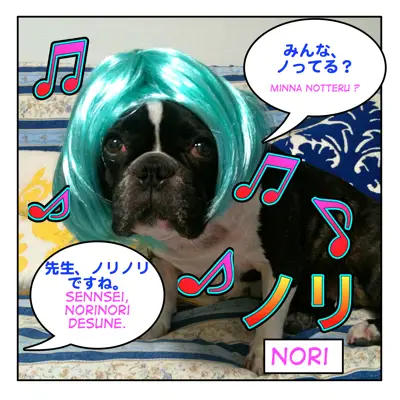
「みんな、ノってる?」
= Minna notteru?
= Are we having fun? / Are you ready to rock?
「先生ノリノリですね!」
= Sensei norinori desune!
= You are hyped up, Sensei!
Hi everyone! Do you like my new wig?
Today’s word is ノリ ( = nori)
The verb form is,
 ノる ( = noru) to go along with a happy mood, to join in someone’s cheerful mood, to respond to someone’s joke or gags
As many other slang words, we usually write these in katakana.
The kanji for the verb ノる ( = noru) was originally,
 乗る( = noru) which means to ride, to board, to get on
This kanji is usually used to ride a vehicle. :
Ex. 車に乗る = kuruma ni noru = to ride a car, to get in a car
Ex. 自転車に乗る = jitensha ni noru = to ride a bike
But you can use it when someone is going along with “the beat”, “the groove” or “mood” as well.
:u:
☆ ビートに乗って踊る
= biito ni notte odoru
= to dance to the beat
☆ リズムに乗って体を揺らす
= rizumu ni notte karada wo yurasu
= to sway one’s body to the rhythm
☆ 音楽に乗る
= ongaku ni noru
= to sway to the music
☆ 調子に乗る
= chōshi ni noru
= to get carried away, to go into gear
☆ 気乗りする
=kinori suru
or 気が乗る
= ki ga noru
= to get excited about something, to warm up, to take an interest
☆ 気乗りがしない
= kinori ga shinai
or 気が乗らない
= ki ga noranai
= to be hesitant, to do something half-heartedly, to not to get into st
:u:
 Now back to the word, ノる ( = noru)
:: negative form
ノらない ( = noranai)
:n: noun form
ノリ = nori
ノリがいい
= nori ga ii
= upbeat, to instantly tune into the happy mood around you, to get excited, to join in someone’s jokes
ノリが悪い
= nori ga warui
= low key attitude, not enthusiastic, not go along with the happy mood around you, not to get into something easily, party pooper.
!to right! When do we use ノリ ( = nori) or ノる ( = noru)?
:u:
!onpu! 1) You can describe a type of upbeat music ♪ as
ノリのいい音楽 ( = nori no ii ongaku), upbeat, groovy music that makes people get into the swing or feel like dancing.
Ex. この曲、ノリがいいね!
= Kono kyoku nori ga iine!
= This song is upbeat! / This song is fun (and makes us get into move our feet.)
!onpu!2) When you describe someone who is hyped-up, get into something, or very excited about something,
The emphasizing adjective is,
ノリノリ= norinori = hyped-up
You can describe people who get extremely excited or participate in some fun activities enthusiastically. (Usually at a party or a concert.)
Ex. 昨日、マギー先生、コンサートでノリノリだったね。
= Kinō Maggie sensei , konnsaato de norinori dattane.
= Maggie Sensei was very hyped up in the concert yesterday.
Ex. 「昨日のライブ、みんなチョーノリノリだったよ!」
= Kinō no raibu minna chou norinori dattayo.
= Everybody got so hyped up at the live concert yesterday.
Ex. 彼は、一人ノリノリで踊っていた。
= Kare wa hitori norinori de odotte ita.
= He was dancing crazy all by himself.
Let’s look at the picture above,
Maggie Sensei says,
「みんな、ノってる?」*
= Minna notteru?
= Are we all having fun? / Are you ready to rock?
*「みんな、ノってるかい?」
= Minna, Notteru kai?
= Are we all having fun? / Are you ready to rock?
is a cliché line that is usually used in a rock or pop music concert. The vocalist shouts out this line in the middle of the concert.
Note : かい ( = kai) ending is for a question and a male speech.
Ex. 覚えている? ( = Oboete iru) Do you remember?
覚えているかい? ( = Oboete irukai?)
!onpu!4) to describe someone who can interact with people in a funny way or someone who responds to someone’s jokes or gags quickly, or people who can adjust to the happy mood around them and go along with the jokes easily or is willing to participate some fun (or sometimes crazy) activities.
Ex. 彼はノリがいいね。
= Kare wa nori ga iine.
= He is funny / He can respond quickly. / He is quick witted./ He rocks!
Ex. 今日のお客さんはノリがいい。
= kyō no okyaku san wa nori ga ii.
= The audience’s response is great today. (It means they laugh a lot responding the gags or jokes.)
The audience was really into our performance/music.
Ex. あいつはノリがいいから飲み会に呼ぶと場が盛り上がる。
= Aitsu wa nori ga iikara nomikai ni yobu to ba ga moriagaru.
= He (That guy) is the life of the party so if we invite him to our drinking session, he cheers up the atmosphere.
Note : あいつ ( = aitsu) is a derogatory term to indicate a third person but sometimes it is used in a friendly manner and just means “he” (or “she“)
So usually ノリ ( = nori) or ノる ( = noru) is used for some fun situations or to describe music with a beat but there are some cases you can use for other activities.
!onpu! 5) When someone is motivated to do something, to be into the groove, to get into a gear.
Ex. 試験勉強ノらないから遊びに行こうよ!
= Shiken benkyō noranai kara asobini ikō yo!
= I don’t feel like studying for the exam so let’s go out!
Ex. 朝から仕事ノってるね。
= Asa kara shigoto notterune.
= You have been working very efficiently since the morning.
!onpu!6) When you say 軽いノリ ( = karui nori) , it implies you are not intended to do something seriously
Ex. 軽いノリのジョーク
= Karui nori no jooku
= a lighthearted joke
Ex. 彼女を軽いノリで誘ったら本気にされた。
= Kanojo wo karui nori de sasottara honki ni sareta.
= I just asked her out casually but she took it seriously.
Ex. 軽いノリでやったことだから許して。
= Karui nori de yatta koto dakara yurushite.
= Forgive me. I just did it as a joke without thinking.
When I ignore Yukari when she wants to play with me, she often says,
Ex. ノらないなあ。
= Noranai naa.
= She is not playful..(She is not in the mood for playing. )
But when I started to get into the mood and play with her, she says,
Ex. あっ!段々、ノってきた!!
= Ag! Dandan notte kita!!
= Oh now she is getting into it.
Sometimes it requires a lot of energy to please humans. 

マギー先生より = Maggie Sensei yori = From Maggie Sensei
さあ、今日もノリノリで遊ぶよ〜!
***
Will you be my Patron?
I appreciate your support! サポートありがとう!
41 Comments
hello sensei, i found your grammar lesson on internet , and i have 1 question related to this blog post
Hope you can explains to me what does this character mean ? いやー、乗ってきた。
Context: MC is eating lunch at school together with his big sisters, at their class (they went to a same school, but his big sisters are 1 year older than him). Both of them want to feed MC with the side dishes from their bento box.
Note: the 3rd big sister of MC is a class rep with serious + tsundere personality, while the 4th one is mischievous (like to tease other people)
彰吾 (MC)「あ、あーん……むぐっ」
三空 (3rd Big sister)「……ど、どうかしら」
彰吾「はむ……むぐっ……うん。そりゃもう……三空ねぇの卵焼きは絶品だよ」
三空「そ、そう。それなら良かったわ。よく噛んで食べなさい?」
詩桜 (4th Big sister)「んっふふー、みーちゃん嬉しそうな顔しちゃって」
三空「何をニヤニヤしてるのよ。別にいいでしょう?」
詩桜「やっぱみーちゃんも、したかったんじゃん」
三空「だ、だったらどうだって言うの」
女子生徒C「へぇー、三空ちゃんも弟さんの前だとあんな感じなんだ」
女子生徒D「ねっ、結構可愛いよね」
三空「~~っ!」
詩桜「くふふっ、赤くなってる。いやー、たーのしいねぇ?」
三空「人をからかって楽しむんじゃありません! もう!」
詩桜「いやー、乗ってきた。次は、これ行ってみよう、あーん」(>> I don’t understand this part)
彰吾「えっ? は……んむっ!」
三空「彰吾くん、これも食べなさい。ほら」
彰吾「三空ねぇ……あっ、んむっ……」
結局、交互におかずを差し出され、僕はお腹いっぱいにお昼を過ごした。
Hello zeroh4nter
In this case, 詩桜 has started to enjoy the way 三空 reacts. But I would just translate it as “This is getting better!” or something.
Hi, Maggie. So, I was hearing a song (Summer Mermaid, by Misako Uno) and this comes out: どうぞ はじめて
Sノリ王子と
シュワシュワ 出逢いに(ラブ)乾杯
Could you, if possible, tell me what means Sノリ王子と, i found this tricky and confuse. Thank you in advance.
Hi Alex,
I am sorry. I wish I could help you but I have no idea.
“S” could be an initial of her prince and follows のり as a part of his name. In other word, there is no such a word, Sノリ王子 in Japanese. It is a coined word.
Thank you for the response. Yeah, that’s hard. Thank you again, I gonna trying to figure out.
I hope you can find the answer somewhere. :)
Hi Alex!
I checked that song and I think – like Maggie said – Sノリ王子 refers to a person and has rather nothing to do with the ノリ slang word.
It might refer to Nissy.
Wow. Yeah, it could be. Thank you 天人. I was thinking that could be S (sea) nori (weed). So, seaweed as Snori. Seaweed Prince. Ok, that’s ridiculous, but…hahaha.
OMG! It’s really helpful. I couldn’t understand the meaning no matter how I read the dictionary again and again. Your explanation is so clear. Thank you. You saved me.
Hi Dahlia,
I am glad to hear this lesson help you understand the meaning. :)
マギー先生、こんにちは!
このレッスンをツイートしてくれてありがとう! いつも新ものは習ってかっこいいんだよね。 !DANCING!
なのに 「ノリ」と「ノる」の使い方があまり分からなかった。でもこれをもう一回読んだ後分かって希望。
いつも難しい文を使いたいんだけど残念ながら簡単のがしてしまう。
この時間にも、難しいのが作ってみた。だから間違いがあれば直してください。
あっ、マギー先生のサイトはノリがいい!
ごめん、たくさん書いた。
@ocd
おはよ〜、ocd!
ocdはツイッターでフォローしてくれているんですね。
マギー先生のサイトはノリがいい!→ありがとう!!それはきっとここに来てくれるみんなのノリがいいからですね(笑)
(Note for you. ノリの文章はとてもよく書けていますよ。あとの文章もいっぱいがんばって日本語で書いてくれましたね。直して欲しかったらocdの勉強のために手伝うので言ってね。)
I’ve a question about what is the difference or which one is correct
If I want to say “It’s nice to learn….”
習ってよい or 習うよい ???
@ocd
習ってよい means “You may learn” (Giving a permission to learn something)
習うよい is grammatically wrong.
It depends on the context but how about (〜を or ~が)習えてよい(or いい)/ 学べてよい(or いい)?
先生、手伝ってくれてありがとう!
I’m trying to read some Japanese texts everyday (tho I don’t really always understand it), but I’m really bad at hearing… What can I do for better recognizing Japanese sounds?
@ocd
It’s good for you to study Japanese everyday.
As for hearing, besides all the language course listening materials, you can use any Japanese videos using youtube or somehting. Find a drama, anime or anything you like. Some of them have subtitles.
Pick any scene and focus on hearing what they are talking about even just 30 seconds everyday. Try to write down every single word that you hear and check it with the subtitles.
NHK also offers やさしい日本語(I once in a while retweet their tweet) They read a news along the text and you can check the vocabulary as well.
ne sensei, wht does “ノリ気じゃなかったのに” mean?
Hello una,
先生 will be back soon, so I will answer your question instead.
ノリ気(乗り気) means “interest; eagerness; enthusiasm” and じゃなかった is its negation in the past. Therefore the speaker wasn’t in the mood for doing something, but he/she (probably) eventually did it. のに expresses feelings like 不平・不満・恨み・非難.
EX) 試験勉強をすることに全く乗り気ではなかったのにな~ (=Though I totally didn’t feel like learning for the exam / Though I really wasn’t thrilled with learning for the exam)
ご参考まで。
すごくゆうようです。ありがとう、Maggie 先生!
@YuetChing
Thank you for your comment. I am glad to hear my site is useful. これからもよろしくね!
え~
私も「ノリ」は「海苔」というと思いました。 orz
とことで、 this lesson was very helpful. My Japanese friend always said 「ノリ!」 And every time, I thought she was saying seaweed. XD
@ハリちゃん
Haha! You must have thought your friends just loved seaweed!
あ!学べるニュースで出た「Xさんのノリがいいですね」の「ノリ」。
以前この表現について優しいマギーに聞いたけど、徹底的な説明をしてくれてどうもありがとう!さすがマギー。
@Cygnus
前に質問されましたっけ?毎日多くの質問に答えているから忘れちゃった。 :) でも「ノリ」はよく使う言葉だから自然に使えるといいですね。
hello!
thank you for the wonderful lesson- this is so useful.!
i saw a video recently where an idol used this expression
今日のメイク乗り悪いんですけど。。
i think is what she said, so was she saying
“i wasn’t so excited about today’s makeup but….”
(that would make sense w the rest of the video)
?
also you wrote
みんな、ノってる?
could one also write
みんな、ノっている?
without changing the meaning? is the first one just more slangy?
Thank you!
@WATA
Hello, WATA!!
Ah, OK, メイクのノリがいい/悪い is different from ノリがいい/悪い.
化粧(けしょう)/メイクのノリがいい means make-up goes on smoothly. When you have a nice smooth skin condition, your skin absorbs all the make up cream, lotion, foundation, powder etc. well and you look good after wearing the make-up.
As for your second question,
ノッてる = ノっている
We often omit ”い” in casual Japanese.
三九!
@WATA
You’re very welcome!
最近、宿題ノらないよね。。。けど、今日から、秋休みだよ!ww家に帰る^^買い物をノリノリでしましょうね~!
レッスンありがとう、先生!
@Aki
すごい!もうAkiは上手に”ノリ”が使えるね!お買い物の後は、宿題もノリノリでがんばってね!!
マギー先生
初めまして!マギー先生のブログを見つけてしばらく経つのですが、初めて書き込みさせていただきます。
いつも教科書にない、毎日耳にするのに意味が辞書を引いてもよくわからないような日本語を取り上げてくれて、ありがとうございます。「あっ、そういう意味だったんだ!」と思うことが毎回と言っていいほどあります。ほんとうに勉強になります!
これからも、どうぞよろしくお願いします。
@Norojika
今日は!!初めてのコメントありがとうございます!!こちらこそこれからも宜しくお願いしますね。
それにしてもコメントの日本語、完璧でびっくりしましたよ。日本語上級の人達にも面白いと思ってもらえるレッスンを作らないといけませんね!….よ〜しがんばろ〜!!! !happyface!
Hi Maggie! I am Italian, I started studying Japanese 2 years ago and I love it! I have just found your blog and I love it too! It is nice, fun and very useful….Maggie Sensei rules!! ;-) Ciao!
@Annarita
Hello Annarita!! Thank you for comment. I am very happy that you found us in Italy!!
Hope you come back soon again!! Feel free to leave a message or questions here anytime!
Ciao!!
おっ、
たくさん間違えたがあったですね。
直ったをありがとう。
はい、これから「twitter account」をつくって、頑張ります。
マギー先生がいいね、たすけられました。
お会いできたうれしいです。(^^)
@Haru
どういたしまして。たくさん直しましたがよかったら、間違ったところをメモしておいてね。必(かなら)ず上達(じょうたつ)しますよ。
(I am not sure if you want me to correct this comment as well but…I will do that anyway to help your Japanese….
間違えたがあったですね。→間違えがありましたね。
直ったをありがとう→直してくれてありがとう。
マギー先生がいいね、たすけられました。→マギー先生、てつだってくれてありがとう。
お会いできた→お会いできて)
私もHaruさんと知り合えてうれしいですよ。これからもよろしくね!
間違えて「publish」ボタンをおしました。
すみまめせんせんせい。
I just found your blog today マギー先生!
めっちゃべんりです!
ありはとうね。
今日からぜひ先生の「blog」またいきたいんです!
ところで、先生の新しい「wig」はいいね。
マギー先生はノリがいいね。<-この使い方は正しいですか?
*間違えたが会ったら治してくださらないんですか?「今日本でべんきょうしているところなんです、よろしく!(^^)」
@Haru
こんにちは!Haru! コメントありがとう!Wig 似合(にあ)ってる?うれしい!!
マギー先生はノリがいいね。→OK!!!
OK,I can help your Japanese. Are you ready?
•すみまめせん→すみません
•ありはとうね。→ありがとうね。
(I think the first two are typos but…)
•またいきたいんです!→またきたいです。
•行く = いく = to go →行きたい = いきたい = ikitai = to want to go
•来る = くる = to come→来たい= きたい= kitai = to want to come
→so you should use きたい in this case.
•間違えたが会ったら→間違いがあったら The kanji 会う is to meet someone
•治してくださらないんですか?→直してくださいませんか?
•直す= to fix, to correct, to repair
•治す= to heal to cure,
でもよく書けてますよ!これからもがんばってね! !happyface!
I can always help your Japanese on Twitter,too!
I just found your blog マギー先生!
I thought “ノリ” is a seaweed. Thank you for your lesson. ^_^
@majoringram3636
Haha, that’s different, nori. →海苔= nori= seaweed!
Anyway thank you for your comment!